
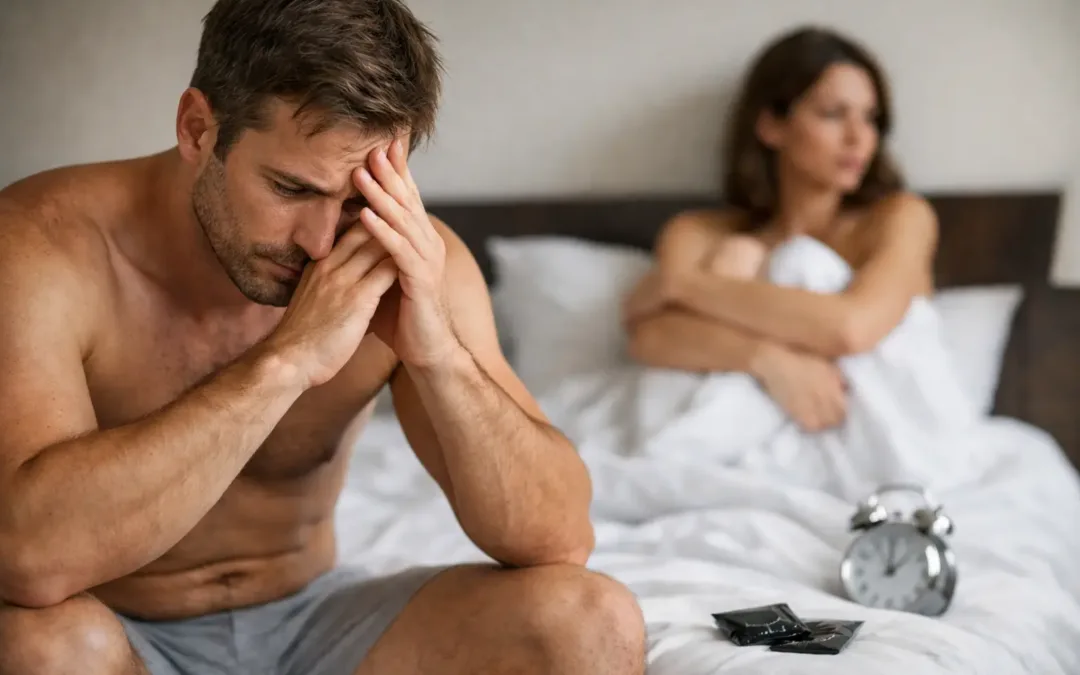
A lot of men wait far too long to look this up, even though premature ejaculation is one of the most common sexual concerns there is. If you want to know how to stop premature ejaculation, the first thing to understand is that this is usually manageable, and in many cases it improves a lot with the right mix of training, communication, and medical support.
Premature ejaculation, or PE, generally means climax happens sooner than you want, with less control than you want, and it causes frustration, stress, or avoidance. For some men, that has been true since their earliest sexual experiences. For others, it starts later and may show up during stressful periods, new relationships, after changes in erections, or alongside other health issues.
That difference matters. Lifelong PE often has a stronger biological component, while acquired PE can be tied to stress, anxiety, erectile dysfunction, prostate inflammation, medication changes, or relationship tension. The goal is not chasing some unrealistic movie version of sex. The goal is better control, less pressure, and a sex life that feels good for both partners.
How to stop premature ejaculation starts with the cause
There is no single fix that works for every man because PE is not caused by one thing. Sometimes the biggest driver is performance anxiety. You get worried about finishing too fast, which makes you more tense, more stimulated, and even more likely to climax quickly. That cycle can build on itself.
In other cases, the issue is more physical. Men with erectile dysfunction sometimes rush intercourse because they are worried about losing the erection. That can train the body into a fast-finish pattern. Hormone changes, thyroid problems, prostatitis, nerve sensitivity, and even certain mental health struggles can also play a role.
This is why a good first step is being honest about the pattern. Ask yourself whether it happens every time or only in certain situations. Does it happen with a partner but not during masturbation? Did it begin recently? Are erections weaker than they used to be? Those details help point toward what actually needs work.
Build more control before sex, not just during it
One of the most effective ways to improve PE is to stop treating sex like a performance test. Men often focus only on the moment of penetration, but control usually improves when you lower overall arousal pressure and retrain your response before you hit the point of no return.
Masturbation habits matter here. If you have trained yourself for years to finish as fast as possible, your body may be doing exactly what it has practiced. Slowing down solo sex, using more awareness, and intentionally stopping before climax can help reverse that pattern over time.
You also want to pay attention to your arousal scale. Most men do not go from relaxed to ejaculation instantly. There is a build-up. Learning the signs of rising tension in the pelvis, abdomen, breathing, and penis can help you catch the moment earlier. That sounds simple, but it is a real skill.
The stop-start method
The stop-start method is one of the best-known behavioral tools for PE. The idea is straightforward. You stimulate yourself or have partner stimulation until you feel close to ejaculation, then stop and let arousal settle down. After that, you start again.
Done consistently, this helps you recognize your edge and stay below it longer. It is not magic, and it usually does not work overnight. But over several weeks, many men gain noticeably better awareness and more control.
The squeeze technique
The squeeze technique is similar, but when you get close to climax, pressure is applied to the penis, usually near the head, to reduce arousal. Some couples find it useful. Others think it interrupts the moment too much. That is the trade-off. It can help, but it is not always the most natural-feeling option.
Pelvic floor training can help, but only if you do it right
A lot of men hear about Kegels and assume more squeezing is always better. Not exactly. Pelvic floor muscles are involved in ejaculation control, but some men with PE already carry too much tension in that area. If you are constantly clenching your abs, glutes, or pelvic muscles, adding more tension can backfire.
What helps is better pelvic floor control, not just brute strength. Start by learning how to contract and relax the muscles you would use to stop urine midstream. Then practice short, controlled squeezes along with full relaxation. Breathing matters here. If every rep turns into full-body strain, you are missing the point.
Some men benefit more from relaxation work than strengthening. Slow breathing, less abdominal bracing, and reducing tension during arousal can make a real difference. If you are unsure whether you are doing pelvic floor exercises correctly, a pelvic floor physical therapist can be surprisingly helpful.
Reduce the factors that speed you up
If your nervous system is running hot, sexual control gets harder. Poor sleep, high stress, too much alcohol, stimulant use, and relationship tension can all shorten your runway. That does not mean PE is all in your head. It means your body performs differently under pressure.
Cardio fitness can help because better circulation, lower stress, and improved stamina all support sexual function. So can strength training, especially if it improves confidence and body awareness. The effect is not instant, but sexual performance usually gets better when your overall health gets better.
You should also look at porn habits with honesty. For some men, frequent high-intensity porn use creates a pattern of fast, stimulus-driven arousal that does not translate well to partnered sex. That is not true for everyone, but if your arousal style has become heavily dependent on extreme novelty or speed, dialing it back may help.
Use condoms, pacing, and partner communication to your advantage
If you are trying to figure out how to stop premature ejaculation in real-world situations, do not ignore simple tools. Condoms can reduce sensation enough to help some men last longer. Thicker condoms may help more, though some men dislike the reduced feeling. It depends on your sensitivity and what still feels satisfying.
Pacing matters too. Fast, repetitive thrusting usually drives arousal up quickly. Slowing down, changing rhythm, pausing, and mixing intercourse with other forms of touch can take pressure off the moment. Sex tends to go better when it is not treated like a race from penetration to climax.
Talking to your partner can also lower anxiety more than men expect. Silence often makes PE feel bigger and more shameful. A direct, calm conversation can turn it into a shared problem to solve rather than a private failure to hide.
Medical treatment options for premature ejaculation
If self-help strategies are not enough, it is worth talking with a doctor. There are real treatment options, and getting checked does not mean something is seriously wrong.
Topical numbing creams or sprays can reduce sensation and help delay ejaculation. They work for many men, but if you use too much or do not apply them properly, they can reduce pleasure or numb your partner too. Following directions matters.
Some doctors prescribe certain antidepressants, especially SSRIs, because one of their side effects is delayed ejaculation. These can be taken daily or sometimes as needed, depending on the medication and the doctor’s guidance. They can be effective, but they may also cause side effects like lower libido, nausea, fatigue, or erection changes.
If erectile dysfunction is part of the picture, treating that can improve PE as well. When a man feels more confident about maintaining an erection, he often stops rushing. This is one reason a full sexual health evaluation can be more useful than trying random internet fixes.
When to get checked out
You should consider medical evaluation if PE started suddenly, is getting worse, is happening with erection problems, or is causing serious stress in your relationship. It is also smart to get help if pain, urinary symptoms, prostate discomfort, or mood changes are showing up at the same time.
For men over 40 especially, sexual changes are sometimes part of a bigger health picture that includes stress, blood pressure, blood sugar, medication effects, or hormone shifts. Male Health Zone speaks to this often because sexual performance is rarely separate from general health. It is one more reason not to write the problem off as bad luck.
The best approach is usually a combination, not a single trick. A man might improve sleep, retrain masturbation habits, use stop-start practice, communicate better with his partner, and talk to a doctor about treatment options. That layered approach tends to work better than hoping one hack will solve everything.
If this has been frustrating, do not treat it like a verdict on your masculinity or your future sex life. Treat it like any other performance issue in the body - something you can assess, train, and improve with the right plan.
This article contains general information about medical conditions and treatments. The information is not advice, and should not be treated as such. Click here for further information.

