
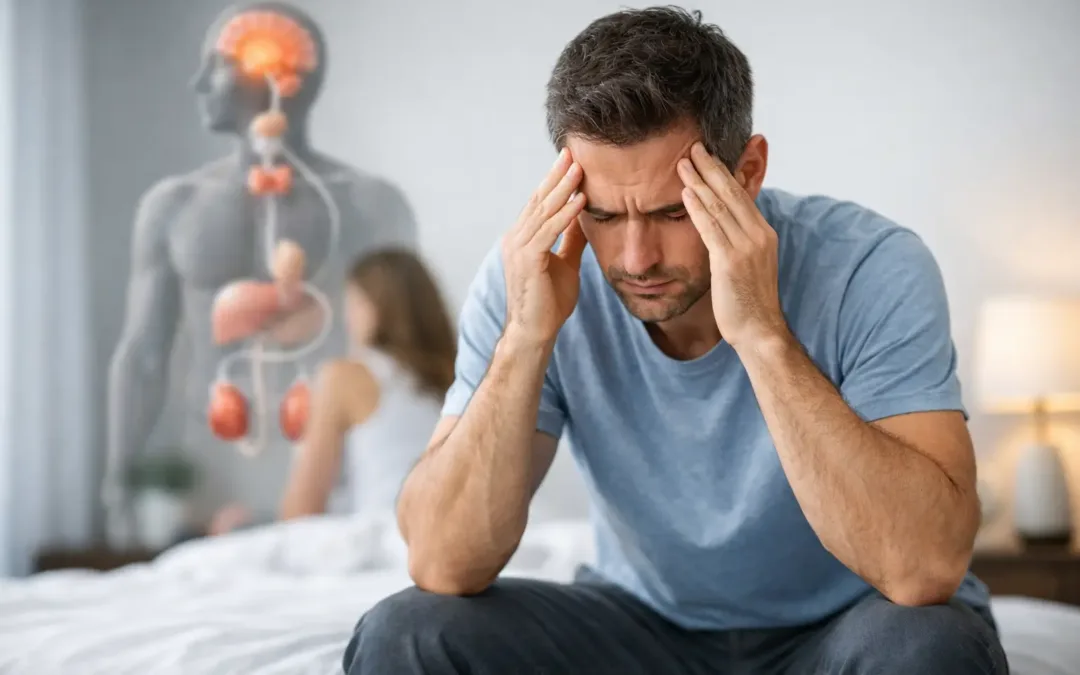
That wired-but-drained feeling can be confusing. You are tired, less motivated, not quite yourself, and somehow more on edge than usual. If you have been asking, can low testosterone cause anxiety, the short answer is yes - but it is rarely the only factor.
Low testosterone can affect mood, energy, sleep, confidence, libido, and mental resilience. Those changes can make anxiety more likely or make existing anxiety feel worse. At the same time, anxiety has many causes, and not every anxious man has low T. The real value is understanding how the two can overlap so you know when it is worth getting checked instead of brushing it off as stress.
Can low testosterone cause anxiety in men?
Yes, it can. Testosterone is not just about sex drive and muscle. It also plays a role in mood regulation, motivation, focus, and how the body responds to stress. When testosterone drops too low, some men notice irritability, nervousness, low confidence, poor concentration, and a sense that they are mentally flat or emotionally less steady.
That does not mean low testosterone directly causes an anxiety disorder in every case. It means hormonal changes can create conditions that make anxiety more likely. A man who is sleeping badly, losing strength, gaining fat, struggling with erections, and feeling less like himself may start feeling worried, tense, or socially withdrawn. Sometimes the anxiety starts with the symptoms. Sometimes both the hormone issue and the anxiety are being driven by the same underlying problem, such as poor sleep, chronic illness, overtraining, or depression.
Why low testosterone may affect your mood
Testosterone interacts with brain chemistry in ways that influence emotional balance. When levels are healthy, many men feel more stable, driven, and physically capable. When levels fall, the shift is not always dramatic, but it can show up in subtle ways first. You may feel less resilient under pressure, more easily frustrated, or mentally foggy.
There is also the physical side. Low T can reduce muscle mass, increase body fat, lower exercise performance, and weaken libido. For many men, those changes hit hard because they affect identity as much as health. If you no longer feel strong in the gym, engaged in your relationship, or sharp at work, that can trigger stress that quickly turns into anxiety.
Sleep is another major piece. Men with low testosterone often report fatigue and poor sleep quality. Some also have sleep apnea, which is strongly linked to both low T and anxiety symptoms. If your sleep is wrecked, your stress tolerance usually drops with it.
Symptoms that may point to low T and anxiety together
A lot of men do not notice a hormone issue because they expect one obvious sign. In reality, low testosterone often shows up as a cluster of changes that build over time. Anxiety may be one of them, especially when it arrives alongside physical symptoms.
You may want to look closer if anxiety comes with low sex drive, fewer morning erections, erectile problems, unusual fatigue, reduced strength, loss of motivation, depressed mood, increased belly fat, or trouble focusing. Some men also notice they recover more slowly from workouts or feel more emotionally reactive than usual.
None of these symptoms prove low testosterone on their own. Stress, burnout, depression, thyroid problems, poor sleep, and medication side effects can create a very similar picture. That is why guessing is not enough.
What else could be causing the anxiety?
This is where some nuance matters. A man can have anxiety and normal testosterone. He can also have low testosterone and no anxiety at all. The overlap is real, but it is not automatic.
Common causes of anxiety in men include chronic stress, financial pressure, relationship strain, caffeine overload, alcohol use, poor sleep, panic disorder, generalized anxiety disorder, and stimulant or antidepressant side effects. Health conditions such as thyroid disease, low blood sugar swings, heart rhythm issues, and sleep apnea can also create symptoms that feel like anxiety.
Weight gain and insulin resistance matter too. These can lower testosterone over time while also increasing inflammation, fatigue, and mood instability. In that situation, low T may be part of the problem, but not the whole story.
When should you get your testosterone checked?
If you feel anxious once in a while, that alone does not automatically call for hormone testing. But if anxiety shows up with classic low T symptoms, or you feel persistently off for weeks or months, it is reasonable to talk with a doctor.
Testing makes the most sense when symptoms are ongoing and affecting daily life. That is especially true if you are over 40, have gained abdominal fat, snore heavily, have low libido, feel chronically exhausted, or notice a drop in physical performance that does not match your training or lifestyle.
Doctors typically check total testosterone with a morning blood test, since levels are highest earlier in the day. If results are borderline or symptoms are strong, they may also look at free testosterone, luteinizing hormone, prolactin, thyroid markers, and sometimes blood sugar or sleep-related issues. One low reading is not always enough for a diagnosis. Levels can fluctuate, and context matters.
Can treating low testosterone improve anxiety?
Sometimes, yes. If low testosterone is truly contributing to your symptoms, addressing it can help improve mood, energy, confidence, and stress tolerance. But the outcome depends on the cause.
For some men, the biggest improvement comes from fixing the basics that lowered testosterone in the first place. Better sleep, weight loss, resistance training, less alcohol, and treatment for sleep apnea can improve hormone health and reduce anxiety at the same time. That is a strong win because it targets the root problem instead of only the symptoms.
For others, testosterone replacement therapy may be considered, but it is not a shortcut and it is not right for everyone. TRT can help men with confirmed low testosterone and significant symptoms, yet it also comes with trade-offs. It may affect fertility, require ongoing monitoring, and carry risks that need to be discussed with a qualified clinician. If anxiety is mainly driven by panic disorder, relationship stress, or heavy stimulant use, TRT is unlikely to be the full answer.
Lifestyle changes that can help both testosterone and anxiety
This is where men can gain real traction. Even before test results come back, certain habits support hormone health and mental steadiness.
Sleep is first. If you are regularly getting five or six broken hours a night, both testosterone and mood can suffer. Aim for a consistent sleep schedule and pay attention to signs of sleep apnea, especially loud snoring, choking during sleep, or daytime exhaustion.
Strength training helps too. You do not need marathon workouts. Consistent resistance training can improve body composition, insulin sensitivity, and confidence. It also gives anxious energy somewhere useful to go.
Nutrition matters more than most men want to hear. Extreme dieting, heavy processed food intake, and too much alcohol can drag you down fast. A balanced approach with enough protein, healthy fats, fiber, and minimally processed carbs tends to support both stable energy and hormone function.
Managing stress is not soft advice. Chronic stress can push cortisol up, wreck sleep, lower libido, and make every symptom feel louder. That may mean dialing back caffeine, taking breaks from all-day stimulation, or finally dealing with the issue you keep trying to outwork.
What men often get wrong
A common mistake is assuming every mental health symptom is low testosterone. Another is assuming anxiety means weakness or something you should just power through. Neither view helps.
Hormones matter, but they are one part of a larger system. If your anxiety is severe, comes with panic attacks, chest pain, hopelessness, or major sleep disruption, do not wait around hoping it fixes itself with a supplement and a better leg day. Get evaluated. The strongest move is getting clear on what is actually happening.
There is also a tendency to chase testosterone because it feels more acceptable than talking about mental health. But many men need both angles addressed. You may need lab work, sleep evaluation, therapy, lifestyle changes, or treatment for depression or anxiety alongside hormone care. That is not overkill. That is smart health management.
The bottom line on can low testosterone cause anxiety
Yes, low testosterone can contribute to anxiety in men, especially when it comes with fatigue, low libido, poor sleep, weight gain, and a drop in confidence or performance. But anxiety is never a one-size-fits-all symptom, and low T is not the explanation in every case.
If your body and mind both feel off, do not guess and do not ignore it. Get the right labs, look at your sleep and stress, and take the symptoms seriously. For a lot of men, progress starts the moment they stop calling it normal aging and start treating it like a health issue worth fixing.
This article contains general information about medical conditions and treatments. The information is not advice, and should not be treated as such. Click here for further information.

