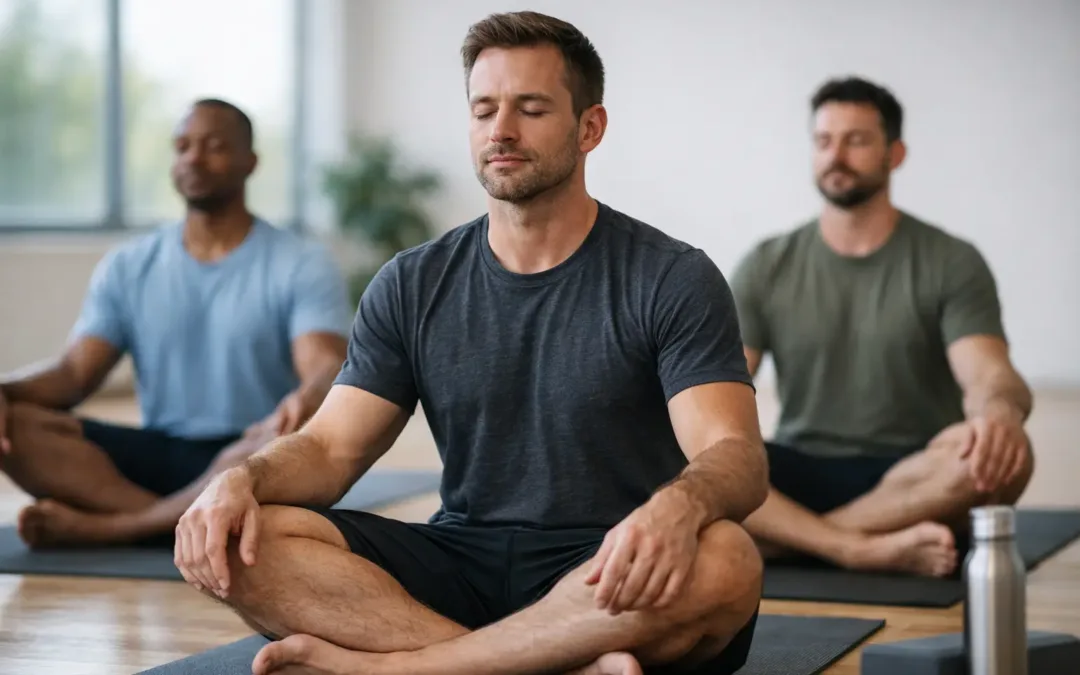
Most men do not avoid yoga because it is too easy. They avoid it because they expect to feel stiff, out of place, or flat-out bad at it. That is exactly why yoga for men beginners works so well when you approach it the right way. You do not need to be flexible, spiritual, or able to touch your toes. You need a plan that improves how your body moves, feels, and recovers.
For a lot of men, especially those who lift, sit at a desk, play sports, or are getting older, the body starts sending the same signals. Tight hips. Achy lower back. Rounded shoulders. Hamstrings that feel like cables. Stress that shows up as poor sleep, shallow breathing, and constant tension. Yoga can help with all of that, but only if you stop thinking of it as stretching class and start seeing it as body maintenance with real performance benefits.
Why yoga for men beginners makes sense
Men often come to yoga after something starts hurting. Sometimes it is the back. Sometimes it is the knees. Sometimes it is not pain at all, but a drop in mobility, stamina, or recovery. You notice you warm up longer, feel beat up after workouts, or cannot move as well as you used to.
Yoga addresses a mix of issues at once. It builds mobility, but also strength and control. It improves balance, which matters more as you age. It can lower stress and help breathing, which affects sleep, blood pressure, and training recovery. For men over 40, those benefits are not cosmetic. They support long-term function.
There is also a practical advantage. Yoga does not require a gym full of equipment. A mat and some floor space are enough. That makes it easier to stay consistent, and consistency matters more than doing an advanced pose once in a while.
What beginners usually get wrong
The biggest mistake is trying to force flexibility. If your hips are tight and your hamstrings are short, pushing harder usually makes the session frustrating instead of productive. Yoga works better when you focus on position, breathing, and gradual range of motion.
The second mistake is choosing classes or routines that move too fast. A power flow might look impressive online, but it is a poor starting point if you cannot yet hinge well, stabilize your core, or get your shoulders overhead comfortably. Slow, basic sessions are not a step backward. They are how you avoid strain and build a foundation.
A third mistake is expecting every session to feel relaxing. Sometimes yoga exposes weaknesses you have been ignoring. Standing on one leg may challenge your balance more than heavy lifting does. Holding a plank may reveal that your core endurance is not where you thought it was. That does not mean yoga is not for you. It means it is showing you useful information.
The best way to start yoga as a man
Start with two or three short sessions per week. Twenty minutes is enough at first. If you train hard already, place yoga on recovery days or after lighter workouts. If you are mostly sedentary, use it to break the cycle of stiffness before you add more demanding exercise.
Aim for routines that emphasize hips, hamstrings, thoracic spine, shoulders, and breathing. Those areas tend to be trouble spots for men who lift, run, golf, cycle, sit for long hours, or carry stress in the neck and upper back. A good beginner routine should feel challenging without turning into a mobility test you fail.
If you have a history of back injuries, joint problems, or blood pressure concerns, use extra caution with deep twists, aggressive forward folds, and long holds that make you strain. Yoga is generally low impact, but low impact does not mean zero risk. Form still matters.
Core poses for yoga for men beginners
You do not need dozens of poses. A small group done well is more useful than a long sequence done poorly.
Child's Pose is a simple reset. It helps you settle your breathing and gently opens the hips and lower back. If your knees are sensitive, place a cushion or folded towel under them.
Cat-Cow improves spinal movement and helps loosen a stiff back, especially if you sit a lot. Move slowly and focus on the full range, not speed.
Downward Dog strengthens the shoulders and lengthens the calves, hamstrings, and back line of the body. If your hamstrings are very tight, keep your knees bent. Straight legs are not the goal.
Low Lunge is valuable for tight hip flexors, which are common in men who sit for work or drive often. Keep the torso tall and avoid dumping into the lower back.
Pigeon Pose can open the hips deeply, but it is not for everyone right away. If your knee feels stressed, back off and use a gentler hip stretch instead.
Cobra and Sphinx help open the chest and strengthen the back, which is useful if you spend a lot of time hunched forward. The key is length through the spine, not cranking your neck up.
Warrior II builds leg strength, hip mobility, and balance. It also teaches control in a wider stance, which many men need more than they realize.
Bridge Pose strengthens the glutes and supports the lower back. For men with desk-job posture, this can be especially helpful.
A seated forward fold looks basic, but it can be humbling. Bend your knees if needed and avoid yanking yourself down. You are training better movement, not trying to win the stretch.
A simple 20-minute beginner routine
Start with one minute of steady nasal breathing while sitting or lying down. Then do Cat-Cow for one minute, Child's Pose for one minute, and Downward Dog for three rounds of 20 to 30 seconds.
Move into a Low Lunge on each side for about 30 seconds, then a gentle hamstring stretch on each side. Add Warrior II on each side for 30 seconds and Bridge Pose for two or three rounds of 20 seconds. Finish with Cobra or Sphinx for 20 to 30 seconds, then lie on your back and breathe slowly for two minutes.
That may not sound intense, but many men feel a difference quickly if they stay consistent. The body usually responds to regular, moderate input better than occasional all-out sessions.
What results can you expect
In the first two weeks, many beginners notice less stiffness and better body awareness. You may stand taller, feel less tension in your hips, and move more comfortably getting out of bed or bending down.
Within a month or two, you may see better squat depth, smoother warm-ups, less post-workout tightness, and improved balance. Some men also sleep better because yoga gives the nervous system a break from constant stress and stimulation.
The trade-off is that progress is not always dramatic from session to session. Yoga tends to reward patience. If your goal is massive calorie burn, a short yoga session will not replace conditioning work. But if your goal is to move better, recover faster, and keep your body more durable, it pulls a lot of weight.
Common concerns men have before they begin
A lot of men wonder whether yoga will make them lose muscle or interfere with strength training. For most beginners, the answer is no. In fact, better mobility and joint control often improve lifting mechanics and reduce wear and tear. The key is not overdoing long, exhausting sessions when your body already has a heavy training load.
Another concern is flexibility. You do not need it to start. Yoga is one of the tools that helps you build it. The men who benefit most are often the ones who need it most.
Some men also feel awkward about the culture around yoga. Ignore the image problem. Your hamstrings, shoulders, spine, and stress levels do not care what the stereotype is. If it helps you perform better and feel better, it is worth doing.
How to stay consistent
Treat yoga like brushing your teeth, not like a major event. Put it on the calendar. Keep the sessions short enough that you will actually do them. If twenty minutes feels manageable, that is better than planning an hour and skipping it.
It also helps to tie yoga to an existing goal. If you want to lift without shoulder pain, run without tight hips, or improve recovery after 40, yoga becomes easier to stick with because the payoff is obvious. At Male Health Zone, that is the lens that matters most: not doing wellness for the image, but using practical habits to protect performance and long-term health.
If you start now, expect to feel a little stiff, a little humbled, and a lot more aware of what your body has been trying to tell you. That is a good place to begin.
This article contains general information about medical conditions and treatments. The information is not advice, and should not be treated as such. Click here for further information.