
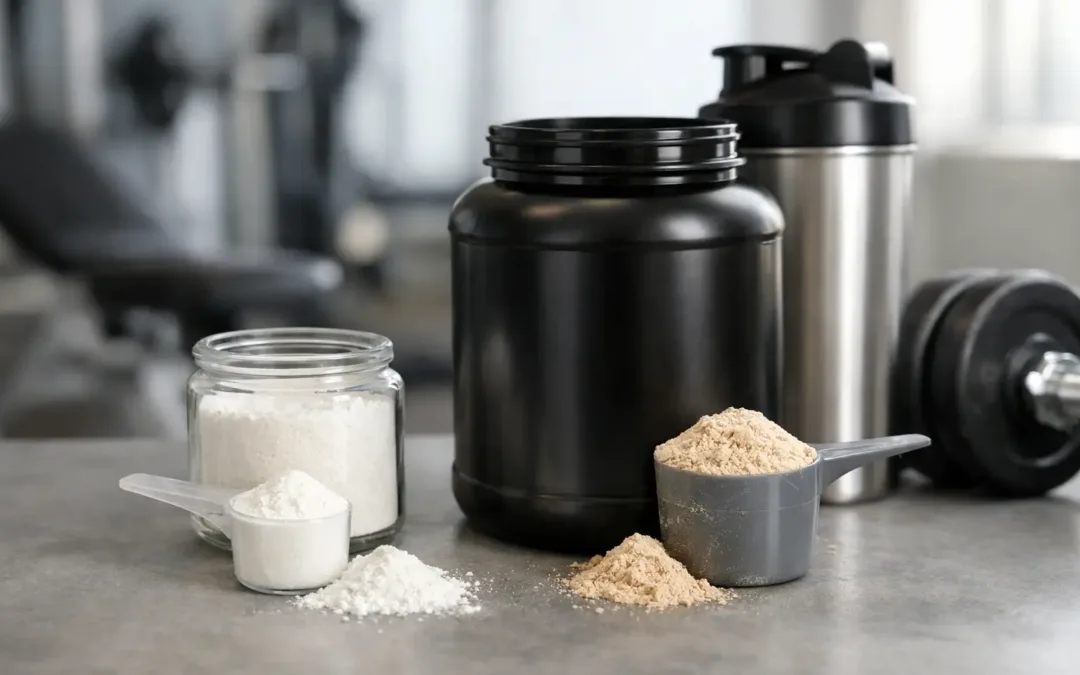
You finish a hard set, look at the supplement shelf, and face the usual question: creatine vs protein powder - which one actually helps you build a stronger, leaner body? The short answer is that they do very different jobs. One supports short-burst training performance; the other helps you reach the raw material your muscles need to recover and grow.
For most men, the better choice depends less on hype and more on what is missing from their current routine. If your diet is already high in protein but your lifts have stalled, creatine may be the more useful addition. If you struggle to eat enough protein between work, family, and training, protein powder can be the practical move. And if you train consistently, many men benefit from using both.
Creatine vs Protein Powder: The Core Difference
Creatine is a compound your body naturally makes and stores, mainly in muscle tissue. You also get some from foods such as beef, pork, and fish. Supplemental creatine raises muscle creatine stores, helping regenerate ATP, the fast-acting energy source your body relies on during heavy lifting, sprinting, jumping, and other intense efforts.
Protein powder is concentrated dietary protein, commonly from whey, casein, egg, soy, pea, or blends. Its primary job is not to give you a temporary workout boost. It helps you meet your daily protein target so your body has amino acids available for muscle repair, muscle growth, and other basic functions.
Think of creatine as support for performance in the gym and protein as construction material for recovery afterward. Neither replaces disciplined training, enough calories, quality sleep, or a diet built around real food.
What Creatine Can Do for Men Who Train
Creatine monohydrate is one of the most studied sports supplements available. It can improve performance in repeated, high-intensity exercise. That may mean getting an extra rep, maintaining power across several sets, or recovering a little better between sprints. Those small improvements can add up over months of progressive training.
For a man trying to add muscle, creatine can help indirectly by making high-quality training easier to sustain. More productive reps and better training volume can create a stronger signal for muscle growth, provided your nutrition and recovery are in place.
Creatine also often causes a modest increase in body weight during the first few weeks. This is usually water being pulled into muscle cells, not body fat. Some men like the fuller muscular look. Others get concerned when the scale rises. If you are cutting weight, track waist measurements, strength, photos, and how your clothes fit instead of judging progress by scale weight alone.
The simplest approach is 3 to 5 grams of creatine monohydrate daily. You do not need a loading phase, although loading can saturate muscle stores faster. Taking it consistently matters more than taking it at a precise time. Mix it into water, a shake, or any drink you will actually use every day.
What Protein Powder Can Do for Muscle and Weight Goals
Protein powder is food convenience, not magic powder. It can make it easier to hit protein intake when breakfast is rushed, lunch is light, or you do not want to cook another chicken breast at 9 p.m.
Men who lift regularly often do well with roughly 0.7 to 1 gram of protein per pound of body weight per day. A 190-pound man, for example, may aim for about 135 to 190 grams daily depending on his training, calorie intake, age, and goal. You do not have to hit a perfect number every day, but consistently falling far short makes building or preserving muscle harder.
Whey protein is popular because it is convenient, generally affordable, and rich in leucine, an amino acid that helps stimulate muscle protein synthesis. Whey isolate can be a better fit if you are sensitive to lactose or want fewer carbohydrates and fats per serving. Casein digests more slowly and may be useful when you want a more filling shake. Plant-based powders can work well too, especially blends that combine sources such as pea and rice protein.
A shake is especially useful after training if it prevents you from going hours without a meal. Still, the total amount of protein you eat across the day matters more than racing to drink a shake within a narrow post-workout window.
Which Should You Take First?
Start with the supplement that solves your biggest bottleneck.
Choose protein powder first if you regularly miss meals, eat little protein at breakfast and lunch, are trying to lose fat without losing muscle, or find it hard to reach your daily protein target from food alone. A powder can turn a low-protein breakfast into a meal that better supports appetite control and muscle maintenance.
Choose creatine first if you already eat enough protein most days, train with weights or explosive exercise, and want a safe, low-cost way to support strength and repeated effort. It is particularly useful for men who want to progress on compound lifts, improve sprint work, or preserve performance while dieting.
If your budget allows, taking both is reasonable because there is no real competition between them. A practical routine is a protein shake when it helps you meet your food intake and 3 to 5 grams of creatine every day. You can put creatine in your protein shake, but you do not have to.
The Trade-Offs Most Guys Miss
Neither supplement can make up for a poor plan. If you sleep five hours, train randomly, and eat too little overall, adding creatine will not fix the foundation. If every meal is ultra-processed and low in fiber, protein shakes will not turn your diet into a health-forward eating plan.
Protein powder can also add calories fast. A basic whey shake mixed with water may be modest, but a shake loaded with whole milk, peanut butter, oats, and fruit can easily become a 700-calorie meal. That is useful for a lean man trying to gain size, but it can quietly stall fat loss for someone who is not tracking portions.
Creatine is usually well tolerated, but some men experience stomach discomfort if they take too much at once. Splitting the dose or taking it with a meal may help. There is no good evidence that standard creatine use causes hair loss, but men with a strong concern about male-pattern hair loss can discuss the issue with a clinician rather than relying on gym rumors.
Quality matters with both products. Look for plain creatine monohydrate rather than expensive blends with vague claims. For protein powder, check the protein per serving, added sugar, calorie count, and ingredient list. If you are drug tested for sport or work, prioritize products that have been independently tested for banned substances.
Who Should Check With a Clinician First?
Healthy adults can generally use creatine and protein powder safely when used as directed. But supplements are not a substitute for personal medical advice.
Talk with your doctor, pharmacist, or registered dietitian before using creatine if you have kidney disease, reduced kidney function, or take medications that can affect the kidneys. Men with a history of kidney stones, high blood pressure, diabetes, or other chronic conditions should also get individualized guidance instead of assuming a standard gym plan fits them.
Protein powder deserves a second look if you have kidney disease, severe digestive issues, a milk allergy, or are managing a calorie-restricted diet. Lactose intolerance is not the same as a milk allergy, but it can make whey concentrate uncomfortable. In that case, whey isolate or a plant-based option may sit better.
A Simple Routine That Holds Up
Build your meals around protein-rich foods first: eggs, Greek yogurt, fish, lean meat, poultry, beans, tofu, and dairy if you tolerate it. Use powder to close the gap, not to replace every meal. Then take creatine daily if strength, muscle gain, or high-intensity performance is part of your goal.
Your best supplement choice is the one that supports a routine you can repeat for months. Train with purpose, eat enough protein, protect your sleep, and let creatine or protein powder handle the small but meaningful gaps. That is how you build performance that shows up in the gym, at work, and as you get older.
This article contains general information about medical conditions and treatments. The information is not advice, and should not be treated as such. Click here for further information.

