
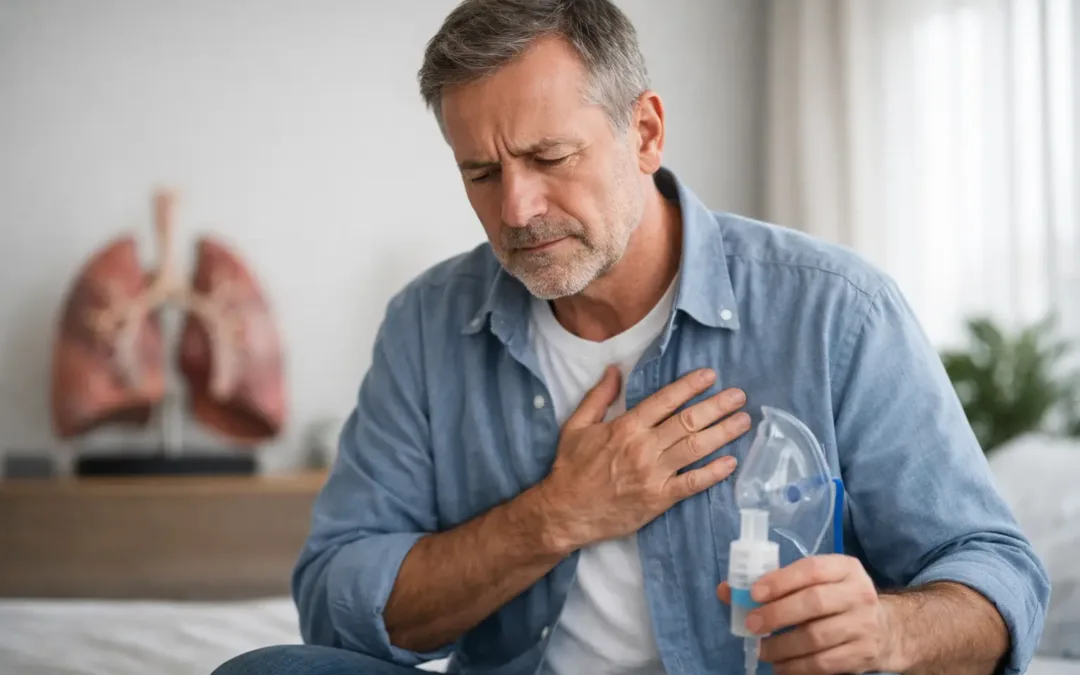
A persistent cough is easy to brush off when you have work, family, and training goals competing for attention. But a cough that sticks around, increasing shortness of breath, or a noticeable drop in stamina can signal more than getting older. This guide to COPD in men explains what the condition looks like, why men face specific risks, and what you can do to protect your breathing and independence.
What COPD Is and Why Men Should Take It Seriously
COPD stands for chronic obstructive pulmonary disease. It is an umbrella term for long-term lung conditions, mainly emphysema and chronic bronchitis, that make it harder to move air in and out of the lungs. The damage develops gradually, which is one reason many men adapt to symptoms instead of getting evaluated.
With emphysema, the tiny air sacs in the lungs lose elasticity and do not exchange oxygen as efficiently. Chronic bronchitis involves ongoing airway irritation, inflammation, and mucus production. Many people with COPD have features of both.
COPD is not just a lung issue. When breathing takes more effort, everyday performance can suffer. Walking uphill, carrying groceries, playing with kids, having sex, sleeping well, and keeping up with a workout can all become more difficult. Over time, lower activity levels can contribute to muscle loss, weight changes, heart strain, anxiety, and reduced confidence.
The good news is that COPD can be managed. The earlier it is recognized, the more opportunity there is to slow its progression and maintain a strong quality of life.
COPD Symptoms in Men That Deserve Attention
COPD symptoms often arrive slowly. A man may first notice that he needs more breaks while doing yard work or that he no longer keeps pace with friends on a walk. He may blame being out of shape, extra weight, or age. Those factors can affect breathing, but they should not automatically explain it away.
Common warning signs include:
- A cough that lasts for weeks or keeps returning
- Regular mucus or phlegm, especially in the morning
- Shortness of breath during activities that used to feel easy
- Wheezing, chest tightness, or a whistling sound when breathing
- Frequent chest colds, bronchitis, or respiratory infections
- Lower exercise tolerance, unusual fatigue, or slower recovery
Symptoms can vary from one man to another. Some men cough and bring up mucus daily, while others mainly notice breathlessness. COPD can also flare up. A flare-up is a sudden worsening of cough, mucus, wheezing, or shortness of breath that may require prompt treatment.
Seek emergency care for severe difficulty breathing, blue or gray lips or fingernails, confusion, chest pain, or symptoms that rapidly worsen. Do not try to push through these signs.
Why COPD Risk Can Be Higher for Men
Smoking remains the leading cause of COPD in the United States, including cigarettes, cigars, pipes, and long-term exposure to secondhand smoke. However, COPD is not only a smoker's disease. Some men develop it after years of exposure to workplace dust, fumes, chemicals, diesel exhaust, or indoor smoke.
This matters because men have historically been more likely to work in occupations with respiratory exposures, such as construction, mining, manufacturing, farming, welding, firefighting, and transportation. Proper respiratory protection can reduce risk, but it needs to fit correctly and be used consistently. A bandana or a basic paper mask is not adequate protection against many fine particles and chemical vapors.
Genetics can play a role too. Alpha-1 antitrypsin deficiency is an inherited condition that can cause emphysema at a younger age, especially in smokers. A doctor may consider testing if you develop COPD unusually early, have a family history of lung or liver disease, or have never smoked.
Age adds risk because lung function naturally changes over time, but COPD is not an inevitable part of aging. New breathlessness after 40 deserves a conversation with a clinician, particularly if you smoke now, smoked in the past, or had significant job-related exposure.
How COPD Is Diagnosed
A diagnosis should not be based on symptoms alone. The key test is spirometry, a simple breathing test that measures how much air you can forcefully exhale and how quickly you can do it. It helps identify airflow obstruction and can show how well your lungs respond to medication.
Your clinician may also review your smoking and work history, listen to your lungs, and order a chest X-ray or CT scan when needed. Blood oxygen testing, a walking test, and lab work may be useful in certain cases.
Be direct at your appointment. Mention how far you can walk before stopping, whether stairs have become harder, how often you wake up coughing, and whether you avoid activities because of breathing. Those details are more useful than simply saying you feel a little winded.
Treatment for COPD: Build a Plan You Can Stick With
There is no single treatment that fits every man with COPD. Your plan depends on symptom severity, lung test results, flare-up history, other health conditions, and whether you are still exposed to smoke or lung irritants. The goal is practical: breathe easier, prevent flare-ups, stay active, and protect lung function.
Stop Smoking and Avoid Ongoing Lung Irritants
If you smoke, quitting is the most powerful step you can take. Cutting down can be a bridge, but complete cessation offers the greatest benefit. Nicotine replacement, prescription medications, counseling, and a structured quit plan can all help. Many men need more than one attempt, and that is not failure. It is part of the process.
Avoiding exposure matters after quitting too. Steer clear of secondhand smoke, vaping aerosols, strong chemical fumes, dust, and wood smoke when possible. If your job includes respiratory hazards, discuss appropriate protective equipment with your employer and clinician.
Use Medication Correctly
Inhalers are a core treatment for many people with COPD. Bronchodilators relax airway muscles to improve airflow. Some are used daily for maintenance, while others are used for quick symptom relief. Inhaled steroids may be added for certain people who have frequent flare-ups or specific clinical features.
Technique matters. An inhaler used incorrectly may deliver very little medication to the lungs. Ask your pharmacist, nurse, or clinician to watch you use it. This small check can make a meaningful difference in symptom control.
Treat Fitness as Part of Lung Care
Breathlessness can make exercise feel intimidating, but avoiding all activity usually makes stamina worse. Pulmonary rehabilitation is a medically supervised program that combines exercise, breathing strategies, education, and support. It is one of the most effective tools for improving day-to-day function.
Even outside a formal program, a clinician may recommend a gradual walking, cycling, or strength-training routine. The right intensity depends on your condition. The goal is not to prove toughness by training through severe symptoms. It is to build capacity safely and consistently.
Strength work can be especially valuable because stronger leg, core, and upper-body muscles reduce the effort required for everyday tasks. Start with controlled movements and sufficient rest. If you use supplemental oxygen, follow your prescribed plan during exercise.
Daily Habits That Help You Stay in Control
COPD management works best when it becomes part of your normal routine rather than a crisis response. Keep up with recommended flu, COVID-19, and pneumonia vaccines, since respiratory infections can trigger serious flare-ups. Get enough sleep, stay hydrated, and aim for regular meals with enough protein to support muscle maintenance.
Weight management is individual. Carrying excess weight can make breathing and movement harder, while unintentional weight loss may signal that COPD is increasing your energy needs or reducing appetite. Either pattern is worth discussing with a healthcare professional.
Learn breathing techniques, including pursed-lip breathing. To do it, inhale gently through your nose, then breathe out slowly through nearly closed lips. This can help during exertion or moments of breathlessness by slowing the breathing rate and reducing air trapping.
It also helps to have a written flare-up plan. Know which symptom changes mean you should call your clinician, what medications to use as directed, and when urgent care is necessary. Waiting several days when mucus changes color, fever develops, or breathing worsens can turn a manageable problem into a hospitalization.
A Better Next Step Than Waiting
If your breathing has changed, schedule an appointment and ask whether spirometry makes sense. That is especially true if you are over 40, have a smoking history, work around dust or fumes, or keep getting diagnosed with bronchitis.
COPD does not require you to give up on fitness, travel, intimacy, work, or an active life. It does require honest attention and a plan. Taking your symptoms seriously now can help you keep doing the things that make you feel capable for years to come.
This article contains general information about medical conditions and treatments. The information is not advice, and should not be treated as such. Click here for further information.

