
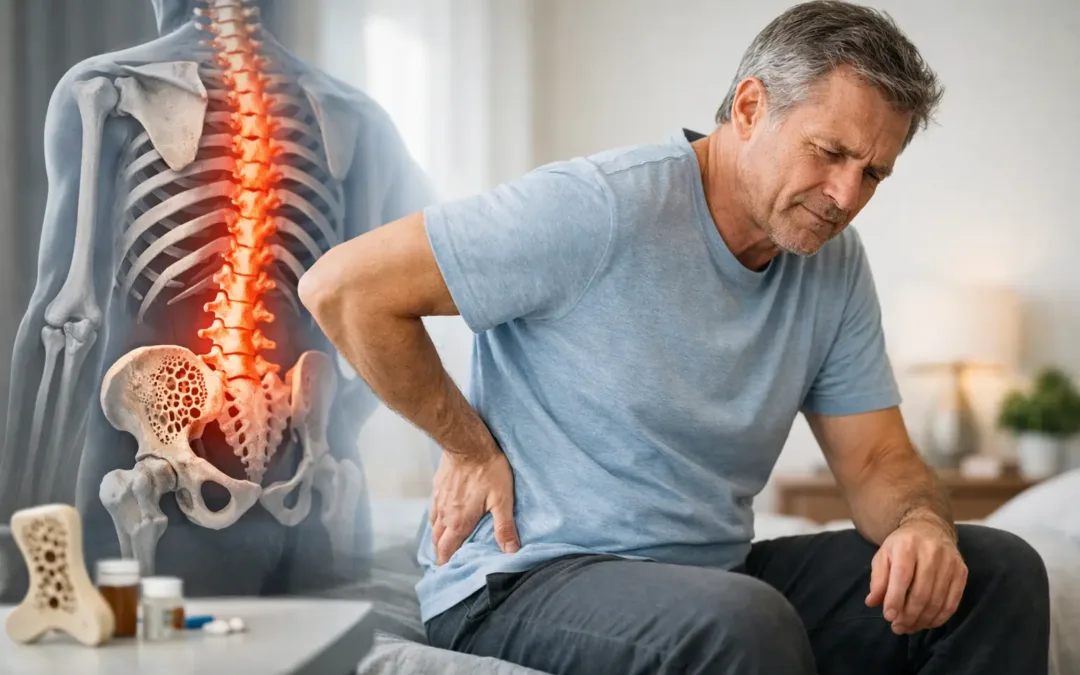
A man can lose bone strength for years without feeling a thing - then a minor fall, a hard landing, or even a forceful twist leads to a fracture. Male osteoporosis risk is often overlooked because osteoporosis has long been framed as a women’s health issue. But men get osteoporosis too, and when a hip or spine fracture happens later in life, the loss of mobility and independence can be serious.
The good news is that bone loss is not something you simply have to accept with age. Knowing your risk factors, getting tested when it makes sense, and training and eating with your bones in mind can help you stay stronger for the long haul.
Why Male Osteoporosis Risk Gets Missed
Osteoporosis means bones have become less dense and more fragile, raising the chance that they break from a fall or force that would not normally cause a fracture. It often develops quietly. You do not feel your bone density dropping in the way you might notice shortness of breath or knee pain.
Men generally start adulthood with larger, denser bones than women, which offers some protection earlier in life. But bone remodeling never stops. As men age, the balance can shift: the body breaks down old bone faster than it builds new bone. Declining testosterone, lower activity levels, chronic illness, weight loss, and certain medications can speed up that process.
A fracture is sometimes the first warning sign. Vertebral compression fractures in the spine may cause sudden back pain, a loss of height, or a more rounded upper back. Other men have no obvious symptoms until they fracture a wrist, hip, rib, or vertebra after a low-impact fall.
Who Has a Higher Risk of Osteoporosis?
Age matters. Men 70 and older should talk with a clinician about bone-density screening even if they feel healthy. Men ages 50 to 69 may need testing sooner when they have risk factors or have already had a fracture from a minor fall.
Low testosterone deserves special attention. Testosterone helps support bone formation, so hypogonadism can contribute to thinning bones over time. Symptoms such as reduced libido, fewer morning erections, fatigue, loss of muscle mass, infertility, or unexplained low bone density are reasons to discuss hormone testing with a medical professional. Testosterone treatment is not automatically the answer, and it should never be started solely on the basis of symptoms. But identifying a real hormone deficiency can reveal a treatable cause of bone loss.
Several other factors raise male osteoporosis risk:
- A previous fracture after age 50, especially from a standing-height fall or less
- Long-term corticosteroid use, such as prednisone, as well as some seizure medicines and cancer treatments
- Prostate cancer treatment that lowers testosterone, often called androgen-deprivation therapy
- Smoking, heavy alcohol use, very low body weight, or a diet consistently low in protein and nutrients
- Conditions that affect nutrient absorption or hormones, including celiac disease, inflammatory bowel disease, overactive thyroid, rheumatoid arthritis, kidney disease, liver disease, and diabetes
- A parent who had a hip fracture or a personal history of frequent falls
Not every medication or health condition carries the same level of risk. For example, a short steroid prescription for a bad sinus infection is different from taking oral steroids for months. This is why your full medication list and medical history matter when deciding whether to screen.
When to Ask for a Bone Density Test
The standard test is a DEXA scan, a quick, low-radiation scan that typically measures bone density at the hip and lower spine. It does not require needles, and the test itself is usually painless. Your clinician may also use a fracture-risk calculator along with your age, weight, smoking history, prior fractures, and other factors to estimate your odds of a major fracture over the next decade.
Do not wait for a dramatic injury if you have a clear risk factor. Bring up bone health if you are 70 or older, have broken a bone after age 50, take long-term steroid medication, receive treatment that suppresses testosterone, or have signs of low testosterone or a condition that affects absorption.
A DEXA result may show normal bone density, osteopenia, or osteoporosis. Osteopenia means bone density is lower than ideal but does not always mean medication is needed. Your actual fracture risk determines the next move. A fit man with mild bone loss and no other risks may focus on lifestyle changes and follow-up testing, while someone with a spine fracture or very low density may benefit from prescription treatment.
Build a Bone-Smart Training Plan
Your skeleton responds to the forces you place on it. That makes exercise one of the most practical tools for protecting bone, but not all workouts provide the same stimulus.
Weight-bearing activity is useful because your bones support your body weight. Brisk walking, stair climbing, jogging, hiking, tennis, and recreational basketball can all help. Higher-impact activity may stimulate bone more than casual walking, but it is not right for everyone. If you have osteoporosis, joint pain, balance problems, or a history of fractures, ask your clinician or physical therapist what impact level is safe.
Strength training is equally valuable. Squats to a chair, rows, presses, lunges, deadlifts with appropriate form, and loaded carries challenge muscles and bones while improving the strength needed to prevent falls. Start with manageable resistance and progress gradually. Technique beats ego lifting, especially if you have back pain or known low bone density.
Balance and mobility work are not glamorous, but they can prevent the fall that causes the fracture. Practice single-leg stands while holding a stable surface, include controlled step-ups, and keep ankle and hip mobility in your routine. For men who sit most of the day, simply moving more often is a strong first step.
Eat for Bone Strength, Not Just Muscle
Protein supports muscle and bone, particularly as you get older. Many men focus on protein for physique goals but overlook the rest of the equation. Calcium and vitamin D are essential, and inadequate intake is common when diets lack dairy, fortified foods, leafy greens, canned fish with bones, or other calcium-rich options.
For most adult men, the daily calcium target is 1,000 milligrams, increasing to 1,200 milligrams after age 70. Vitamin D needs vary based on age, sun exposure, diet, skin tone, body weight, and blood levels. Rather than taking megadoses on your own, ask your clinician whether a blood test or supplement plan is appropriate. Too much supplemental calcium or vitamin D can create problems, especially for men with kidney disease or a history of kidney stones.
Aim for regular meals built around protein, produce, and minimally processed foods. Extreme dieting, repeated crash cuts, and heavy alcohol intake can work against bone health even if your gym performance looks solid for a while. If you are losing weight after 50, protect muscle with resistance training and adequate protein instead of relying only on severe calorie restriction.
Protect Your Bones From Everyday Setbacks
Smoking damages more than your lungs and circulation. It is also linked with poorer bone health and slower healing after fractures. Quitting is one of the most meaningful long-term moves you can make.
Alcohol is another area where moderation matters. Heavy use can interfere with nutrition, hormones, balance, and bone remodeling, while also increasing the chance of falls. If drinking is part of your routine, be honest about how much and how often.
Finally, make your environment work for you. Good lighting, stable footwear, corrected vision, and attention to medications that cause dizziness can lower fall risk. This becomes more relevant with age, but a preventable injury can derail training, work, and independence at any stage of adulthood.
Bone health is a long game, but the next step is straightforward: if you have risk factors, a past low-impact fracture, or concerns about testosterone or long-term medications, bring male osteoporosis risk up at your next checkup. A simple conversation now can help protect the strength you count on for decades.
This article contains general information about medical conditions and treatments. The information is not advice, and should not be treated as such. Click here for further information.

