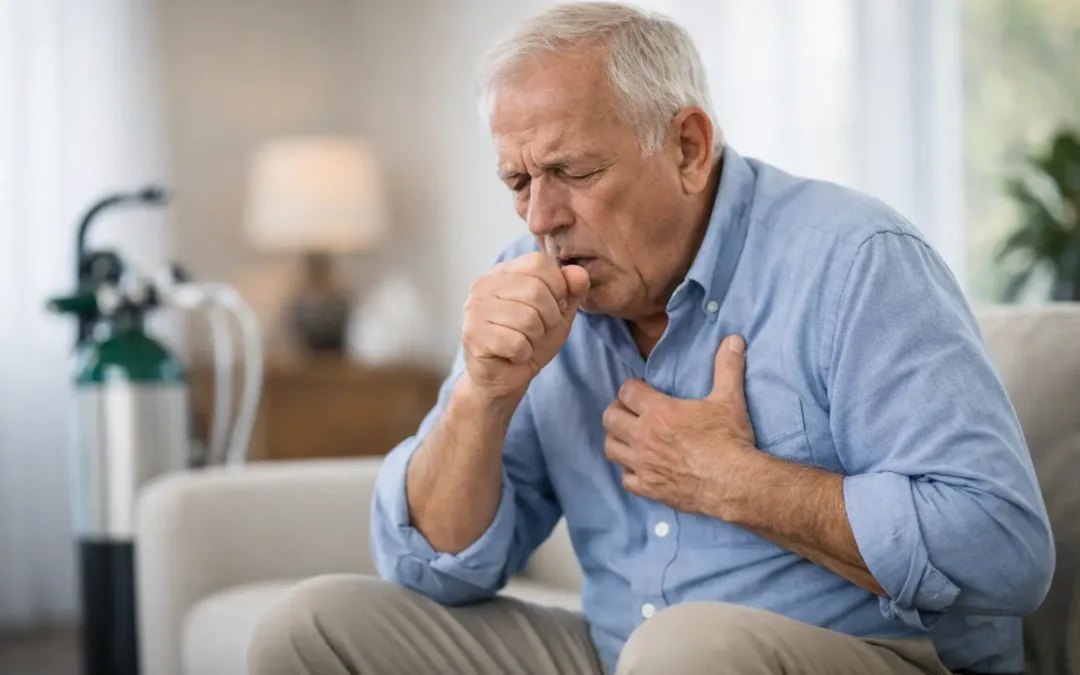
A man may write off getting winded while carrying groceries, climbing stairs, or keeping pace on a walk as simply getting older. But when breathlessness starts shrinking what he can do, it deserves a closer look. COPD symptoms in older men often build gradually, which makes them easy to overlook until daily life, fitness, sleep, and independence are affected.
COPD, or chronic obstructive pulmonary disease, is a long-term condition that restricts airflow in and out of the lungs. It commonly includes emphysema and chronic bronchitis. Cigarette smoking is the leading cause, but not the only one. Years of secondhand smoke, workplace dust or chemical exposure, air pollution, and certain genetic factors can also contribute.
For men who have spent decades working, exercising, providing for family, and pushing through discomfort, acknowledging a breathing problem can feel frustrating. The productive move is not to tough it out. It is to find out what is driving the symptoms and protect the lung function you still have.
Common COPD Symptoms in Older Men
The hallmark symptom is shortness of breath, especially during activity. At first, it may only show up during hard exercise or uphill walking. Over time, a man may notice he has to stop midway up a flight of stairs, pause while mowing the lawn, or avoid activities he once handled easily.
A persistent cough is another common sign. Some men have a dry, nagging cough, while others regularly bring up mucus or phlegm. Coughing most days for months is not something to dismiss as a normal part of aging, particularly with a current or past smoking history.
Wheezing, chest tightness, and a feeling that it is difficult to fully exhale can also occur. COPD tends to make breathing out harder because damaged or inflamed airways narrow and the lungs can trap air. This can create the uncomfortable sense of not being able to get enough air even after taking a deep breath.
Other symptoms can be less obvious. Low energy, reduced stamina, poor sleep, frequent chest colds, and slower recovery after activity may all be part of the picture. Some men lose weight or muscle as the work of breathing increases and activity levels drop. Others become less active and gain abdominal weight, which can make breathing feel even more difficult.
Why Symptoms Can Look Different After 60
Age does not cause COPD, but aging can make its impact more noticeable. The lungs and chest wall naturally become less flexible with time, and many older men also have heart disease, diabetes, sleep apnea, arthritis, or reduced muscle strength. These issues can overlap with COPD and make fatigue or breathlessness harder to sort out.
That overlap is why self-diagnosis is risky. Shortness of breath can also signal heart failure, coronary artery disease, anemia, a blood clot in the lung, pneumonia, or medication side effects. A new or worsening breathing problem needs a medical evaluation instead of an assumption that it is “just COPD” or “just age.”
Men can also underestimate symptoms because they quietly adjust their routines. They take the elevator instead of the stairs, stop playing pickup sports, avoid long walks, or let a partner handle tasks that now leave them winded. Those changes may feel practical, but they can hide a real decline in capacity.
COPD and Physical Performance
COPD is not only a lung issue. When breathing becomes harder, men often move less. Less movement leads to weaker leg and core muscles, lower endurance, poorer balance, and less confidence with activity. That loss of conditioning can then make ordinary exertion feel even more difficult.
The goal is not to force intense workouts through severe breathlessness. It is to get the condition assessed and follow a plan that keeps the body active safely. Pulmonary rehabilitation, when recommended, combines supervised exercise, breathing strategies, and education. Many men find it helps them regain function and feel more in control of their day.
Warning Signs That Need Prompt Care
A routine appointment is appropriate for an ongoing cough, recurring wheezing, declining exercise tolerance, or frequent mucus production. But some symptoms call for urgent medical attention, especially in a man with known lung or heart disease.
Seek emergency help for severe or sudden shortness of breath, chest pain or pressure, confusion, fainting, blue or gray lips or fingertips, or trouble speaking in full sentences because of breathing. Coughing up blood also needs prompt evaluation.
For men already diagnosed with COPD, an exacerbation, often called a flare-up, can become serious quickly. Warning signs include a clear increase in breathlessness, more coughing, thicker or discolored mucus, fever, or needing to use rescue medication more often than usual. Early treatment can sometimes prevent a hospital stay, so it pays to have a written action plan from your clinician.
How COPD Is Diagnosed
A clinician will ask about symptoms, smoking and work history, past lung infections, and family history. The main test is spirometry, a breathing test that measures how much air you can forcefully exhale and how quickly you can do it. It is straightforward, noninvasive, and essential for confirming COPD.
A chest X-ray or CT scan may be used to look for other problems or assess lung changes, but imaging alone does not diagnose COPD. Blood tests, oxygen measurements, and heart testing may also be considered depending on your symptoms and overall health.
Be honest about smoking, vaping, marijuana use, and occupational exposures. The point is not judgment. It is getting the clearest possible picture so the treatment matches the problem.
What Helps Men Manage COPD Better
There is no cure for COPD, but there is a lot that can be done to slow progression, reduce flare-ups, and improve day-to-day breathing. The right plan depends on symptom severity, test results, flare-up history, and other health conditions.
Stopping smoking is the single most powerful step for anyone who still smokes. It can be difficult, particularly after decades of habit, but quitting at any age benefits lung and heart health. Prescription medications and counseling support can raise the odds of success. Avoiding secondhand smoke and lung irritants matters too.
Inhaled medications may help relax airways, reduce inflammation, or both. Some are used every day to prevent symptoms; others are rescue inhalers for sudden breathlessness. Use them exactly as prescribed and ask a pharmacist, nurse, or clinician to check your inhaler technique. A medication cannot work well if most of it ends up in the mouth instead of the lungs.
Physical activity remains valuable, but the best approach is controlled and consistent. Walking, stationary cycling, light strength work, and mobility training can support stamina and muscle mass. Start at a level you can tolerate, use prescribed oxygen if your clinician recommends it, and stop for chest pain, dizziness, or severe breathlessness.
Nutrition matters as well. Men with COPD may need enough protein and calories to preserve muscle, while men carrying extra weight may benefit from gradual weight loss that reduces strain on breathing. There is no one-size-fits-all diet, especially if diabetes, kidney disease, or heart disease is also in the mix.
Vaccinations are another practical defense. Respiratory infections can hit harder with COPD, so staying current on recommended flu, COVID-19, pneumococcal, and other age-appropriate vaccines can lower the chance of a serious illness.
Do Not Let Breathlessness Set the Rules
COPD can change how a man trains, works, travels, sleeps, and shows up for the people he cares about. It does not have to mean giving up on strength, independence, or an active life. The earlier symptoms are evaluated, the more options you have to protect your lungs and keep doing what matters to you.
If climbing stairs, walking the dog, or finishing a round of errands now leaves you unusually winded, put a breathing checkup on the calendar. Taking action is not weakness. It is a practical decision to preserve your energy, mobility, and freedom for the years ahead.