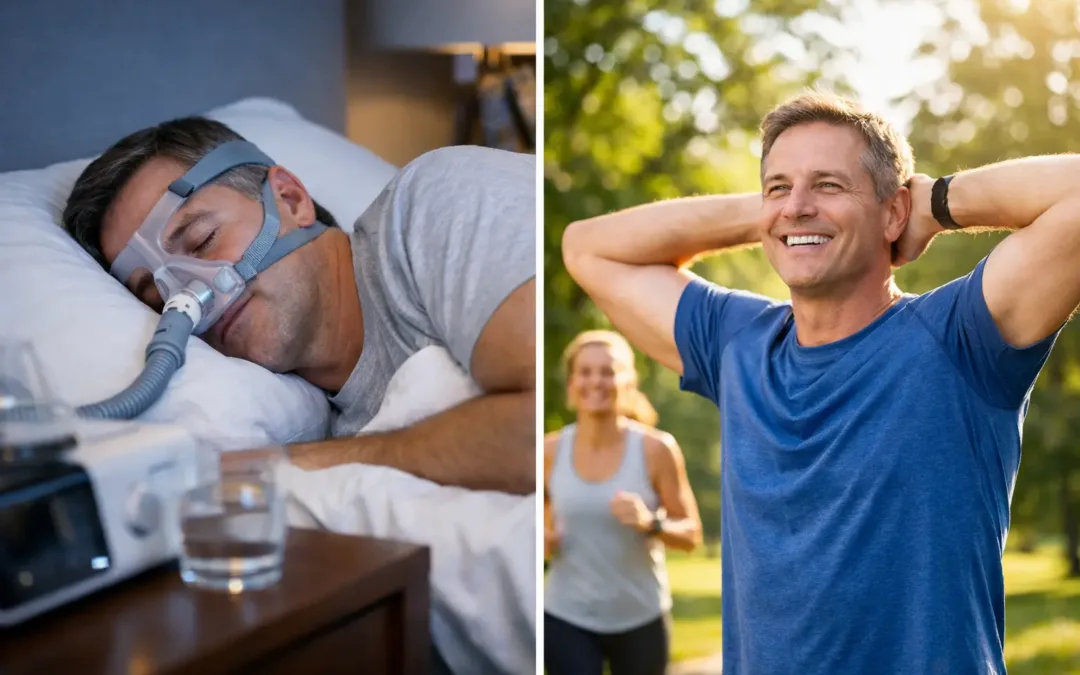
Waking up after eight hours in bed but feeling like you barely slept is not a toughness problem. For many men, it is the effect of sleep apnea: repeated breathing interruptions that strain the body all night long. Sleep apnea recovery is about more than stopping snoring. It is about restoring daytime energy, mental sharpness, workout capacity, blood pressure control, and the confidence that comes from feeling like yourself again.
The good news is that effective treatment can make a major difference. The realistic news is that recovery is usually a process, not a single great night of sleep. Your results depend on the type and severity of apnea, how consistently you use treatment, your weight and fitness, nasal health, medications, alcohol use, and other medical conditions.
What Sleep Apnea Recovery Actually Means
Obstructive sleep apnea, the most common type, happens when throat tissues relax during sleep and repeatedly narrow or block the airway. Your brain briefly wakes you to restart breathing, often without you remembering it. That cycle can happen dozens of times an hour.
Recovery means reducing those events enough that your sleep becomes truly restorative again. Many men first notice fewer morning headaches, less dry mouth, and fewer middle-of-the-night bathroom trips. Over time, they may see steadier energy, better concentration, improved mood, and less drowsiness behind the wheel or at work.
It can also support bigger health goals. Untreated sleep apnea is associated with high blood pressure, irregular heart rhythms, type 2 diabetes, weight gain, and cardiovascular disease. It can contribute to lower libido and erectile difficulties as well, although sexual function has many possible causes and deserves its own medical evaluation.
Do not judge recovery only by whether your partner says you snore less. Snoring may improve while breathing disruptions continue, and some men with significant apnea do not snore loudly at all. The goal is better breathing, better sleep quality, and better health markers.
Start Sleep Apnea Recovery With the Right Diagnosis
If you have not been tested, that is the first move. Common warning signs include loud habitual snoring, witnessed pauses in breathing, gasping awake, morning headaches, unexplained fatigue, irritability, high blood pressure, and sleepiness while driving. A home sleep test works well for many adults, while an in-lab sleep study may be better when symptoms are complex or another sleep disorder is suspected.
Your results usually include an apnea-hypopnea index, or AHI. This measures breathing disruptions per hour of sleep. The number helps guide treatment, but it is not the only number that matters. Oxygen levels, symptoms, heart risks, body anatomy, and treatment tolerance all affect the plan.
Give CPAP a fair adjustment period
Continuous positive airway pressure, commonly called CPAP, is often the most effective treatment for moderate to severe obstructive sleep apnea. It uses gentle air pressure to keep the airway open. For some men, the first few nights feel strange. That does not mean it is failing.
The right mask fit, humidity setting, pressure settings, and bedtime routine can turn CPAP from a frustrating device into a tool that protects your energy and health. Dryness, air leaks, nasal congestion, and a feeling of too much pressure are common problems with practical solutions. Report them early instead of quietly giving up.
Consistency matters more than perfection. Using CPAP only when you feel especially tired leaves untreated hours during the rest of the week. Many machines record usage, leaks, and estimated breathing events, giving your sleep clinician useful data to refine treatment.
Know when another treatment may fit
CPAP is not the only option. A custom oral appliance from a qualified dental sleep specialist can help some men with mild to moderate obstructive sleep apnea or those who cannot tolerate CPAP. Positional therapy may help men whose apnea is much worse while sleeping on their back.
In selected cases, surgery or upper-airway nerve stimulation may be considered. These options have potential benefits and trade-offs, so they require a careful discussion with a sleep specialist. Over-the-counter mouthpieces and anti-snoring gadgets are not reliable substitutes for diagnosed sleep apnea treatment.
Build the Habits That Support Better Sleep and Breathing
Treatment addresses the airway. Your daily choices can make that treatment more effective and improve how you feel during recovery.
If you carry extra weight, even a modest reduction can improve obstructive sleep apnea for some men, especially when fat around the neck and abdomen contributes to airway narrowing. But do not make the mistake of delaying treatment until you lose weight. You need quality sleep to train consistently, manage appetite, and recover from exercise in the first place.
Exercise is one of the best supporting tools. Aim for a mix of regular walking or other aerobic work plus strength training two or more days per week. Better cardiovascular fitness can improve stamina and metabolic health, while strength training helps preserve muscle during fat loss. Start where you are. A daily 20-minute walk is more useful than an ambitious plan you abandon after a week.
Alcohol deserves an honest look. Drinking in the evening relaxes airway muscles and can make apnea worse, particularly when combined with poor sleep position or sedating medications. You do not necessarily have to swear off alcohol forever, but reducing the amount and avoiding it close to bedtime is often a high-return experiment.
Also review sleep-disrupting substances with your clinician. Opioid pain medication, some sleep aids, and sedatives can worsen breathing problems in certain people. Never stop prescribed medication abruptly, but do make sure every prescriber knows you have sleep apnea.
Nasal congestion is another fixable barrier. Allergies, a deviated septum, chronic sinus problems, and frequent colds can make CPAP harder to use and encourage mouth breathing. Saline rinses, allergy treatment, humidification, or an evaluation by an ear, nose, and throat specialist may help, depending on the cause.
Testosterone is worth mentioning because it is a common concern for men dealing with fatigue and lower sex drive. Do not assume apnea-related tiredness means low testosterone, and do not self-treat with hormones. Testosterone therapy can worsen sleep apnea in some men, so men considering it should discuss sleep symptoms and current treatment with a qualified clinician.
Track Progress Beyond the First Week
Some men feel dramatically better after their first successful night on CPAP. Others improve in stages over several weeks or months, especially if they have been sleep-deprived for years. The brain and body need time to repay that sleep debt.
Pay attention to patterns: your afternoon energy, need for caffeine, morning blood pressure readings if you monitor them, gym performance, mood, and daytime sleepiness. If your machine data still shows frequent events or major mask leaks, bring that information to your follow-up appointment. A treatment that is technically being used may still need adjustment.
It is also possible to have persistent fatigue for reasons beyond apnea. Low iron, thyroid disorders, depression, diabetes, medication effects, insufficient sleep time, and other sleep conditions can all overlap. Good follow-up prevents you from blaming yourself or assuming you should just push harder.
When to Get Help Quickly
Do not drive when you are struggling to stay awake. Drowsy driving can be as dangerous as driving impaired, and untreated apnea raises the risk. Seek prompt medical care for chest pain, severe shortness of breath, fainting, or new neurological symptoms.
If you already use CPAP but have stopped because of discomfort, contact your sleep clinic rather than shelving the machine. A different mask style, pressure adjustment, heated tubing, or targeted treatment for congestion can be enough to get you back on track.
The strongest move is not trying to outwork exhaustion. It is treating the cause, using your equipment consistently, and giving your body the conditions it needs to rebuild. Better sleep is not a luxury or a reward after you have handled everything else. For many men, it is the foundation that makes everything else feel possible again.
This article contains general information about medical conditions and treatments. The information is not advice, and should not be treated as such. Click here for further information.