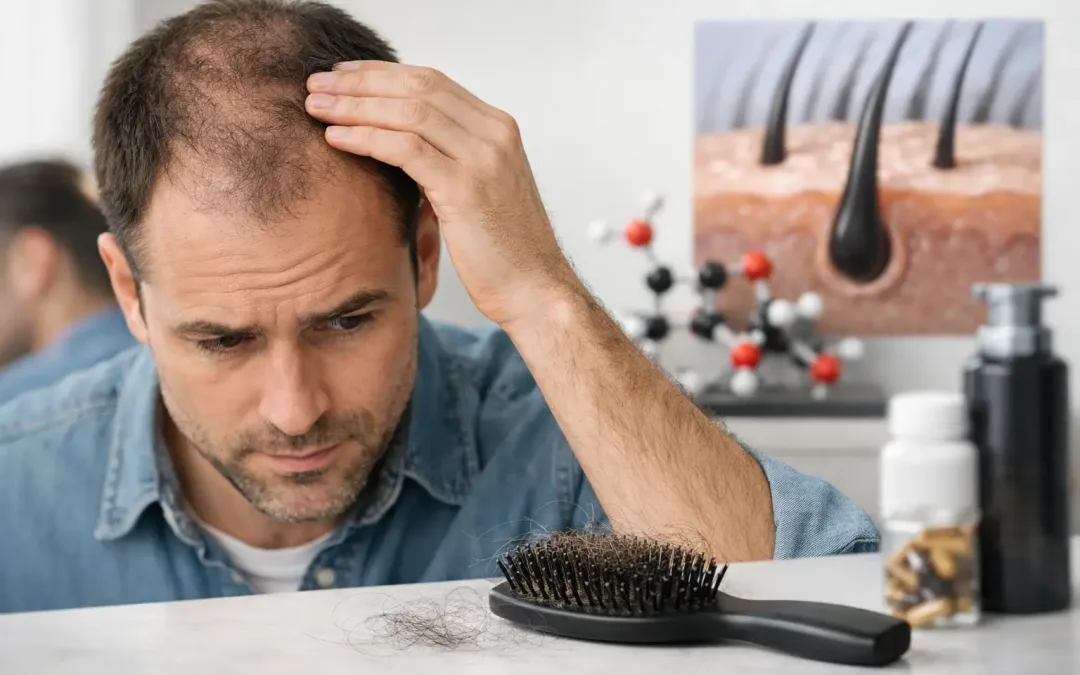
If you have started seeing more scalp in the mirror, more hair in the shower drain, or a thinner hairline in photos, you are not imagining it. Why do men lose hair is one of the most searched men’s health questions for a reason. Hair loss is common, often starts earlier than most guys expect, and can hit confidence hard even when overall health feels fine.
The good news is that hair loss is not one single problem. It usually comes down to a few clear causes, and the right next step depends on which one is driving it. For some men, it is mostly genetics. For others, stress, nutrition, illness, hormones, grooming habits, or certain medications can speed things up.
Why do men lose hair in the first place?
Most male hair loss happens because hair follicles gradually shrink over time. A follicle is the tiny structure in the scalp that grows each hair. When follicles shrink, hair grows back finer, shorter, and weaker. Eventually, some follicles stop producing visible hair at all.
In many men, this process is linked to genetics and a hormone called dihydrotestosterone, or DHT. DHT is made from testosterone. It is normal to have it, but some hair follicles are more sensitive to it than others. If your follicles are genetically sensitive, DHT can slowly shorten the hair growth cycle and miniaturize the follicle.
That is why male pattern baldness often follows a familiar pattern. It may start with a receding hairline, thinning at the crown, or both. Over time, the hair on top gets thinner while the sides and back stay stronger.
The most common reason men lose hair
By far, the biggest cause is androgenetic alopecia, better known as male pattern baldness. This is the classic hereditary form of hair loss. If your father, uncles, or grandfather lost hair, your odds are higher, although genetics can come from either side of the family.
Male pattern baldness can begin in the late teens or 20s, but it becomes more common with age. That does not mean every man will go bald, and it does not always move fast. Some men notice mild thinning for years. Others feel like it changes all at once over a short stretch.
The key thing to know is that male pattern hair loss is progressive. If it is starting, waiting too long can limit your options because treatments tend to work better at slowing loss and preserving existing hair than restoring hair that has been gone for years.
Other reasons why men lose hair
Not every thinning scalp is male pattern baldness. That matters, because some causes are temporary or reversible.
Stress and shock to the body
Physical or emotional stress can push more hairs than usual into the shedding phase. This is called telogen effluvium. It can happen after a high fever, surgery, major weight loss, severe illness, a crash diet, divorce, grief, or intense ongoing stress.
This kind of shedding usually shows up a few months after the trigger, which can make it easy to miss the connection. Hair often grows back once the body recovers, but it takes patience.
Poor nutrition and rapid dieting
Hair is not essential for survival, so when your body is low on key nutrients, it may shift energy away from hair growth. Low protein intake, iron deficiency, low zinc, vitamin D deficiency, and extreme calorie restriction can all play a role.
This is especially relevant for men who are cutting hard for weight loss, doing aggressive fasting, or following restrictive diets without enough planning. If your body is underfed, your hair may show it.
Hormonal and thyroid problems
Hormones affect hair growth more than many men realize. Low or high thyroid activity can cause diffuse thinning. Major hormone shifts can also affect shedding patterns. Testosterone itself is not automatically the villain, but its conversion to DHT is central in male pattern baldness.
If hair loss comes with fatigue, weight change, low mood, temperature sensitivity, or other unexplained symptoms, it is worth looking beyond the scalp.
Medical conditions and autoimmune causes
Some men lose hair because of scalp infections, inflammatory skin conditions, or autoimmune issues such as alopecia areata. Unlike male pattern baldness, alopecia areata often causes smooth, round patches of missing hair and can affect the beard too.
If the scalp is itchy, painful, flaky, red, or developing patchy bald spots, it is smart to get it checked instead of assuming it is normal aging.
Medications and treatments
Some prescription drugs can trigger shedding. Common examples include certain medications for blood pressure, depression, acne, gout, and chemotherapy drugs. Not every man reacts the same way, but if hair loss started after a new medication, timing matters.
Never stop a prescribed medication on your own. The better move is to talk with your doctor about whether the drug may be contributing and whether alternatives exist.
Smoking, sleep, and lifestyle wear and tear
Hair loss is not only about genes. Smoking may worsen circulation and increase oxidative stress. Poor sleep and chronically high stress hormones may also make shedding worse in some men. These are rarely the sole cause of male pattern baldness, but they can make a bad situation look worse.
Hairstyles and grooming habits
Tight braids, cornrows, man buns, or frequent tension on the hair can cause traction alopecia. Harsh bleaching, constant heat styling, or aggressive brushing can also damage hair shafts and make thinning more obvious.
This is a good example of how losing hair and breaking hair are not exactly the same thing, but both reduce hair density.
Why hair loss can start early
A lot of men assume baldness is something that starts in middle age. In reality, some guys notice recession in college or in their early 20s. Early onset hair loss usually points to a stronger genetic component, not poor hygiene or doing something wrong.
That said, early thinning can also be exaggerated by stress, under-eating, poor recovery, or heavy styling. When more than one factor is in play, the change can seem sudden.
How to tell what kind of hair loss you have
Pattern matters. A receding hairline and thinning crown usually suggest male pattern baldness. Diffuse shedding all over the scalp often points more toward stress, nutrition, illness, or thyroid issues. Round patches raise concern for alopecia areata. Redness, itching, and flakes suggest a scalp condition may be involved.
Photos help more than memory. If you compare pictures from six months ago to now, you can often spot whether the issue is gradual recession, widespread thinning, or breakage. That makes it easier to decide whether you are dealing with a classic pattern or something that needs medical evaluation.
What can men do about hair loss?
The best approach depends on the cause, but the main message is simple: act early.
For male pattern baldness, the goal is usually to slow down follicle shrinkage and preserve what you still have. Some men also pursue regrowth options, but results vary. It depends on how long the follicles have been miniaturized and how consistent treatment is.
If the issue is stress-related shedding or nutrition-driven loss, the solution is less about fighting DHT and more about fixing the trigger. That may mean eating enough protein, correcting iron or vitamin D deficiency, reducing crash dieting, sleeping better, and giving the body time to recover.
If a medication, thyroid issue, or autoimmune condition is involved, treatment has to address that root cause. This is why guessing can waste time.
When should you get checked?
You do not need to panic over a few hairs on your pillow. Normal shedding happens every day. But it is worth getting evaluated if you notice rapid thinning, patchy loss, scalp irritation, sudden heavy shedding, or hair loss along with fatigue, weight changes, or other health symptoms.
A doctor or dermatologist can often narrow it down based on the pattern, your timeline, medical history, and sometimes blood work. For men who want clear answers instead of internet guesswork, that step can save months of frustration.
Can hair loss be prevented?
You cannot completely outwork genetics, but you can avoid making hair loss worse. That means managing stress better, avoiding extreme diets, getting enough protein and micronutrients, sleeping well, not smoking, and being smarter with tight hairstyles and harsh treatments.
For men with a strong family history, prevention really means early awareness. The sooner you notice a change, the more options you usually have. Waiting until the scalp is clearly visible often makes the road harder.
Hair loss can feel personal, but it is also incredibly common. The right response is not denial or panic. It is figuring out which cause fits your pattern, then taking action while you still have room to protect your results. When you treat hair loss like any other health issue - early, directly, and without shame - you put yourself in a much stronger position.
This article contains general information about medical conditions and treatments. The information is not advice, and should not be treated as such. Click here for further information.