
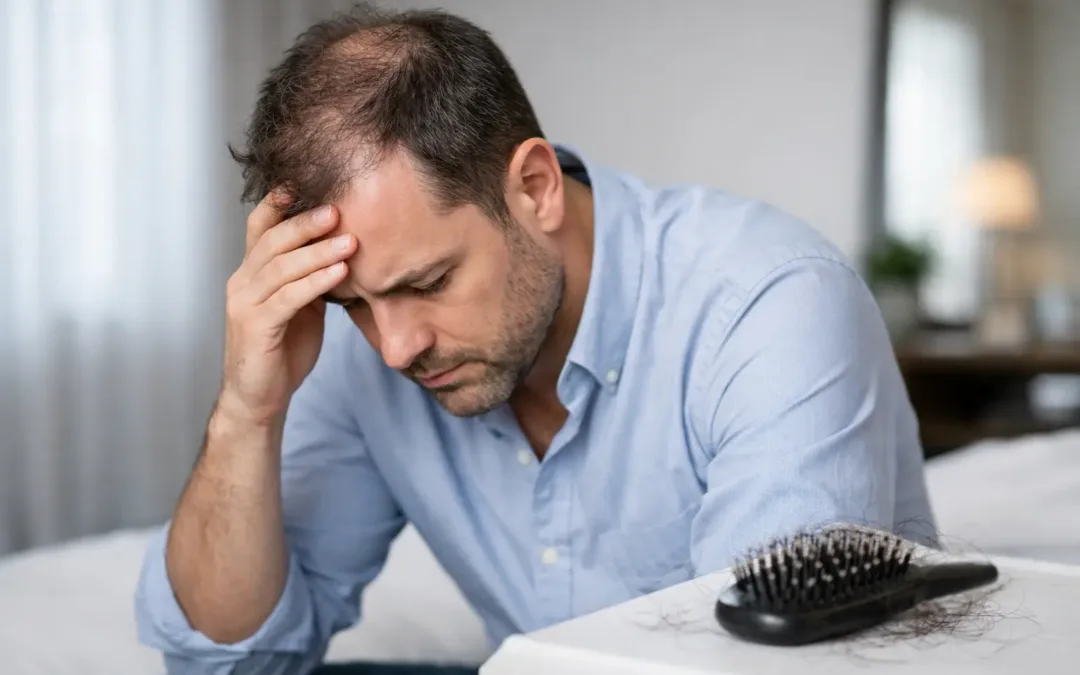
You notice more hair in the shower drain after a brutal month at work. Or maybe your barber points out thinning at the crown right after a divorce, a move, or a stretch of bad sleep. That is usually when the question hits hard: does stress cause hair loss in men, or was this going to happen anyway?
The honest answer is yes, stress can trigger hair loss in men. But it is not the only reason, and it does not affect every man the same way. In some cases, stress causes temporary shedding that can improve once the body settles down. In other cases, stress speeds up hair loss that was already in motion because of genetics, hormones, poor sleep, illness, or nutrition gaps.
That distinction matters. If you assume every shed hair is just stress, you may miss an underlying problem. If you assume it is all male pattern baldness, you may overlook something reversible.
Does stress cause hair loss in men or make it worse?
Stress can do both. It can directly push more hairs into a resting phase, which leads to increased shedding a few weeks or months later. It can also make existing hair loss look worse by piling onto other risk factors.
Men often think stress-related hair loss should happen instantly, like a switch flipping after a rough week. Usually it does not work that way. Hair grows in cycles. A major stressor such as illness, surgery, emotional trauma, overtraining, rapid weight loss, or chronic sleep deprivation can disrupt that cycle. Then the shedding shows up later, which is why the connection is easy to miss.
The most common stress-linked pattern is called telogen effluvium. That means more hairs than normal shift into the shedding phase. Instead of a receding hairline or a clearly defined bald spot, men usually notice more hair falling out all over the scalp. Hair may feel thinner overall, especially when wet or under bright light.
Stress can also worsen habits that hurt hair. Some men eat worse, sleep less, drink more alcohol, smoke more, or stop exercising during high-pressure periods. Those changes can raise inflammation, affect circulation, throw hormones off balance, and make recovery harder.
What stress-related hair loss usually looks like
Stress shedding tends to be diffuse. In plain terms, the hair looks thinner across the scalp rather than disappearing in one classic pattern. You might notice more hairs on your pillow, in your sink, or on your hands when shampooing.
Male pattern hair loss usually behaves differently. It often starts with recession at the temples, thinning at the crown, or both. That process is driven mostly by genetics and sensitivity to DHT, a hormone linked to shrinking hair follicles over time.
The tricky part is that both can happen together. A man genetically prone to male pattern baldness can go through a high-stress period and suddenly feel like his hair loss accelerated. Stress may not be the original cause, but it can turn a slow process into a more visible one.
Common stress triggers men overlook
Not all stress is emotional. Physical stress counts too, and men often underestimate it. A hard cut in calories, a bad infection, a demanding endurance training block, poor recovery, high fever, surgery, and even dramatic sleep loss can all stress the body enough to affect hair.
That matters for performance-focused men. Chasing fat loss, working long hours, training hard, and sleeping five hours a night might feel productive in the short term. Your hair may disagree.
Why stress affects the hair growth cycle
Hair follicles are active tissues. They respond to internal signals from hormones, inflammation, nutrient status, and the nervous system. When stress stays high, the body shifts priorities. Hair growth is not essential for survival, so it can take a back seat.
Stress hormones such as cortisol may play a role, though the exact biology is more complex than one hormone causing baldness. Ongoing stress can alter immune activity, increase inflammation, interfere with sleep quality, and affect eating patterns. Together, those changes can disrupt the normal growth phase of hair.
This is one reason stress management is not just about mental health. It has physical consequences men can see in the mirror.
When hair loss is probably not just stress
If your hairline is steadily moving back at the temples or the crown is gradually widening over years, genetics are more likely the main driver. If you have itching, redness, scaling, broken hairs, or patchy bald spots, stress alone is less likely to explain it.
Other causes worth considering include thyroid problems, iron deficiency, low protein intake, medication side effects, autoimmune conditions, scalp infections, and hormonal issues. Men who have recently had a serious illness or major weight change should also keep that in the picture.
Hair loss deserves more attention if it is sudden, severe, patchy, or paired with other symptoms like fatigue, major weight change, low libido, or changes in skin and nails. Those clues suggest it is time to look beyond stress.
What men can do if stress may be causing hair loss
The first move is not panic. Stress shedding is often temporary, but the timeline is slow. Hair may continue shedding for a while even after life calms down. Regrowth, when it happens, usually takes months, not days.
Start by tightening up the basics that support hair and overall recovery. Prioritize sleep. For a lot of men, this is the missing piece. If you are consistently under-sleeping, your body stays in a more stressed state and recovery suffers across the board.
Nutrition matters too. Hair is built from protein, and hair growth can suffer when calories or nutrients stay too low for too long. If you have been crash dieting, skipping meals, or living on convenience food, fixing that is not cosmetic vanity. It is basic repair work.
Exercise helps, but there is a sweet spot. Regular training can lower stress and support better metabolic health. Overtraining without enough recovery can do the opposite. If your body is already run down, piling on more intensity is not always the answer.
If the stress is emotional, address it directly. That may mean counseling, better boundaries at work, meditation, time off, breathing exercises, or cleaning up the routines that keep your nervous system switched on all day. Men often wait until the signs become visible before taking stress seriously. Hair loss can be that sign.
Should you use hair loss treatments?
It depends on what is driving the problem. If stress triggered a temporary shedding episode, the main treatment is usually giving the body what it needs to recover while ruling out other causes. If you also have male pattern hair loss, a clinician may discuss treatments aimed at preserving follicles.
The key is not to self-diagnose too confidently. Stress can be part of the story without being the whole story.
When to talk to a doctor about stress and hair loss
If shedding lasts more than a few months, gets dramatically worse, or comes with patchy bald areas, scalp symptoms, or other body-wide symptoms, get checked. A doctor or dermatologist can look at the pattern, review your health history, and order labs if needed.
This step is especially smart for men over 40, since hair changes can overlap with broader health shifts. Low iron, thyroid issues, medication effects, and other treatable problems can be missed when everything gets blamed on stress.
For some men, the bigger win is not just saving hair. It is catching a health issue early.
The bottom line on does stress cause hair loss in men
Yes, stress can cause hair loss in men, most often by triggering increased shedding rather than permanent baldness. But stress is rarely the only factor worth looking at. Genetics, hormones, sleep, diet, illness, and lifestyle all shape what happens on your scalp.
The practical move is to treat hair loss like useful feedback. If your body is under pressure, your hair may show it before other systems do. Clean up recovery, improve sleep, eat enough quality food, and get evaluated if the pattern is severe or persistent. That approach helps your hair, but more importantly, it helps you stay in better shape for the long run.
This article contains general information about medical conditions and treatments. The information is not advice, and should not be treated as such. Click here for further information.

