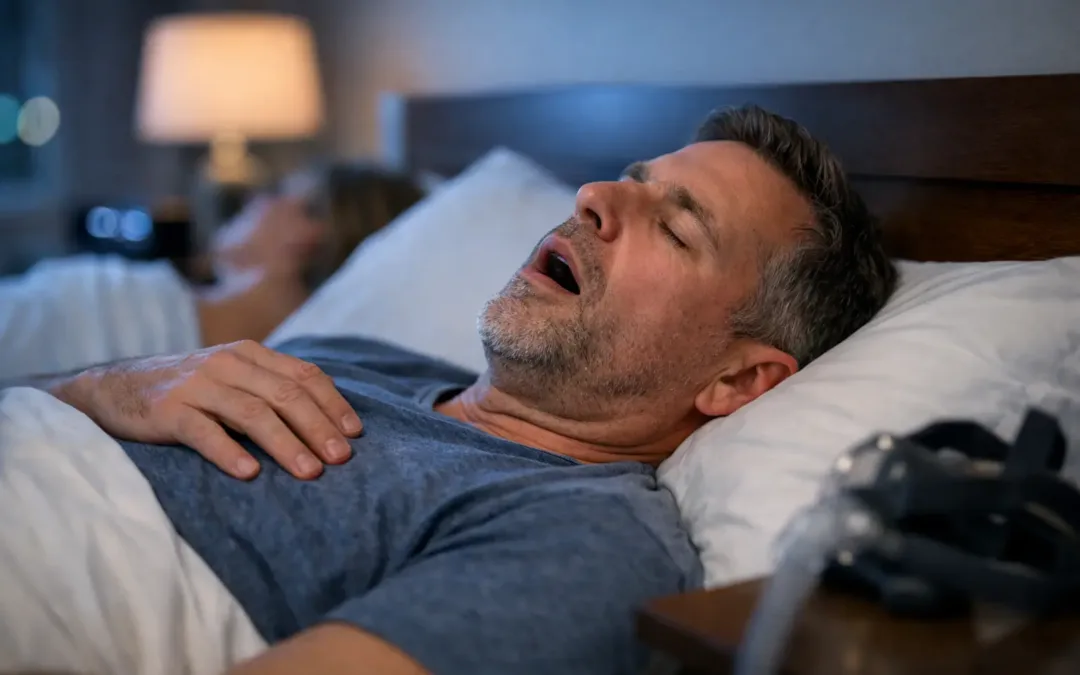
A lot of men shrug off bad sleep as part of getting older, working hard, or carrying extra stress. But sleep apnea symptoms in men often show up long before a diagnosis, and they can hit more than just your energy. They can affect your blood pressure, your mood, your workouts, your focus at work, and even your sex life.
That is what makes this condition worth paying attention to. Obstructive sleep apnea is common, underdiagnosed, and easy to dismiss because many of the signs build gradually. You may not notice them at night, but your body notices every time your breathing pauses and your sleep gets broken up.
Common sleep apnea symptoms in men
The classic sign is loud, chronic snoring, especially if it is paired with choking, gasping, or long pauses in breathing during sleep. In many cases, a partner notices this first. Snoring alone does not always mean sleep apnea, but snoring plus breathing pauses is a strong warning sign.
Daytime fatigue is another major clue. This is not just feeling a little tired after a late night. Men with sleep apnea often sleep for what seems like a full night and still wake up exhausted. They may rely on caffeine, feel sleepy during meetings, struggle through workouts, or get drowsy while driving.
Morning headaches are also common. When breathing repeatedly drops during sleep, oxygen levels can dip and sleep quality takes a hit. That can leave you waking up with a dull, heavy headache that improves later in the day.
Dry mouth or a sore throat in the morning can point in the same direction, especially if you breathe through your mouth at night. Restless sleep, frequent waking, and getting up to urinate more than expected can also be part of the picture.
Signs men often miss or explain away
Not every symptom sounds like a sleep disorder. That is one reason so many men delay getting checked.
One of the most overlooked issues is brain fog. Sleep apnea can make you feel mentally slower, less sharp, and more forgetful. You may have trouble concentrating, lose patience faster, or feel like your reaction time is off. Some men describe it as always running on low battery.
Mood changes can show up too. Poor sleep can raise irritability, increase stress sensitivity, and make anxiety or depression worse. If your fuse feels shorter than it used to, poor overnight breathing may be part of the reason.
Lower sex drive and erectile dysfunction are also linked to sleep apnea. That catches many men off guard. Broken sleep, lower oxygen, hormone disruption, and higher cardiovascular stress can all work against sexual performance. If snoring, fatigue, and erectile issues are showing up together, it is smart to think beyond just testosterone or stress.
Performance in the gym can slip as well. Recovery may get worse, motivation may drop, and body composition can become harder to manage. Men sometimes blame age or a stalled routine when the real issue is that their sleep is never truly restorative.
Why sleep apnea symptoms in men can look different
Men are generally more likely than women to be diagnosed with obstructive sleep apnea, and some of the patterns are more obvious. Loud snoring, witnessed breathing pauses, and daytime sleepiness are especially common. Men also tend to carry more weight around the neck and abdomen, which can increase airway collapse during sleep.
That said, not every man with sleep apnea fits the stereotype of an older overweight snorer. Some men are lean, younger, and physically active but still have the condition because of jaw structure, nasal obstruction, large tonsils, alcohol use, or family history. If you think you are too fit or too young for sleep apnea, that assumption can delay answers.
Age matters, but it is not the whole story. Risk tends to rise after 40, especially with weight gain, rising blood pressure, or metabolic issues. Still, men in their 20s and 30s can absolutely develop it too.
What causes these symptoms
In obstructive sleep apnea, the airway narrows or collapses during sleep, which temporarily reduces or stops airflow. Your brain senses the problem and briefly wakes you just enough to reopen the airway. These arousals may happen dozens of times per hour, even if you do not remember them.
The result is a double hit. First, your sleep gets fragmented, so you miss the deeper stages that support recovery, hormone balance, and mental sharpness. Second, your oxygen levels may drop again and again, which puts stress on the heart and blood vessels.
That is why untreated sleep apnea is tied to more than snoring. It is associated with high blood pressure, heart rhythm problems, insulin resistance, weight gain, and reduced quality of life. It can also make it harder to improve other areas of health because your body is working against you every night.
When snoring is more than snoring
A lot of men snore occasionally, especially after drinking alcohol, sleeping on their back, or dealing with congestion. That does not always mean apnea. The concern goes up when snoring is frequent, loud, and paired with other symptoms.
Pay closer attention if your partner notices pauses in breathing, if you wake up gasping, or if you feel tired despite spending enough time in bed. Add in high blood pressure, obesity, type 2 diabetes, or erectile dysfunction, and the case gets stronger.
There is also a safety angle. If you are nodding off while driving, having trouble staying alert at work, or making more mistakes than usual, this is no longer just an annoying sleep issue. It is affecting function and potentially putting you and others at risk.
Who is at higher risk
Some risk factors are well known. Excess body weight is a big one, especially if you carry fat around the neck or midsection. A thicker neck can mean more pressure around the airway. Alcohol and sedatives can worsen airway collapse by relaxing throat muscles.
Nasal blockage, smoking, and poor sleep position can contribute too. Family history matters, and so does anatomy. A small jaw, recessed chin, enlarged tonsils, or certain airway shapes can raise risk even in men who are not overweight.
Men with high blood pressure, atrial fibrillation, type 2 diabetes, low testosterone symptoms, or stubborn fatigue should have sleep apnea on the radar. It often travels with other health issues, and treating it may help improve more than sleep.
What to do if these symptoms sound familiar
If you recognize several of these signs, the next move is simple: get evaluated. Start by telling a primary care clinician exactly what is happening. Mention snoring, witnessed pauses, gasping, daytime sleepiness, morning headaches, and any sexual or mood changes. Specific details help.
A sleep study is often the key step. Some men complete an at-home sleep test, while others need a lab-based study for a clearer picture. Which one makes sense depends on your symptoms, medical history, and whether other sleep problems might be involved.
Treatment depends on the cause and severity. CPAP is the best-known option and works very well for many men, but it is not the only path. Oral appliances can help in some cases. Weight loss, reducing alcohol near bedtime, side sleeping, treating nasal congestion, and improving sleep habits may also make a meaningful difference. If anatomy plays a major role, some men need an ENT evaluation or other targeted treatment.
The trade-off is that no single fix works for everyone. Mild cases may improve a lot with lifestyle changes, while moderate to severe sleep apnea usually needs more direct treatment. The goal is not just quieter sleep. It is better breathing, better recovery, and lower long-term health risk.
Why acting early pays off
Men often push through fatigue and normalize poor sleep for years. That mindset can cost you. Untreated sleep apnea can chip away at energy, discipline, motivation, and cardiovascular health in a way that feels gradual enough to ignore.
The upside is that many men feel a real difference once the problem is addressed. Better focus, steadier energy, improved blood pressure, fewer headaches, and stronger sexual health are all realistic benefits. For a site like Male Health Zone, that matters because this is not just about sleep. It is about protecting performance across your whole life.
If your nights are loud, your mornings are rough, and your days feel harder than they should, listen to that pattern. Catching sleep apnea early is one of those moves that can improve how you function now while protecting your future health at the same time.
This article contains general information about medical conditions and treatments. The information is not advice, and should not be treated as such. Click here for further information.