
If you leak a little after using the bathroom, feel a drop in erection quality, or notice less control during workouts, your pelvic floor may be part of the issue. Pelvic floor exercises men often overlook can make a real difference in bladder control, sexual function, and core stability - but only if you’re doing the right muscles, not just clenching everything in sight.
A lot of men hear “Kegels” and tune out. That’s usually because pelvic floor training gets framed as something only women need after pregnancy. In reality, men have a pelvic floor too, and it matters more than most realize. These muscles form a sling at the base of the pelvis and help support the bladder and bowel, control urine flow, and contribute to erections and ejaculation.
When this area is weak, poorly coordinated, or always tense, problems can show up in ways that feel unrelated at first. You might notice dribbling after urination, more urgency, reduced sexual confidence, or a sense that your core is not as solid as it used to be. For some men, especially after prostate surgery, pelvic floor work becomes a key part of recovery. For others, it’s less about rehab and more about maintaining performance as they get older.
Why pelvic floor exercises men use can help
The pelvic floor does not work in isolation. It teams up with your diaphragm, deep abdominal muscles, lower back, and hips to manage pressure and support movement. That means this is not just about squeezing a hidden muscle. It is about better control.
When these muscles contract and relax well, they help close the urethra, which improves bladder control. They also play a role in blood flow and pressure around the base of the penis, which is why targeted training may help some men improve erection firmness and ejaculatory control. If you lift weights, run, or play sports, a well-functioning pelvic floor can also support your trunk during effort.
The trade-off is that more tension is not always better. Some men assume they should clamp down hard all day long. That can backfire. An overly tight pelvic floor can contribute to pelvic pain, trouble starting urination, constipation, and discomfort during sex. Good training builds both strength and relaxation.
How to find the right muscles
This is where most men go wrong. They tighten the glutes, hold their breath, brace their abs hard, or squeeze their thighs together. That is not the same thing.
A better way to identify the pelvic floor is to imagine you are trying to stop passing gas and gently stop urine flow at the same time. The feeling should be a subtle lift inward, not a full-body strain. Your butt, legs, and stomach should stay relatively relaxed, and you should still be breathing.
You can also test awareness during urination once or twice by briefly trying to stop the stream mid-flow, but do not make a habit of using this as the exercise itself. It is only a check to help you find the muscles. Repeatedly practicing during urination can interfere with normal bladder emptying.
If you cannot feel the muscles at all, that does not mean you are failing. It usually means coordination needs work first. Start gently. Think precision, not force.
Pelvic floor exercises men can start with
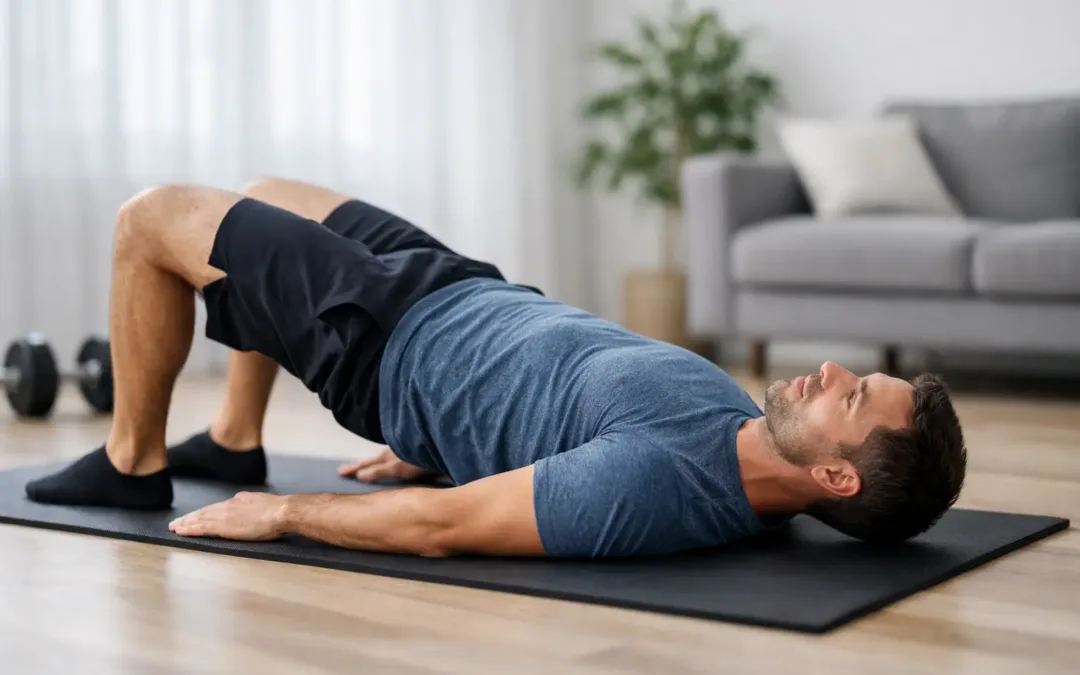
The best starting point is usually a basic contraction done with control. Lie on your back with knees bent, or sit upright in a chair. Inhale normally. As you exhale, gently lift the pelvic floor for about 3 seconds, then fully relax for 3 to 5 seconds. Aim for 8 to 10 reps.
If that feels easy and you are not recruiting your glutes or abs, build to 5-second holds. Over time, work toward 10 slow, controlled contractions. Quality matters more than chasing a high number.
You should also add quick contractions. These help with sudden pressure changes like coughing, laughing, or lifting. Tighten and lift the pelvic floor for 1 second, then relax fully for 1 second. Do 10 reps.
A practical routine for beginners is one round of slow holds and one round of quick contractions, once or twice a day. That is enough to build consistency without turning it into another thing you quit after three days.
Add breathing, not strain
One of the most useful upgrades is pairing the contraction with an exhale. Breathing out helps reduce pressure and often makes it easier to engage the right muscles. If you hold your breath, bear down, or feel pressure pushing downward, reset and go lighter.
Progress beyond lying down
Once you can do the basics well, practice in sitting and standing. Real life happens upright, not flat on your back. Standing work is harder because gravity and daily movement challenge the muscles more.
You can also apply the skill before activities that usually trigger leaks or pressure. For example, gently contract before a cough, sneeze, or heavy lift. This is sometimes called bracing with control rather than just bracing hard.
Common mistakes that waste your effort
The biggest mistake is squeezing too hard. These are relatively small muscles. Max effort usually brings in the wrong helpers.
The second mistake is skipping the relaxation phase. If you only contract and never let go, you are training tension, not function. That can be part of the problem instead of the solution.
The third mistake is expecting overnight results. Like any form of muscle training, this takes repeated practice. Some men notice changes in a few weeks, but 6 to 12 weeks is a more realistic window for meaningful improvement.
Another common issue is doing pelvic floor work while your bladder is full or using urination as your workout. Keep the practice separate. And if you feel pelvic pain, burning, or increased urgency getting worse, do not just push through it.
When pelvic floor exercises help most
Pelvic floor training can be especially useful if you deal with post-void dribbling, urinary urgency, mild stress incontinence, or reduced pelvic control after prostate procedures. Some men also find that better pelvic floor coordination improves confidence with erections and orgasm control.
That said, results depend on the cause. If erectile dysfunction is mainly driven by diabetes, poor circulation, medication side effects, low testosterone, or psychological stress, pelvic floor work may help a little or only as part of a bigger plan. The same goes for urinary symptoms caused by an enlarged prostate. Exercise can support function, but it does not replace a proper diagnosis.
This is where a straightforward mindset helps. Pelvic floor exercises are not magic, but they are low-cost, low-risk, and worth doing when the issue fits.
When men should get professional help
If you have persistent leakage, pelvic pain, constipation, painful ejaculation, trouble emptying your bladder, or symptoms after prostate surgery, it is smart to talk with a doctor or a pelvic floor physical therapist. A weak pelvic floor and an overactive pelvic floor can feel surprisingly similar, and the treatment is not the same.
That matters because some men do better with relaxation work, hip mobility, and breathing drills before they ever add strengthening. Others need both. Guessing can keep you stuck longer.
For men over 40, this is also a reminder not to blame everything on aging. Changes in bladder control or sexual performance can be an early sign that something else deserves attention, including prostate issues, nerve problems, or metabolic health.
How to make the habit stick
Keep it simple enough that you will actually do it. Attach the routine to something already built into your day, like after brushing your teeth or before your workout. Do not turn it into a 30-minute project.
It also helps to think bigger than symptom relief. Better pelvic floor function supports control, confidence, and performance. That is a useful frame for any man trying to stay sharp physically and sexually as the years add up.
If you are consistent, patient, and honest about whether your symptoms are improving, pelvic floor work can be one of those small habits that pays off in ways you notice every day. Start with control, not force, and give your body a chance to respond.
This article contains general information about medical conditions and treatments. The information is not advice, and should not be treated as such. Click here for further information.

