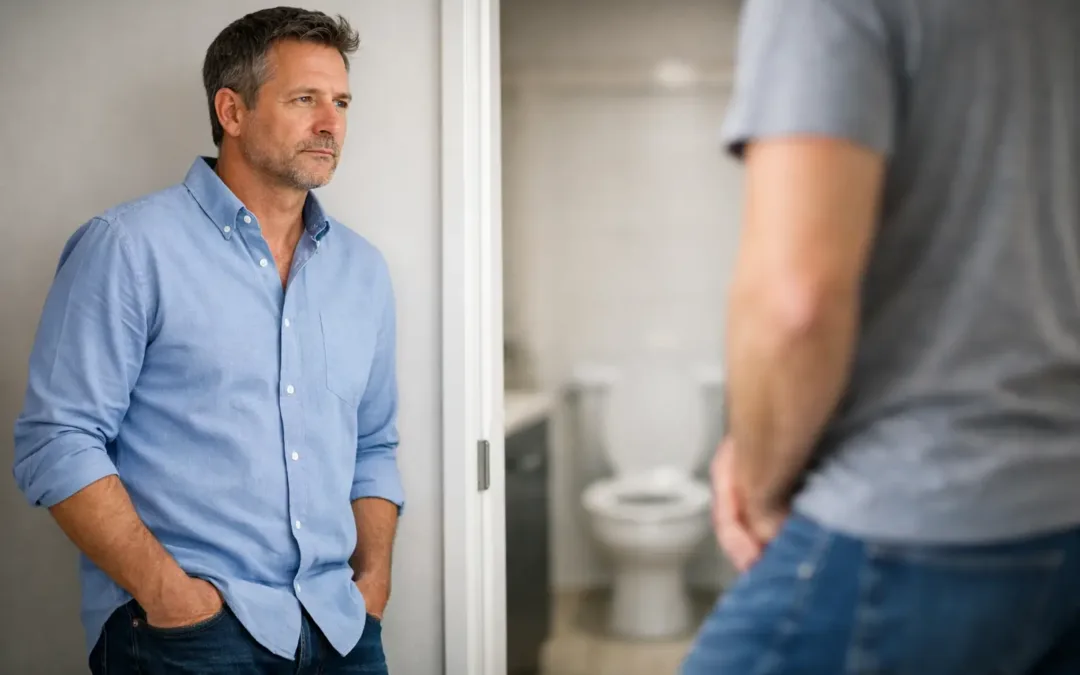
Waking up for the bathroom once can be annoying. Waking up two, three, or more times night after night can drain your energy, disrupt workouts, affect your mood, and make you wonder what is changing. Is frequent urination normal in men? Sometimes, especially after a lot of fluids, alcohol, or caffeine. But a persistent change in how often you urinate deserves attention rather than guesswork.
Frequency is not just a prostate issue, and it is not something men should automatically accept as part of getting older. Your bladder, prostate, blood sugar, medications, sleep, and fluid habits can all play a role. The goal is not to panic over a few extra bathroom trips. It is to recognize when your body is giving you useful information.
What counts as frequent urination?
There is no single number that defines normal for every man. Many healthy adults urinate about six to eight times during the day, but fluid intake, weather, exercise, and bladder size all affect that number. If you drink a gallon of water during a demanding outdoor shift or a long gym session, more trips are expected.
What matters more is a noticeable change from your usual pattern. You may be dealing with urinary frequency if you need to urinate repeatedly in small amounts, feel a strong urge that is hard to postpone, or wake more than once a night on a regular basis. Nighttime urination is called nocturia. One trip may be common, particularly with age, but two or more trips that regularly interrupt sleep are worth discussing with a clinician.
Also pay attention to volume. Passing large amounts of urine each time is different from feeling like you need to go constantly but only producing a small amount. That distinction can help point toward the cause.
Is frequent urination normal in men as they age?
Aging can make urinary symptoms more common, but it does not make every symptom harmless or inevitable. The prostate gradually tends to enlarge in many men, particularly after age 40. This noncancerous growth is called benign prostatic hyperplasia, or BPH. As the prostate presses on the urethra, it can affect urine flow and prevent the bladder from emptying as efficiently.
BPH often causes a cluster of symptoms: a weak stream, hesitation before urine starts, dribbling after finishing, straining, a sense that the bladder is not empty, and more frequent urges. Men may assume the problem is simply drinking water too late. In reality, a slow or incomplete emptying pattern can make the bladder signal again sooner.
Still, age is only one factor. A fit man in his 50s who suddenly starts urinating frequently should not write it off as normal aging. A change that comes on quickly, worsens, or affects daily life calls for a proper evaluation.
Common reasons men urinate more often
Fluid habits, caffeine, and alcohol
The simplest explanation is sometimes the right one. Large drinks close to bedtime, pre-workout supplements, coffee, energy drinks, tea, soda, and alcohol can increase urine production or irritate the bladder. Alcohol may also fragment sleep, making you more aware of bladder signals you might otherwise sleep through.
Do not respond by severely restricting water all day. Chronic underhydration can concentrate urine and irritate the bladder, while also working against training performance, digestion, and kidney health. A better move is to hydrate steadily earlier in the day and reduce large fluid intake in the two to three hours before bed.
Prostate enlargement or inflammation
BPH is a leading cause of urinary symptoms in middle-aged and older men. Prostatitis, or inflammation of the prostate, can also cause urgency, frequency, pelvic pressure, painful urination, painful ejaculation, or discomfort between the scrotum and anus. Prostatitis can be bacterial, but many cases are not caused by an active bacterial infection, which is one reason evaluation matters.
Overactive bladder
An overactive bladder contracts when it should be storing urine. The result can be sudden urgency, frequent small trips, and occasional leakage. It can occur with or without prostate enlargement. Bladder irritants, constipation, poor sleep, and some neurologic conditions may contribute.
Diabetes and high blood sugar
Frequent urination with increased thirst is a classic sign of elevated blood sugar. When blood glucose is high, the kidneys pull extra water into the urine to remove it. You may also notice fatigue, blurred vision, unexplained weight loss, recurrent infections, or slower healing.
This is especially relevant for men carrying extra abdominal weight, those with a family history of type 2 diabetes, and men who have become less active over time. Urinary frequency can be one of the first symptoms that pushes a man to get tested.
Urinary tract infection, stones, or other bladder problems
Men get urinary tract infections less often than women, but they can still happen. Burning, pain, cloudy or foul-smelling urine, pelvic discomfort, fever, or a sudden urgent need to urinate can signal an infection. Kidney or bladder stones may cause pain in the side, back, lower abdomen, or groin, sometimes with blood in the urine.
Less commonly, frequent urination can be related to bladder cancer, prostate cancer, neurologic conditions, or sleep apnea. Prostate cancer often causes no urinary symptoms early on, and BPH does not turn into prostate cancer. But the symptoms can overlap, so self-diagnosis is not a smart strategy.
Medications and sleep problems
Water pills, known as diuretics, are commonly prescribed for high blood pressure, heart failure, or swelling and predictably increase urination. Some other medications can affect bladder function as well. Never stop a prescription on your own, but ask whether timing can be adjusted.
Sleep apnea deserves a mention because it is often missed. Men with loud snoring, gasping episodes, daytime exhaustion, excess weight, or resistant high blood pressure may wake frequently to urinate. In some cases, the sleep disruption is the main problem, not the bladder itself.
Red flags that need prompt medical care
Call a medical professional promptly if frequent urination comes with fever, chills, severe pain, nausea or vomiting, blood in the urine, or burning that is getting worse. Seek urgent care if you cannot urinate at all, develop severe lower abdominal pain or swelling, or feel weak, confused, or seriously unwell.
Make an appointment soon if you have persistent symptoms plus excessive thirst, unintentional weight loss, new leakage, recurrent urinary infections, or a steadily weakening stream. Blood in urine should always be checked, even if it appears once and then goes away.
Practical steps to take this week
Start with a three-day bladder log. Write down when you drink, what you drink, when you urinate, whether the amount is small or large, and how many times you wake overnight. Include coffee, alcohol, supplements, and medications. This gives you and your clinician far more useful information than saying, “I go a lot.”
Then test a few sensible adjustments. Move caffeine earlier in the day, limit alcohol in the evening, and avoid chugging fluids before bed. If constipation is part of the picture, address it with more fiber, adequate daytime fluids, regular movement, and medical guidance if needed. A full rectum can put pressure on the bladder and worsen urgency.
Keep your bigger health picture in view. Regular exercise, a waistline trending in the right direction, steady blood pressure, and better sleep support prostate, metabolic, and urinary health at the same time. Pelvic floor exercises may help some men with urgency or leakage, but they are not a substitute for identifying the cause of a new symptom.
What a clinician may check
A primary care clinician or urologist will usually ask about your pattern, fluid intake, sexual health, medications, sleep, and family history. Testing may include a urine sample to look for infection or blood, blood work for glucose and kidney function, and sometimes a prostate exam or a test of how well your bladder empties.
Treatment depends on the cause. It might be as simple as changing caffeine timing or medication timing. It may involve treating an infection, improving diabetes control, addressing sleep apnea, trying bladder training, or using medication for BPH or overactive bladder. For significant prostate blockage, procedures can also be considered. The best option depends on symptom severity, prostate size, side effects, and whether preserving sexual function is a major priority for you.
Bathroom trips are not a measure of toughness. If your urinary pattern is cutting into sleep, confidence, training, travel, or sex life, treat it like any other performance issue: notice the pattern, get clear data, and take the next practical step.
This article contains general information about medical conditions and treatments. The information is not advice, and should not be treated as such. Click here for further information.