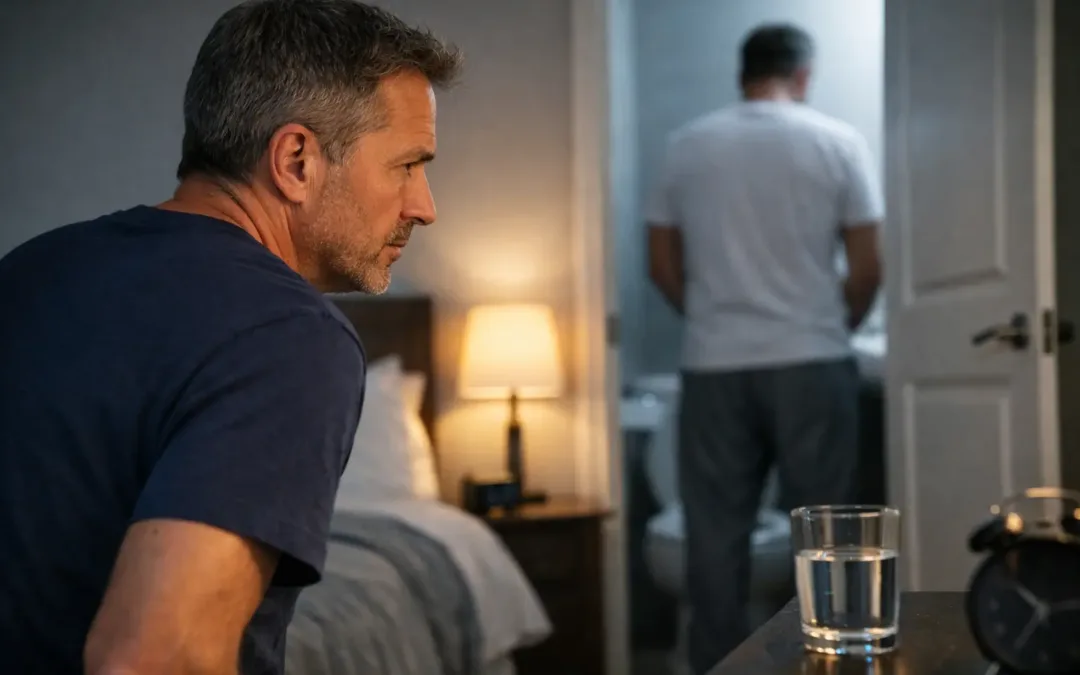
Waking up at 2 a.m. to urinate can feel like a minor annoyance. Waking up again at 4 a.m., then dragging through the next day, is different. So, is nocturia normal in men? An occasional nighttime bathroom trip can be normal, especially after a late drink. But frequent nighttime urination that disrupts sleep deserves attention, not dismissal.
Nocturia is the medical term for waking from sleep to urinate. It becomes more common with age, but getting older does not mean you should simply accept poor sleep, low daytime energy, or repeated bathroom runs as unavoidable. The cause may be as simple as fluid timing, or it may point to a prostate, bladder, sleep, metabolic, or cardiovascular issue worth addressing.
Is Nocturia Normal in Men?
For many men, waking once to urinate is not automatically a health problem. A large glass of water before bed, alcohol with dinner, a hot evening workout, or a restless night can all lead to one extra trip.
The pattern matters more than a single number. If you routinely wake two or more times nightly, have trouble falling back asleep, or feel tired, unfocused, and less motivated during the day, nocturia is affecting your health and performance. Broken sleep can undermine training recovery, appetite control, mood, libido, and blood pressure over time.
Age changes the odds. The prostate often enlarges gradually as men get older, which can affect urine flow and bladder emptying. But nocturia is not always a prostate problem. In fact, some men make more urine at night because of sleep apnea, diabetes, medication effects, or fluid shifts in the legs. Assuming every nighttime trip is caused by the prostate can delay the right solution.
Common Causes of Nighttime Urination in Men
The most obvious cause is taking in too much fluid close to bedtime. Caffeine can increase urine production and irritate the bladder, while alcohol can both increase urination and fragment sleep. A man may wake because alcohol disrupted his sleep, notice a partly full bladder, and assume the bladder was the original problem.
Benign prostatic hyperplasia, or BPH, is another common factor, particularly after age 50. An enlarged prostate can narrow the urethra, making it harder to empty the bladder fully. Along with nocturia, men may notice a weaker stream, hesitancy, dribbling, a feeling that they still need to go, or more frequent daytime urination. BPH is common and treatable, but its symptoms overlap with other conditions, so it should not be self-diagnosed.
An overactive bladder can create sudden urgency even when the bladder is not very full. Urinary tract infections and bladder irritation may also cause frequency, urgency, burning, pelvic discomfort, or cloudy urine. While urinary infections are less common in men than women, symptoms in men should be evaluated rather than ignored.
Some causes extend well beyond the urinary tract. Untreated sleep apnea is a major example. Men with sleep apnea may wake repeatedly because breathing pauses interrupt sleep, then urinate because they are already awake. Sleep apnea can also change hormone signals that influence nighttime urine production. Loud snoring, witnessed pauses in breathing, morning headaches, high blood pressure, and daytime sleepiness are strong reasons to discuss sleep testing with a clinician.
High blood sugar can also increase urine output. If nocturia comes with unusual thirst, fatigue, unexplained weight changes, blurry vision, or frequent daytime urination, diabetes or prediabetes should be considered. Swelling in the ankles or lower legs can contribute as well. When you lie down, fluid that collected in the legs during the day returns to circulation and may be processed by the kidneys overnight.
Certain medications can play a role, especially diuretics used for blood pressure or swelling. Changing the timing may help some men, but never move, reduce, or stop a prescription without guidance from the clinician who manages it.
When Nocturia Needs Medical Attention
A few nighttime trips are rarely an emergency. Still, nocturia should move up your priority list when it is new, worsening, or paired with other symptoms.
Contact a healthcare professional promptly if you have blood in the urine, pain or burning when urinating, fever, pelvic pain, new urine leakage, severe urgency, or a weak stream that is getting worse. Seek urgent care if you cannot urinate at all, have severe lower abdominal pain, or develop fever and chills with urinary symptoms.
It is also wise to arrange an evaluation if nighttime urination appears alongside persistent thirst, leg swelling, shortness of breath, chest discomfort, or major daytime fatigue. Those signs do not automatically mean something serious is happening, but they can point to conditions that benefit from early treatment.
Prostate cancer usually does not cause early urinary symptoms, and nocturia alone is not a reliable sign of it. Still, new urinary changes deserve an informed conversation, especially if you have a strong family history of prostate cancer or are due for routine preventive care.
Practical Ways to Reduce Nighttime Bathroom Trips
Start by looking at the habits you can control without sacrificing healthy hydration. The goal is not to dehydrate yourself. It is to get most of your fluids earlier in the day and reduce avoidable bladder triggers in the evening.
For one week, keep a simple nighttime urination log. Record:
- What and how much you drink after dinner
- The time you go to bed and each time you urinate overnight
- Caffeine and alcohol intake
- Daytime urinary symptoms, leg swelling, snoring, or unusual thirst
This small amount of tracking can reveal patterns quickly. Maybe the issue follows late coffee, a protein shake at 9 p.m., two beers with dinner, or a blood pressure medication taken too close to bed. It also gives your doctor useful information if you decide to schedule an appointment.
Try shifting most fluid intake to earlier in the day, then ease back during the two to three hours before bedtime. You do not need to eliminate all fluids. If you are thirsty, drink water. Just avoid turning late-night hydration into a large-volume habit unless you have a medical reason to do so.
Limit caffeine after lunch if nighttime urination is a consistent issue. Coffee, energy drinks, pre-workout formulas, tea, and some sodas can all be factors. Alcohol is another common disruptor. Cutting back may improve sleep quality even if it does not eliminate every bathroom trip.
If your ankles swell by evening, ask your clinician whether gentle activity, elevating your legs in the late afternoon, compression strategies, or medication timing could help. Do not assume swelling is simply part of aging, particularly if it is new or paired with breathlessness.
Support better sleep from both directions. Keep a consistent sleep schedule, address snoring, and make the walk to the bathroom safe with clear floors and low lighting. Falls during nighttime bathroom trips become more common with age, especially when sleep medications or alcohol are involved.
What a Doctor May Check
A medical evaluation for nocturia is usually straightforward. Your clinician will ask about fluid intake, sleep, medications, urinary symptoms, and your health history. They may order a urine test, check blood sugar and kidney function, review prostate health, or assess whether you are retaining urine after voiding.
Depending on your symptoms and age, they may discuss a prostate exam, PSA screening decisions, sleep apnea testing, or treatment for an overactive bladder or enlarged prostate. The right treatment depends on the cause. A man with sleep apnea needs a different plan than a man with BPH, high blood sugar, or late-evening caffeine habits.
Do not let embarrassment keep you quiet. Nighttime urination is common, but chronic sleep disruption is not something you have to power through. Treat each bathroom trip as useful feedback from your body, then use that information to protect your sleep, energy, and long-term health.
This article contains general information about medical conditions and treatments. The information is not advice, and should not be treated as such. Click here for further information.