
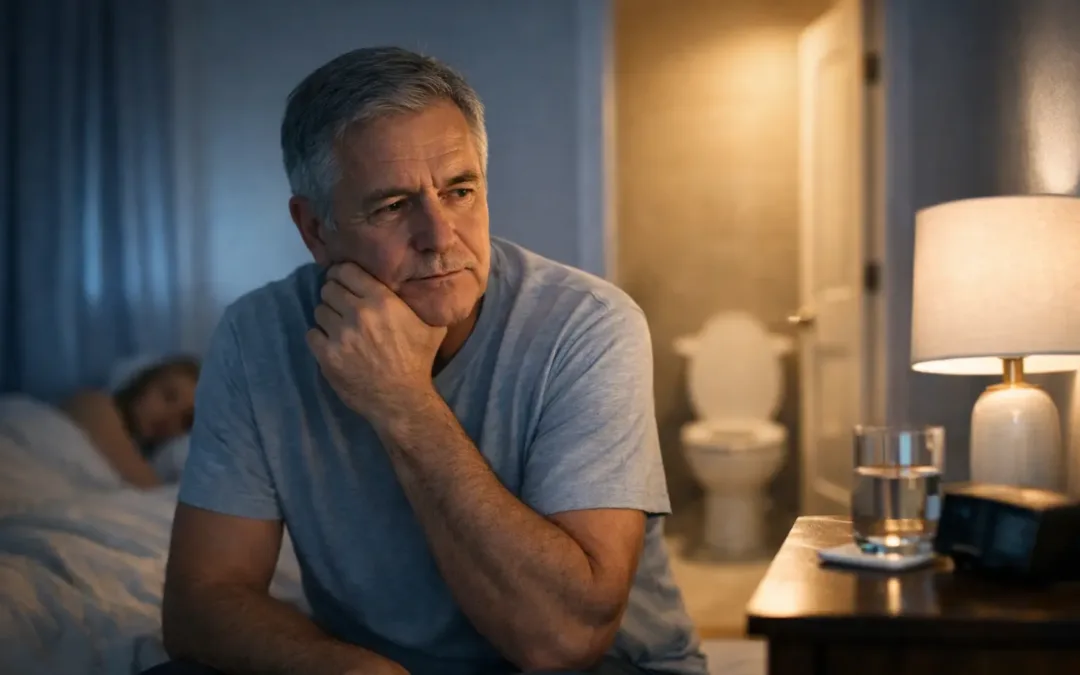
Waking up at 2:00 a.m. to urinate once may be annoying. Waking up two, three, or more times can leave you dragging through work, workouts, and family time the next day. If you are searching for how to stop nighttime urination, the first step is separating a manageable habit problem from a symptom that deserves medical attention.
Nighttime urination, medically called nocturia, becomes more common as men age. But it is not something you simply have to accept as the price of getting older. Your evening routine, sleep quality, medications, bladder habits, prostate health, blood sugar, and heart health can all play a role. The right fix depends on what is waking you up in the first place.
Why Men Wake Up to Urinate at Night
Your body normally makes less urine while you sleep. When that system is disrupted, your bladder may fill faster than expected, or you may wake for another reason and decide to use the bathroom because you are already awake.
For many men, the cause is simple: too much fluid too close to bed, especially beer, liquor, coffee, tea, soda, or energy drinks. Alcohol increases urine production and can fragment sleep. Caffeine can stimulate the bladder even when you had your last cup much earlier in the afternoon.
Age-related prostate enlargement is another common factor. Benign prostatic hyperplasia, or BPH, can narrow the urethra and keep the bladder from emptying efficiently. You may notice a weak stream, trouble getting started, dribbling, urgency, or the feeling that you still need to go after finishing.
Other possible causes include an overactive bladder, urinary tract infection, poorly controlled diabetes, swelling in the legs, sleep apnea, and certain medications. Diuretics, often called water pills, are designed to make you urinate more. Some blood pressure medications and drugs used for swelling can affect your nighttime bathroom pattern depending on when you take them.
The key point: nocturia is not always a bladder problem. Sometimes it is a sleep, circulation, metabolic, or medication-timing problem that shows up in the bathroom.
How to Stop Nighttime Urination With Better Evening Habits
Start with a one-week reset before assuming you need a major solution. Track what and when you drink, how often you urinate overnight, and whether you have symptoms such as urgency, snoring, leg swelling, thirst, or a weak urine stream. Patterns are more useful than guesses.
Move more of your fluids earlier
Do not dehydrate yourself all day. That can cause headaches, constipation, darker urine, and poorer exercise performance. Instead, drink most of your water from morning through late afternoon, then taper in the two to three hours before bed.
A small drink with medication or if you are genuinely thirsty is fine. The goal is not zero fluid. It is avoiding a large bottle of water, a protein shake, or several drinks while watching TV late at night.
Put a hard stop on alcohol and caffeine
If nighttime urination is disrupting your sleep, avoid caffeine for at least six to eight hours before bed. Some men are more sensitive and may need to cut it off by noon. Remember that pre-workout powders, iced tea, cola, chocolate, and some headache medications can contain caffeine too.
Alcohol is a common double hit: it increases urine output and makes sleep lighter later in the night. If you drink, keep it moderate and finish several hours before bed. A two-week break from evening alcohol is a useful real-world test, especially if you routinely wake after drinking beer or cocktails.
Empty your bladder twice before bed
Try “double voiding.” Urinate as you begin your bedtime routine, then go again right before getting into bed. Do not strain or force it. The purpose is simply to give your bladder another chance to empty after a few minutes of relaxed movement.
This can be particularly helpful for men who feel they do not fully empty their bladder, though persistent incomplete emptying should be evaluated rather than managed on your own.
Manage fluid that collects in your legs
If your socks leave deep marks, your ankles swell, or your legs feel heavy by evening, fluid may be shifting back into your bloodstream once you lie down. Your kidneys then filter that fluid, creating more urine at night.
Walking regularly, avoiding long stretches of sitting, and elevating your legs in the late afternoon can help. Compression socks may be appropriate for some men, but check with a clinician first if you have artery disease, heart failure, or significant circulation problems. New or worsening leg swelling needs medical attention.
Improve sleep, not just bladder control
A man with sleep apnea may wake repeatedly because breathing briefly stops or becomes restricted. Once awake, he notices his bladder and goes to the bathroom. Sleep apnea can also increase nighttime urine production through hormonal changes.
Loud snoring, witnessed pauses in breathing, morning headaches, daytime sleepiness, high blood pressure, and waking unrefreshed are reasons to discuss sleep apnea screening. Treating it can improve both sleep and nocturia for some men.
When Prostate Health May Be the Issue
BPH is extremely common after age 50, but symptoms can begin earlier. An enlarged prostate is not cancer, and prostate cancer often causes no urinary symptoms in its early stages. Still, new urinary changes are worth discussing with a healthcare professional, especially when they are persistent or affecting sleep.
Symptoms that point more strongly toward prostate or urinary outlet issues include a slow or stop-start stream, straining, urgency, frequent daytime urination, dribbling, and a sense that your bladder never fully empties. Your clinician may review your medical history, perform an exam, test your urine, check blood sugar and kidney function, and discuss whether prostate-focused treatment makes sense.
Treatment is not one-size-fits-all. Some men do well with lifestyle changes and monitoring. Others benefit from medication that relaxes the prostate and bladder outlet, medication that gradually shrinks the prostate, or procedures when symptoms are severe. These treatments have trade-offs, including possible dizziness, changes in ejaculation, erectile effects, or blood pressure concerns. That is why the best choice depends on your symptoms, prostate size, overall health, and priorities.
Rule Out Blood Sugar and Other Medical Causes
Frequent urination can be an early clue that blood sugar is running high. When glucose levels rise, your kidneys pull more water into the urine. Excessive thirst, increased daytime urination, fatigue, unexplained weight loss, blurred vision, or recurrent infections make diabetes screening more urgent.
Do not overlook medication timing either. If you take a diuretic, ask your prescriber whether taking it earlier in the day is safe and appropriate. Never change a prescribed dose or schedule without that conversation. The same applies to prostate medications, diabetes drugs, and any over-the-counter sleep aid that may worsen urinary retention.
A bladder diary can make this appointment much more productive. For three days, write down when you drink, roughly how much, when you urinate, and how many times you wake overnight. Include alcohol, caffeine, medications, and leg swelling. It gives your clinician evidence to work with instead of a vague report that you “go a lot.”
When to See a Doctor Promptly
Make an appointment if nighttime urination happens two or more times most nights, lasts longer than a few weeks, or is damaging your sleep and daytime performance. You should also be evaluated if you have daytime urinary symptoms, erectile changes alongside urinary symptoms, or a major increase in thirst.
Seek urgent care for inability to urinate, fever or chills with urinary symptoms, severe lower abdominal or back pain, confusion, or visible blood in the urine. These symptoms can signal urinary retention, infection, kidney stones, or another problem that should not wait.
Build a Plan You Can Actually Keep
The most effective approach is usually boring but powerful: shift fluids earlier, reduce evening alcohol and caffeine, use double voiding, move your body during the day, and protect your sleep schedule. Give those changes one to two weeks while tracking results.
If you are still waking regularly, do not just accept exhausted mornings as normal. Better sleep supports testosterone, training recovery, appetite control, blood pressure, mood, and sexual health. Addressing nighttime urination is not only about fewer bathroom trips - it is about getting your nights, energy, and momentum back.
This article contains general information about medical conditions and treatments. The information is not advice, and should not be treated as such. Click here for further information.

