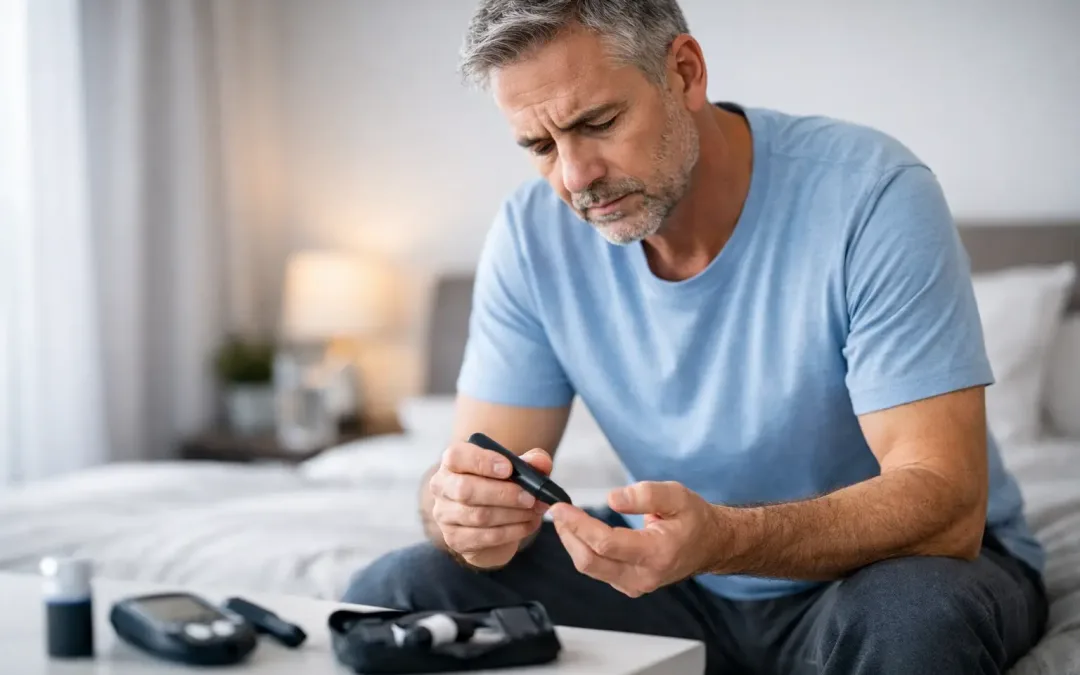
You may chalk it up to getting older, working too much, or carrying extra weight - but if your energy is dropping, your waistline is changing, and your sex drive is off, diabetes could be part of the picture. Diabetes symptoms in men do not always show up as one obvious problem. More often, they creep in through everyday issues that seem unrelated until they start affecting your work, workouts, sleep, and performance.
That is part of what makes diabetes easy to miss. A lot of men push through symptoms for months or even years because they are busy, they feel functional enough, or they assume the problem is stress. But high blood sugar can quietly damage blood vessels, nerves, and hormone balance long before a diagnosis happens.
Common diabetes symptoms in men
Some symptoms are common in both men and women, but men often notice them through changes in energy, physical performance, body composition, and sexual health. The most recognized sign is frequent urination, especially at night. When blood sugar is too high, the kidneys work overtime to flush out extra glucose, which pulls more water into the urine.
That often goes hand in hand with unusual thirst. If you are constantly refilling your water bottle yet still feel dry, your body may be trying to keep up with fluid loss. This can also leave you with headaches, dry mouth, and lower exercise tolerance.
Fatigue is another major sign. This is not just feeling tired after a long day. Diabetes-related fatigue can feel like your energy is flat no matter how much sleep you get. Your body has trouble using glucose effectively, so cells do not get the fuel they need. For men who care about productivity, training, or stamina, this can be one of the first red flags.
Blurred vision can show up early too. Changes in blood sugar affect fluid levels in the eyes, which can temporarily change your vision. Some men notice they are squinting more, struggling with screens, or having trouble reading signs while driving.
Unexplained weight loss is another clue, especially with type 1 diabetes but sometimes with type 2 as well. If the body cannot use sugar properly, it starts breaking down fat and muscle for energy. On the flip side, many men with type 2 diabetes also gain weight over time, particularly around the abdomen, because insulin resistance is closely tied to excess body fat.
Male-specific signs that often get overlooked
One of the most overlooked diabetes symptoms in men is erectile dysfunction. Erections depend on healthy blood flow, nerve function, and hormone balance. Diabetes can interfere with all three. High blood sugar damages blood vessels and nerves over time, which can make it harder to get or keep an erection.
That does not mean every case of ED points to diabetes. Low testosterone, stress, poor sleep, relationship issues, medications, and heart disease can also play a role. Still, when erectile problems show up alongside fatigue, weight changes, or frequent urination, diabetes should be on the radar.
Some men also notice lower libido. This can happen for several reasons. Blood sugar problems can affect testosterone levels, mood, sleep quality, and circulation. The result may be less interest in sex, less confidence, and reduced physical responsiveness.
Recurrent yeast infections or irritation around the genitals can also happen, even though many men do not realize it. Extra sugar in the urine creates an environment where yeast can grow more easily. Men who are uncircumcised may be more likely to notice redness, itching, or discomfort.
Another issue is slower recovery. If your cuts, scrapes, or gym-related skin irritation are taking longer to heal, it may be more than bad luck. High blood sugar can impair circulation and immune function, making healing slower and infections more likely.
What early diabetes can feel like in real life
Early diabetes does not always look dramatic. For a lot of men, it feels like a slow drop-off. You are more tired in the afternoon. You need to pee more during the night. Your workouts feel harder than they should. You get hungrier after meals, then crash an hour later. You may even notice brain fog or irritability.
That is one reason type 2 diabetes often goes undiagnosed. The body can compensate for insulin resistance for a long time before blood sugar rises enough to cause clear symptoms. During that stretch, many men simply feel off. They may gain belly fat, lose conditioning, sleep worse, and feel less sharp without knowing why.
Prediabetes can create this gray-zone effect too. Blood sugar is not yet in the diabetes range, but it is high enough to affect metabolism and increase future risk. If you have a family history of diabetes, high blood pressure, high triglycerides, low HDL cholesterol, or excess abdominal fat, it is worth taking subtle symptoms seriously.
When symptoms point to a more urgent problem
Sometimes diabetes symptoms escalate fast. If you have extreme thirst, vomiting, rapid breathing, confusion, severe weakness, or fruity-smelling breath, get medical care right away. Those can be signs of diabetic ketoacidosis, which is more common in type 1 diabetes but can happen in other cases.
There is also the opposite problem - blood sugar dropping too low, especially in men already on diabetes medication. That can cause shakiness, sweating, dizziness, irritability, confusion, and even fainting. If you have already been diagnosed, those symptoms need quick attention too.
Why men often miss the warning signs
A lot of men are trained to tolerate discomfort and keep moving. That mindset can help in the gym or at work, but it can backfire with health. Frequent urination gets blamed on drinking more water or coffee. Fatigue gets blamed on stress. ED gets pushed aside as a private issue. Weight gain gets treated like a motivation problem.
The problem is that diabetes is not just about blood sugar on a lab test. Left unchecked, it raises the risk of heart disease, kidney disease, nerve damage, vision loss, and sexual dysfunction. Men already face elevated cardiovascular risk as they age, so ignoring symptoms can cost you more than energy levels.
What to do if you notice diabetes symptoms in men
First, do not self-diagnose based on one symptom. Plenty of issues can mimic diabetes, from sleep apnea to low testosterone to dehydration. But if several signs are showing up together, schedule a medical visit and ask for blood sugar testing. That may include fasting glucose, A1C, or an oral glucose tolerance test.
It helps to pay attention to patterns before your appointment. Notice whether you are urinating more often, waking up thirsty, crashing after meals, or having sexual performance changes. If you can describe what has changed and when it started, that gives your doctor a clearer picture.
If you are overweight, especially with more fat around the midsection, lifestyle changes matter whether or not you already have a diagnosis. Losing even a modest amount of weight can improve insulin sensitivity. Strength training, walking after meals, better sleep, and cutting back on sugary drinks can make a real difference.
Food quality matters, but this is not about perfection. Men often do better with realistic habits than extreme plans they abandon in two weeks. A high-protein breakfast, more fiber, fewer liquid calories, and better portion control at night can move the needle. If you are carrying a lot of stress or sleeping five hours a night, those issues deserve attention too because they affect blood sugar regulation.
For men dealing with ED or lower libido, treat that as health information, not a personal failure. Sexual symptoms are often one of the first visible signs that blood vessels and nerves are under strain. Getting checked early can help protect both your long-term health and your quality of life.
Who should be extra alert
Any man can develop diabetes, but the risk climbs with age, inactivity, excess body weight, family history, and certain ethnic backgrounds. Men over 40 should be especially aware if they have high blood pressure, carry weight in the abdomen, or have a history of prediabetes.
If you have been told your testosterone is low, it is also worth looking at the bigger metabolic picture. Low testosterone and type 2 diabetes often overlap, partly because both are linked with obesity, inflammation, and insulin resistance. One problem does not automatically cause the other, but they often travel together.
At Male Health Zone, the message is simple: pay attention early. You do not need to panic over every off day, but you also do not need to wait until symptoms wreck your sleep, sex life, or stamina before taking action.
If something has been off for a while, get it checked. Catching diabetes early is not just about avoiding future complications. It is about keeping your energy, performance, and health working for you now.
This article contains general information about medical conditions and treatments. The information is not advice, and should not be treated as such. Click here for further information.