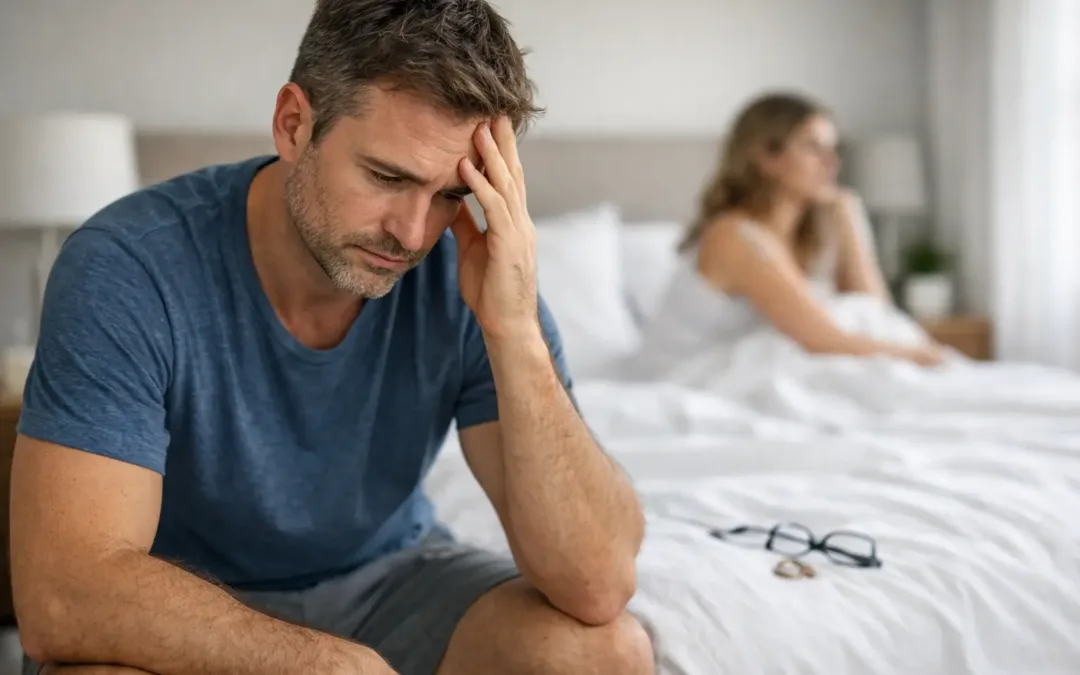
A demanding job, a new baby, money pressure, family conflict, or a stretch of poor sleep can change more than your mood. If you have been wondering, can stress lower male libido, the direct answer is yes. Stress can reduce sexual desire, make erections less reliable, and create a frustrating cycle in which worrying about performance adds even more pressure.
This is common, and it is not a sign that you have lost your masculinity or that something is permanently wrong. Your sex drive is tied to your brain, hormones, sleep, physical health, relationship dynamics, and daily habits. When your system is stuck in high-alert mode, sexual interest often moves down the priority list.
How Stress Lowers Male Libido
Stress starts in the brain. When you feel threatened, overwhelmed, or unable to switch off, your body releases stress hormones such as cortisol and adrenaline. These chemicals are useful for dealing with an immediate challenge. They are less helpful when the challenge is an overflowing inbox, financial uncertainty, or chronic tension that lasts for weeks.
Your body has limited bandwidth. The stress response shifts resources toward survival functions: staying alert, raising heart rate, and preparing to react. Relaxation, connection, digestion, and sexual arousal are not the main mission in that moment. Desire can fade even when you still love and are attracted to your partner.
Chronic stress may also affect testosterone indirectly. Testosterone naturally rises and falls throughout the day and can be influenced by sleep, body weight, illness, alcohol use, medications, and overall health. High cortisol does not automatically mean clinically low testosterone, but ongoing stress often travels with habits that can work against healthy hormone function, including short sleep, poor food choices, less exercise, and more drinking.
Libido and Erections Are Related, but Not the Same
Low libido means you have less interest in sex, fewer sexual thoughts, or less motivation to initiate intimacy. Erectile dysfunction means trouble getting or keeping an erection firm enough for sex. Stress can contribute to either issue, and one can feed the other.
For example, a man may still want sex but lose an erection after he starts mentally checking whether he is performing well enough. Another may feel too mentally drained to want sex at all. Sometimes both happen together. Sorting out which part is most noticeable helps you take the right next step.
Signs Stress May Be Driving Your Lower Sex Drive
A stress-related drop in libido often appears alongside other changes. You may feel constantly keyed up, impatient, distracted, exhausted, or unable to enjoy downtime. Sleep may be lighter or shorter. Workouts may feel harder than usual, and you may lean more heavily on alcohol, late-night scrolling, comfort food, or pornography to decompress.
Timing matters, too. If your desire was steady before a major life change and then dropped during a stressful period, stress is a reasonable suspect. If libido improves on vacation, during less demanding weeks, or after several nights of good sleep, that is another useful clue.
Still, do not assume stress explains everything. A low sex drive that persists for months, appears suddenly without an obvious trigger, or comes with other symptoms deserves a closer look.
The Stress-Libido Cycle Can Become Self-Reinforcing
One off night is normal. The problem often grows when you assign it a bigger meaning: “Something is wrong with me,” “I am letting my partner down,” or “This will happen every time.” That internal pressure activates the same stress response that interferes with arousal in the first place.
Relationship tension can add another layer. When sex becomes a test of performance or a topic both partners avoid, intimacy may start to feel like another obligation. Open, low-pressure communication is usually more productive than pretending nothing has changed. A simple conversation such as, “I have been under a lot of pressure lately, and it is affecting me. It is not about you,” can prevent misunderstandings.
What to Do When Stress Is Affecting Your Libido
You do not need to eliminate all stress to improve your sex drive. The goal is to lower the baseline pressure on your body and create more opportunities for recovery. Small, consistent actions tend to work better than trying to overhaul your life in one weekend.
Start with sleep. Most men underestimate how strongly poor sleep affects energy, mood, appetite, training recovery, and sexual interest. Aim for a consistent bedtime, reduce bright screens and work messages before bed, and keep alcohol out of your nightly wind-down routine when possible. Even one additional hour of sleep can change how you feel and function.
Move your body regularly, but avoid turning exercise into another source of burnout. Strength training, brisk walking, cycling, or a sport you enjoy can reduce stress and support cardiovascular health, which matters for erections. If you are already training hard while sleeping poorly and feeling run-down, cutting back temporarily may help more than pushing harder.
Make space for a daily decompression habit that is realistic enough to repeat. A 10-minute walk without your phone, slow breathing, time outside, journaling, prayer, meditation, or calling a friend can help signal that the threat has passed. The best method is the one you will actually use after a difficult day.
Also look honestly at the habits you use to cope. Alcohol can lower inhibitions in the moment, but heavier or frequent use can impair sleep, testosterone regulation, mood, and erection quality. Nicotine affects blood flow. Large amounts of caffeine late in the day can keep your nervous system switched on at night. These are not moral failures. They are practical levers you can adjust.
If you are in a relationship, take penetration and performance off the table occasionally. Spend time being physically close without a goal. Kissing, touch, massage, and affection can rebuild comfort and arousal while removing the pressure to prove anything.
When Low Libido May Be More Than Stress
Stress is often part of the picture, but it is not always the entire explanation. Low libido can also be connected to depression, anxiety, low testosterone, sleep apnea, diabetes, obesity, thyroid conditions, chronic pain, cardiovascular disease, and certain medications. Antidepressants, blood pressure medications, opioids, and some hair-loss or prostate treatments can affect sexual function in some men.
Pay attention if lower desire comes with fatigue, depressed mood, reduced strength, loss of morning erections, breast tenderness, testicular changes, pain during sex, or major changes in body composition. These symptoms do not diagnose a condition by themselves, but they are worth discussing with a clinician.
A medical evaluation is especially smart if erection problems are new, frequent, or worsening. Erections depend on healthy blood flow, nerve function, hormone balance, and psychological comfort. In some men, persistent erectile dysfunction can be an early signal of cardiovascular risk. Getting checked is not overreacting. It is preventive health.
How to Talk With a Doctor About Male Libido
Be direct. You can say, “My sex drive has been lower for several months, and I have been under stress. I want to rule out other causes.” Mention when the change began, whether you still get morning erections, how you are sleeping, any mood changes, medications and supplements you take, alcohol or drug use, and other health concerns.
Your clinician may review your medical history, blood pressure, weight, sleep, mental health, and medication list. Depending on your symptoms, they may order blood work or recommend treatment for contributing issues. Avoid buying testosterone or erectile dysfunction products online before you understand the cause. Some products are ineffective, mislabeled, or unsafe with other medications.
Stress may be a normal part of a full life, but running on empty does not have to become your normal. Treat a lower libido as useful feedback from your body: protect your sleep, reduce the pressure, rebuild recovery time, and get support when the problem is not improving. Taking action early gives you the best chance to feel more like yourself again.
This article contains general information about medical conditions and treatments. The information is not advice, and should not be treated as such. Click here for further information.