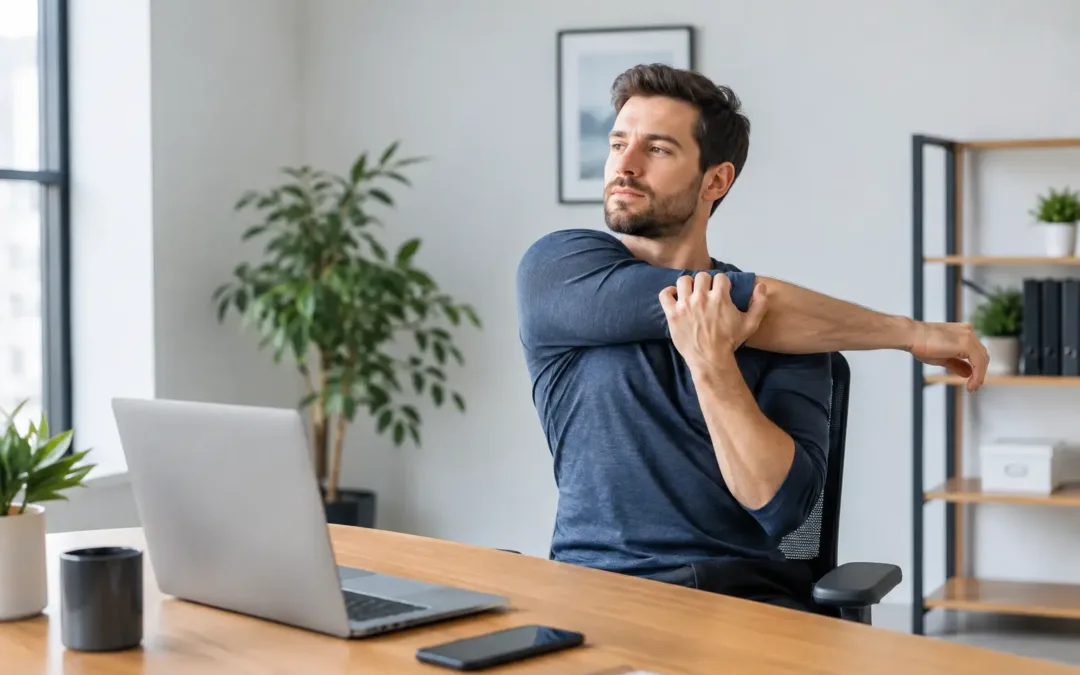
Your lower back tightens halfway through the afternoon. Your neck starts creeping toward the screen. By the time you stand up, your hips feel like they have been bolted to the chair. The best desk stretches for men are not a replacement for regular training, but they can stop a desk job from quietly wrecking your posture, mobility, and energy.
Sitting is not automatically harmful, and you do not need to panic about every hour in a chair. The real problem is staying in one position for too long, especially when work, commuting, and evening screen time all add up. A few purposeful movements during the day can reduce stiffness, help you move better in the gym, and make it easier to stay active after work instead of collapsing on the couch.
Why Men Get So Stiff at a Desk
Many men train hard for an hour and then spend eight to ten hours sitting. That combination often leaves the chest and hip flexors feeling short and tight, while the upper back, glutes, and deep core muscles are underused. Add stress, shallow breathing, and a screen positioned too low, and you have a reliable recipe for neck tension and an aching low back.
This matters beyond comfort. Stiff hips can affect squat depth and walking mechanics. Rounded shoulders can make pressing movements less comfortable. Persistent pain also makes it less likely that you will train, sleep well, or keep up with the activities that support a healthy weight, heart health, and stamina.
The answer is not to force dramatic stretches at your desk. Gentle, frequent movement usually works better than one aggressive session after you are already locked up.
10 Best Desk Stretches for Men
Aim to run through a few of these movements every 60 to 90 minutes. Hold static stretches for about 20 to 30 seconds per side, breathe slowly, and stay out of sharp pain. If you can only spare two minutes, choose the areas that feel most restricted that day.
1. Seated Neck Retraction
Sit tall with your ribs stacked over your hips. Without looking down, glide your chin straight backward as if you are making a double chin. Hold for three seconds, relax, and repeat 8 to 10 times.
This is not a neck stretch in the usual sense. It strengthens the position that counters the forward-head posture created by staring at a laptop. Keep the movement small. Jamming your chin down can irritate the neck rather than help it.
2. Upper Trapezius Stretch
Place your right hand under your chair or sit on it. Tilt your left ear gently toward your left shoulder until you feel a stretch along the right side of your neck. Hold, then switch sides.
Do not pull hard on your head. The goal is to calm a constantly tense muscle, not win a flexibility contest. This stretch is especially useful after long calls, driving, or working with your shoulders shrugged toward your ears.
3. Doorway Chest Stretch
Stand in a doorway with one forearm against the frame, elbow roughly at shoulder height. Step forward slowly until you feel the front of your chest and shoulder open up. Repeat on the other side.
Men who bench press, do push-ups, or spend a lot of time typing often feel tight across the chest. Opening the pec muscles can make it easier to bring your shoulders back, but it works best when paired with upper-back strength work outside the office.
4. Seated Thoracic Rotation
Sit near the front edge of your chair with your feet flat. Cross your arms over your chest, then rotate your torso to the right without twisting your knees. Pause for a breath, return to center, and repeat to the left for 6 to 8 reps per side.
Your mid-back is built to rotate. When it gets stiff, the lower back and neck often try to make up the difference. Controlled rotations can feel surprisingly good after hours of facing one direction.
5. Chair Lat Stretch
Place both hands on your desk or the back of a stable chair. Step back, hinge at your hips, and lower your chest between your arms while keeping your spine long. You should feel the sides of your back, shoulders, and upper chest lengthen.
This is a strong option for men who feel restricted when reaching overhead or setting up for pull-ups and overhead presses. Keep your abs lightly engaged so the stretch comes from the shoulders and upper back, not from over-arching your lower back.
6. Seated Figure-Four Hip Stretch
Sit upright and place your right ankle across your left thigh, just above the knee. Flex your right foot, then lean forward slightly from the hips until you feel the outer hip and glute stretch. Switch sides.
Long periods of sitting can make the glutes feel inactive and the outer hips feel tight. This movement is useful before a walk, a lower-body workout, or simply standing up after a long stretch at your desk. If you have hip or knee discomfort, keep the lean shallow.
7. Hip Flexor Desk Stretch
Stand with one foot behind you and rest the top of that foot on a low, stable chair if comfortable. Tuck your pelvis slightly, squeeze the glute of the back leg, and shift forward just enough to feel the front of that hip open. Hold, then switch sides.
If using a chair feels unstable, do a basic standing split-stance version with both feet on the floor. The key is the glute squeeze and pelvic tuck. Simply leaning forward can turn this into a low-back bend instead of a true hip flexor stretch.
8. Standing Hamstring Hinge
Place one heel on a low surface, such as the base of a chair, with the knee softly bent. Keep your back straight and hinge forward from the hips. Repeat on the other side.
Avoid the old habit of rounding your back and reaching for your toes. That often produces more nerve tension than a useful hamstring stretch. A small hinge with a neutral spine is enough, particularly if you have a history of low-back trouble.
9. Calf Stretch at the Wall
Place your hands on a wall, step one leg back, and press that heel toward the floor while keeping the back knee straight. Hold, then switch. Bend the back knee slightly for a second variation that reaches deeper into the lower calf.
Calves get overlooked in desk routines, but they matter if you want walking, running, and lower-body training to feel better. Tight calves can also make ankle mobility feel limited during squats and lunges.
10. Standing Backward Reach
Stand tall, place your hands on your hips or the back of your pelvis, and gently lean backward a few degrees while breathing out. Return to neutral and repeat 5 to 8 times.
This is not right for every back. Some men with spinal conditions or extension-sensitive pain may feel worse with it. But for many people who have been flexed over a desk all day, a small backward movement provides welcome relief and reminds the body that it can move in more than one direction.
Build a Desk-Stretch Routine You Will Actually Use
A perfect 20-minute mobility session that never happens will not help you. Attach short movement breaks to habits already built into your workday: after sending a major email, before a meeting, when you refill your water, or after using the restroom.
Try this simple rotation: do neck retractions and chest stretches in the morning, thoracic rotations and the lat stretch around lunch, then hip flexor, figure-four, and calf stretches late in the day. Stand up for calls when you can, take a five-minute walk after meals, and position your screen near eye level. These changes reduce how much stretching you need in the first place.
Stretching also has limits. If your upper back is weak, your shoulders may drift forward again. If your glutes are weak, your hips may keep feeling stiff. Two or three weekly sessions of resistance training that include rows, dead bugs, squats or split squats, hip hinges, and carries can make desk mobility work better.
When Stiffness Needs More Than Stretching
A mild tight feeling that eases when you move is common. Pain that shoots down an arm or leg, numbness, weakness, severe headaches, unexplained weight loss, fever, or pain after an injury deserves medical attention. The same goes for back or neck pain that keeps worsening despite changing your routine.
For ordinary desk stiffness, consistency wins. Set a reminder, move before you feel wrecked, and treat these stretches as basic maintenance for the body that carries you through work, training, family life, and everything else you want to do well.
This article contains general information about medical conditions and treatments. The information is not advice, and should not be treated as such. Click here for further information.