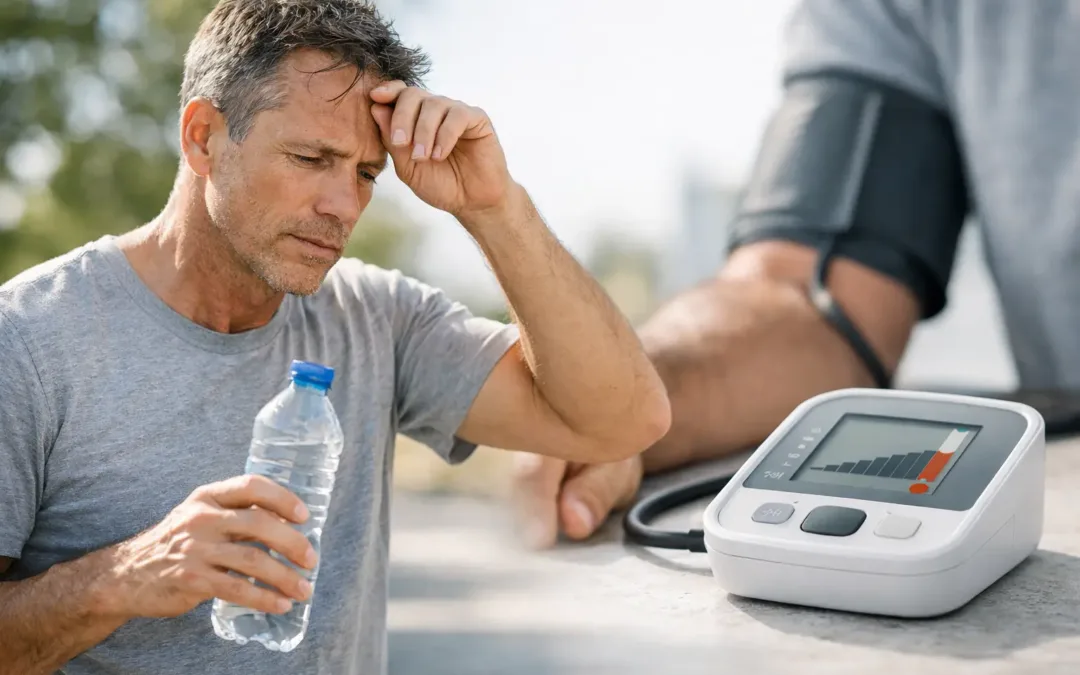
You finish a hard workout, spend a day working in summer heat, or wake up after a few drinks with a pounding headache. Your blood pressure reading is higher than expected. Can dehydration raise blood pressure? Yes, it can contribute to a temporary increase in some men, especially when heat, sweat, illness, caffeine, alcohol, or certain medications leave the body short on fluids. But the relationship is not as simple as “drink water and your blood pressure is fixed.”
Dehydration can also cause blood pressure to fall, particularly when it becomes severe. The key is understanding how your body responds to fluid loss, recognizing when a reading deserves medical attention, and building hydration habits that support your heart, workouts, energy, and long-term performance.
Can dehydration raise blood pressure temporarily?
When you lose water through sweat, urine, vomiting, diarrhea, or simply not drinking enough, the amount of fluid circulating in your blood vessels can drop. Your body does not ignore that change. It activates protective systems designed to keep blood flowing to the brain, heart, and other vital organs.
One response is the release of hormones that encourage the body to hold onto sodium and water. Another is increased activity in the sympathetic nervous system, the same system that can raise heart rate and tighten blood vessels under stress. Narrower blood vessels can raise resistance to blood flow, which may push blood pressure upward temporarily.
Dehydration may also make your blood more concentrated. That does not mean it becomes “thick” in a way you can feel, but reduced fluid volume changes circulation and makes the cardiovascular system work harder to maintain balance. For a man who already has high blood pressure, kidney disease, diabetes, sleep apnea, or a family history of heart disease, these shifts may matter more.
A single high reading after a hot day or intense training session does not automatically mean you have hypertension. It does mean the reading should be taken seriously and rechecked when you are rested, cooled down, and adequately hydrated.
Why severe dehydration can lower blood pressure instead
There is an important trade-off: mild or moderate dehydration can trigger blood-vessel tightening and a short-term blood pressure rise, while major fluid loss can eventually reduce blood volume enough to cause low blood pressure.
At that point, you may feel lightheaded when standing, weak, confused, unusually sleepy, or as if your heart is racing. Severe dehydration can impair blood flow to organs and requires prompt medical evaluation, especially if it follows persistent vomiting, diarrhea, fever, heavy sweating, or an inability to keep fluids down.
This is why hydration advice should not be reduced to a single claim. Your blood pressure response depends on how dehydrated you are, your baseline health, the medications you take, sodium intake, alcohol use, temperature, and how hard your body is working at the time.
Signs you may be dehydrated before your numbers climb
Thirst is useful, but it is not always an early warning system. Many men get absorbed in work, travel, training, or parenting and realize they have barely had a drink by late afternoon. Older adults may also feel less thirst than they did when they were younger.
Common signs of dehydration include dry mouth, darker yellow urine, headache, fatigue, muscle cramps, constipation, reduced exercise performance, and dizziness. Urine that is pale yellow is generally a practical sign that you are keeping up with fluid needs. Completely clear urine all day is not a goal, especially if you are forcing water beyond thirst.
If your blood pressure seems elevated along with a headache, do not assume dehydration is the only explanation. High blood pressure usually causes no symptoms, and a headache can come from poor sleep, alcohol, stress, heat exposure, migraine, illness, or many other causes. Check the number correctly rather than trying to diagnose yourself by how you feel.
How to get an accurate blood pressure reading
A rushed reading can look worse than it really is. Caffeine, nicotine, exercise, a full bladder, conversation, anxiety, and recent heat exposure can all affect the result. If you want numbers that actually help you make decisions, measure under consistent conditions.
Sit quietly for at least five minutes with your back supported, feet flat on the floor, and arm supported at heart level. Use a properly sized upper-arm cuff, avoid smoking, caffeine, and exercise for 30 minutes beforehand, and do not talk during the measurement. Take two readings about one minute apart and record both.
If you suspect dehydration, drink fluids gradually, cool down, eat normally if you have been sweating heavily, and recheck later or the next day when you feel back to normal. Do not chug several bottles of water immediately before a reading just to chase a better number. That will not address an ongoing blood pressure issue and can be unsafe in extreme amounts.
Hydration habits that support blood pressure and performance
Most men do not need to obsess over a universal gallon-a-day target. Fluid needs change with body size, climate, activity level, diet, and medical conditions. A man lifting in an air-conditioned gym has different needs than a construction worker in July or a runner training for a half-marathon.
Start your day with water, then drink consistently rather than waiting until you are parched. Keep a bottle visible at your desk, in your vehicle, or in your gym bag. During longer or sweat-heavy training sessions, replace fluids as you go and pay attention to how much you sweat, your urine color afterward, and whether headaches or cramps show up repeatedly.
Electrolytes can be useful after prolonged, heavy sweating, endurance exercise, or physical labor in high heat. They are not automatically necessary for a standard 45-minute workout. Many sports drinks add substantial sugar and sodium, which may not fit your goals if you are trying to manage weight or blood pressure. Water plus regular meals is enough for many everyday workouts.
Alcohol deserves special attention. It can increase urine output, disrupt sleep, worsen next-day hydration, and raise blood pressure in some men. If your high readings cluster after nights out, that pattern is worth addressing. Better hydration helps, but it does not cancel out the cardiovascular impact of heavy drinking.
When drinking more water is not the answer
If you have heart failure, advanced kidney disease, liver disease, or have been prescribed a fluid restriction, do not increase your water intake without guidance from your clinician. Too much fluid can worsen swelling, strain the heart, or disturb electrolyte balance.
Medication also changes the picture. Diuretics, commonly called water pills, are often prescribed for high blood pressure and can increase urination. Some cold medicines, stimulant medications, anti-inflammatory pain relievers, and supplements can raise blood pressure or affect fluid balance. Never stop a prescribed blood pressure medication because you think dehydration caused a high reading.
Schedule a medical visit if your home readings are repeatedly at or above 130/80, particularly if you have diabetes, kidney disease, excess body weight, sleep apnea, or a strong family history of hypertension. A clinician can assess the full picture, including medications, kidney function, diet, stress, sleep, and whether your cuff is accurate.
Get urgent care for a blood pressure reading of 180/120 or higher that remains elevated after a few minutes of rest, especially if you have chest pain, shortness of breath, weakness or numbness, confusion, vision changes, or a severe sudden headache. Those symptoms are not a hydration project to handle at home.
A smarter approach to hydration and heart health
Hydration is one lever, not the whole machine. Consistent sleep, regular exercise, a diet built around minimally processed foods, managing body weight, limiting excess alcohol, avoiding tobacco, and treating sleep apnea can all have a meaningful effect on blood pressure.
If you notice that heat, long workouts, travel, or busy workdays leave you dehydrated and your readings jump, use that information. Build a better routine before the next demanding day. Taking care of your fluid balance is a simple way to protect your training, focus, and cardiovascular health - and it gives you one more practical advantage in staying strong as you get older.
This article contains general information about medical conditions and treatments. The information is not advice, and should not be treated as such. Click here for further information.