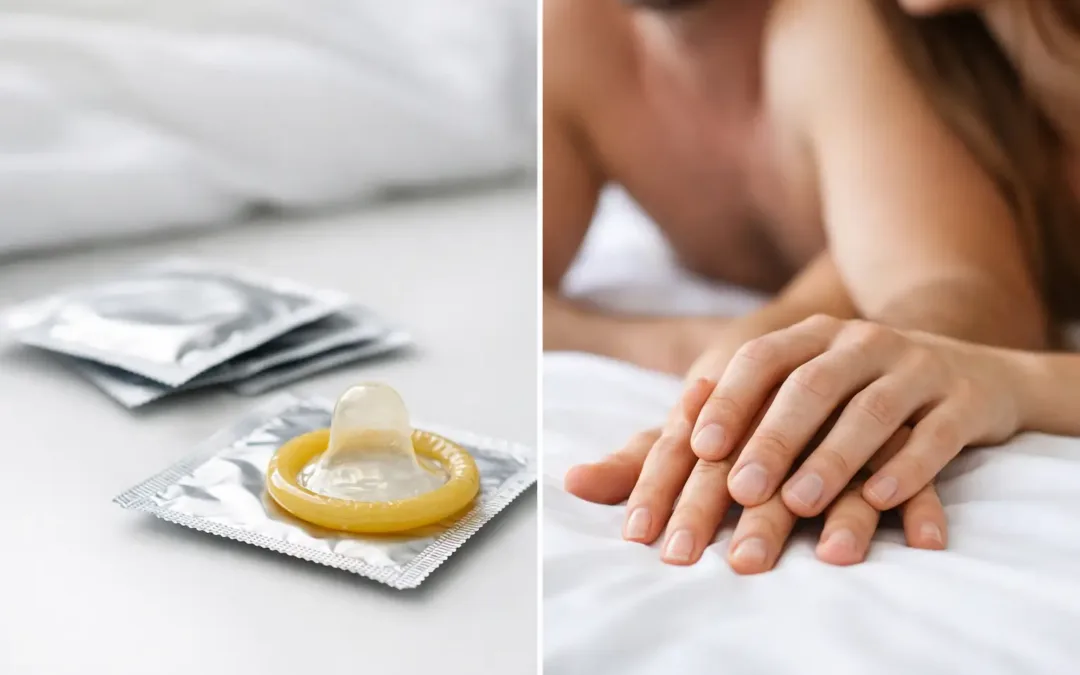
A split-second decision can have consequences that last far longer than sex. When comparing condoms versus withdrawal, the biggest difference is not just convenience. It is how much control you have over preventing pregnancy, avoiding sexually transmitted infections (STIs), and staying calm afterward.
Withdrawal can feel simple, spontaneous, and familiar. Condoms can feel like an interruption if you are not prepared. But real sexual health is not about relying on timing and hope. It is about choosing protection that fits your situation before the moment arrives.
Condoms Versus Withdrawal: The Numbers That Matter
Both methods can reduce the chance of pregnancy, but they are not equally reliable in everyday life.
With perfect use, meaning every step is done correctly every time, external condoms are about 98% effective at preventing pregnancy. Withdrawal is about 96% effective with perfect use. At first glance, that gap may not seem dramatic.
Typical use tells the more useful story. People are not perfect, especially during sex. Condoms are about 87% effective with typical use, meaning roughly 13 out of 100 couples may experience a pregnancy over a year. Withdrawal is about 78% effective with typical use, or roughly 22 pregnancies per 100 couples over a year.
That difference adds up. Withdrawal requires the man to recognize ejaculation is approaching, stop sexual activity in time, and fully ejaculate away from his partner’s genitals every time. One misjudgment can change the outcome.
Condoms have their own real-world mistakes: putting one on late, using the wrong size, tearing it with fingernails, or removing it incorrectly. Still, these are problems you can largely prevent with preparation and basic technique.
Pregnancy Prevention: Why Withdrawal Is Less Predictable
Withdrawal is not the same as having no birth control, but it is a higher-risk method. The main issue is that it depends entirely on timing under pressure.
Pre-ejaculate fluid does not always contain sperm. However, sperm can remain in the urethra after a previous ejaculation, particularly if a man has not urinated in between. More importantly, withdrawal can fail if ejaculation starts before full withdrawal. You cannot always reverse that once it happens.
Alcohol, fatigue, anxiety, new-partner excitement, and certain medications can affect judgment and body awareness. Men who have trouble sensing the exact point of no return should not treat withdrawal as their primary pregnancy prevention plan.
Condoms put the barrier in place before penetration. That means protection does not rely on a last-second decision. If avoiding pregnancy is a serious priority, condoms are the more dependable choice between these two methods.
When withdrawal may have a role
Withdrawal can be better than using no method at all. It may also work as a backup layer when a partner is already using a highly effective form of birth control, such as an IUD, implant, pill, patch, ring, or shot.
For example, using a condom and withdrawing before ejaculation gives you two layers of pregnancy prevention. It does not make either method perfect, but it can lower risk further. This approach can be especially reassuring if a condom breaks or slips without being noticed right away.
Withdrawal alone is a different calculation. If an unplanned pregnancy would create major financial, emotional, or relationship stress, it is usually not a strong enough plan by itself.
STI Protection Changes the Conversation
Pregnancy prevention is only one part of safer sex. Condoms are the clear winner for STI risk reduction because withdrawal offers no meaningful protection against infections.
External condoms can reduce transmission risk for infections spread through semen, vaginal fluids, and blood, including HIV, gonorrhea, and chlamydia. They also reduce the chance of transmitting some infections spread by skin-to-skin contact, such as herpes and HPV, though they cannot fully prevent them because uncovered skin can still carry infection.
Withdrawal does not protect either partner from STIs. Infections can spread before ejaculation through genital skin contact and body fluids. A man may also have an STI without symptoms and pass it on without knowing it.
If you have a new partner, more than one partner, uncertain testing history, or any concern about exposure, use condoms from start to finish. This is not about distrust or killing the mood. It is a practical decision that protects both people.
Testing is part of responsible sexual health
Condoms lower risk, but they are not a substitute for testing and honest conversations. Getting tested when your relationship status changes, before stopping condom use with a new partner, or after a possible exposure shows maturity and self-respect.
If you are in a committed relationship and both partners have been tested, you may decide together to use another pregnancy prevention strategy. That is a personal choice. The key is that it should be a clear decision, not an assumption.
How to Make Condoms Work Better
A condom is only useful if it is used correctly. Many failures come down to preventable errors, not bad luck.
Start with the right fit. A condom that is too tight may feel uncomfortable or break more easily. One that is too loose can slip off. Try different sizes and materials until you find an option that feels secure and comfortable.
Use a new condom for every act of vaginal, oral, or anal sex, and put it on before genital contact. Check the expiration date and package for damage. Open it carefully, pinch the tip to leave room for semen, and roll it all the way down the shaft.
Lubricant can improve comfort and lower the chance of breakage. With latex condoms, choose water-based or silicone-based lubricant. Oil-based products, including lotion, petroleum jelly, and massage oil, can weaken latex and cause it to fail.
After ejaculation, hold the condom at the base while withdrawing before the erection softens. Then throw it away. Do not reuse it, double up with two external condoms, or keep condoms in a wallet for months where heat and friction can damage them.
The Comfort and Performance Factor
Some men avoid condoms because they worry about reduced sensation, erection loss, or disruption. Those concerns are common, but they are often solvable.
A better-fitting condom, a thinner style, more lubricant, or practicing alone can make a major difference. Keeping condoms nearby also removes the awkward pause of searching for one when things are already moving fast.
If erections consistently fade when you put on a condom, slow down rather than treating it as a personal failure. Make condom application part of foreplay. If erection difficulties are happening regularly with or without condoms, pay attention. Stress, poor sleep, alcohol, cardiovascular health, medication side effects, and low testosterone can all play a role.
Sexual performance is not just about staying hard in one moment. It is about confidence, communication, and protecting your health well enough to enjoy sex without anxiety afterward.
What to Do After a Condom Breaks or Withdrawal Fails
No method is flawless, and quick action matters after a mistake. If a condom breaks, slips off, or ejaculation occurs before withdrawal, talk openly with your partner as soon as possible.
Emergency contraception may help prevent pregnancy depending on timing and the option used. The sooner it is used, the better. A pharmacist, clinician, or sexual health clinic can help identify the right next step. If there is any chance of STI exposure, ask about testing and whether time-sensitive treatment is appropriate.
Do not let embarrassment turn a manageable situation into a bigger problem. Handling it directly is what responsible men do.
The Better Choice Depends on Your Goal
For pregnancy prevention alone, condoms are more reliable than withdrawal in typical use. For STI protection, condoms are the only meaningful option of the two. Withdrawal may be a useful backup, but it should not be mistaken for comprehensive protection.
The strongest plan is the one you can use consistently. Keep condoms where you need them, learn how they fit, discuss expectations before sex, and treat protection as part of taking care of yourself and your partner. That confidence carries well beyond the bedroom.
This article contains general information about medical conditions and treatments. The information is not advice, and should not be treated as such. Click here for further information.