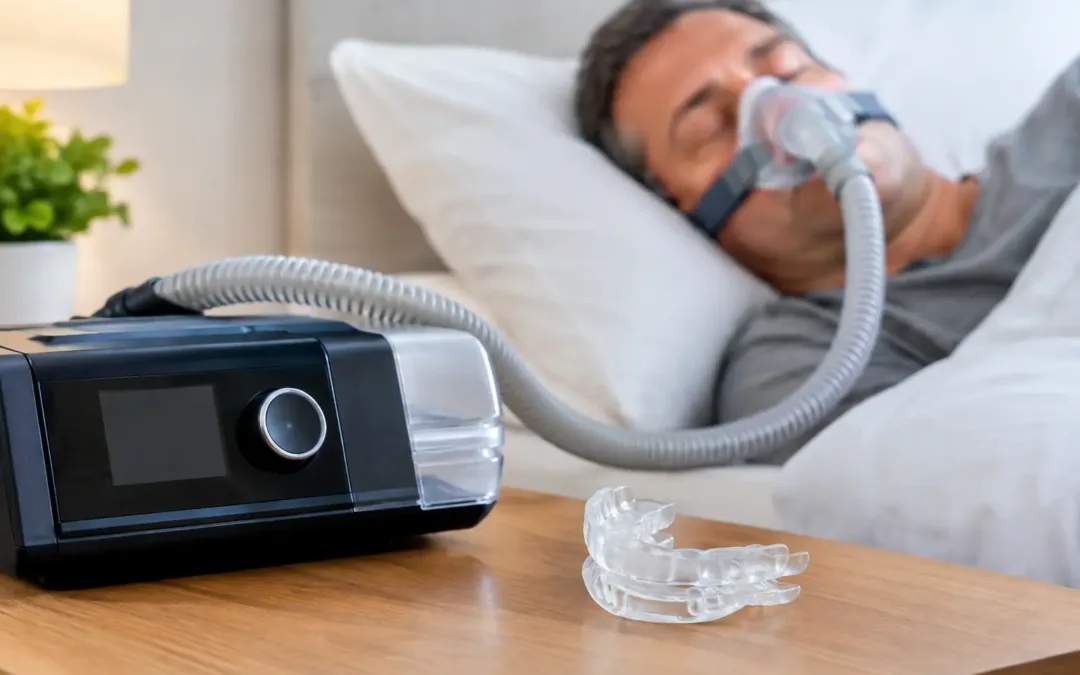
Waking up exhausted after a full night in bed is not a toughness problem. For many men, it is a breathing problem. The CPAP versus mouthguard decision often comes up after loud snoring, daytime fatigue, a frustrated partner, or a sleep study reveals obstructive sleep apnea. Both options can help in the right situation, but they do not work the same way - and choosing based on convenience alone can leave a serious condition undertreated.
Why this choice matters for men
Obstructive sleep apnea happens when the muscles and soft tissues in the throat relax during sleep and repeatedly narrow or block the airway. Your brain briefly wakes you enough to restart breathing, sometimes dozens of times per hour. You may not remember those interruptions, but your body pays for them.
Untreated sleep apnea can raise the risk of high blood pressure, irregular heartbeat, heart disease, stroke, insulin resistance, accidents caused by drowsy driving, and low mood. For men, poor sleep can also work against testosterone, libido, erections, training recovery, appetite control, and weight management. Snoring itself is not proof of apnea, but snoring combined with gasping, witnessed pauses in breathing, morning headaches, or persistent fatigue deserves a real evaluation.
The best treatment is not simply the smallest device or the cheapest one. It is the treatment that controls your breathing events and that you can use consistently.
CPAP versus mouthguard: the key difference
CPAP stands for continuous positive airway pressure. A CPAP machine sends a steady stream of air through a mask, creating enough pressure to keep the airway from collapsing. It treats the underlying airway obstruction throughout the night.
A sleep apnea mouthguard, more accurately called an oral appliance or mandibular advancement device, is a custom-fitted device worn over the teeth. It gently moves the lower jaw forward. That forward position can pull the tongue and soft tissue away from the back of the throat, making the airway less likely to close.
These are not interchangeable products. An over-the-counter sports mouthguard, night guard for teeth grinding, or boil-and-bite snoring device is not automatically an effective sleep apnea treatment. If you have diagnosed apnea, look for guidance from a sleep physician and a dentist trained in dental sleep medicine.
When CPAP is usually the stronger option
CPAP is generally considered the most effective first-line treatment for moderate to severe obstructive sleep apnea. When the pressure and mask are set up properly, it can dramatically reduce or eliminate breathing interruptions, improve oxygen levels, and reduce snoring.
It is often the better choice if your sleep study shows severe apnea, significant drops in oxygen, a high number of events per hour, or sleepiness that affects driving and work performance. CPAP may also be the safer starting point if you have cardiovascular disease, difficult-to-control high blood pressure, atrial fibrillation, a prior stroke, or other medical factors that make nighttime oxygen problems more concerning.
The downside is obvious: wearing a mask and tubing takes adjustment. Some men feel claustrophobic, struggle with air leaks, get a dry mouth, or remove the mask halfway through the night. Those issues are real, but they are often fixable. Mask styles vary widely, heated humidification can reduce dryness, and pressure settings can be adjusted. A rough first week does not mean CPAP has failed.
CPAP also requires power, routine cleaning, replacement supplies, and some planning for travel. Yet for a man with severe apnea, those inconveniences are usually a fair trade for protecting energy, cardiovascular health, and long-term performance.
When an oral appliance can make sense
A custom oral appliance can be an effective alternative for mild to moderate obstructive sleep apnea, particularly when someone cannot tolerate CPAP despite a genuine effort to make it work. It may also be appropriate for primary snoring after apnea has been ruled out.
Many men prefer an oral appliance because it is compact, quiet, battery-free, and easier to take on business trips or weekends away. There is no mask on the face, which can make it more appealing for side sleepers or men who feel restricted by CPAP equipment.
The trade-off is that oral appliances typically do not reduce breathing events as reliably as CPAP, especially in severe apnea. Some men feel better because they wear the device all night, while their CPAP sits unused. That consistent use matters. Still, feeling better is not the same as proving the apnea is controlled. Follow-up sleep testing is often needed to confirm that the appliance is doing its job.
Oral appliances can also cause jaw soreness, tooth discomfort, excess saliva or dry mouth, and gradual bite changes. Men with significant gum disease, loose teeth, certain jaw joint problems, or too few healthy teeth may not be good candidates. A properly fitted device should be monitored over time, not purchased once and forgotten.
Do not confuse comfort with effectiveness
A mouthguard may feel simpler than CPAP, and CPAP may deliver more consistent airway support. That does not mean every man should force himself into one category.
A useful way to think about it is this: CPAP usually offers the highest level of control, while a custom oral appliance can offer a strong balance of comfort and effectiveness for selected patients. Severity, anatomy, body weight, sleep position, nasal congestion, jaw health, and personal tolerance all affect the answer.
Some men use both tools strategically. For example, a man may use CPAP as his main therapy at home and a dentist-made oral appliance for short trips when carrying equipment is difficult. This plan should be directed by the clinicians managing his apnea, not improvised from online product reviews.
What to do before choosing a device
Start with a diagnosis, not a guess. Home sleep tests can be useful for many adults suspected of having obstructive sleep apnea, while an in-lab study may be needed when symptoms, medical history, or test results are more complicated. The test helps identify not only whether apnea is present, but how severe it is and how low oxygen levels fall.
If CPAP is recommended, give setup and troubleshooting a fair chance. Ask about nasal pillows, full-face masks, humidity, ramp settings, and treatment for nasal blockage. A mask leak or dry throat is a setup problem, not a character flaw. Small adjustments can turn an unbearable experience into a routine one.
If you are considering an oral appliance, ask whether you are a candidate for a custom, adjustable mandibular advancement device. A qualified dental provider should examine your teeth, gums, bite, and jaw joints. Once the device is adjusted, confirm its effectiveness with the follow-up testing your sleep clinician recommends.
Avoid self-treating obvious apnea symptoms with a generic mouthguard. If you wake choking, fall asleep unintentionally during the day, have witnessed breathing pauses, or have high blood pressure and heavy snoring, get assessed promptly. Alcohol near bedtime, sedating medications, and sleeping on your back can make airway collapse worse, but lifestyle changes alone may not replace treatment.
Weight, fitness, and sleep apnea treatment
Losing excess body fat can reduce obstructive sleep apnea severity for some men, particularly when weight gain has increased neck circumference and airway pressure. Regular exercise, limiting alcohol before bed, managing nasal allergies, and prioritizing sleep time can support treatment as well.
But do not make the mistake of postponing CPAP or an oral appliance until you lose weight. Better sleep can improve training consistency, food decisions, recovery, and daytime drive - the very factors that help you make progress. Treat the breathing issue while you work on the lifestyle piece.
The practical bottom line
For moderate to severe obstructive sleep apnea, CPAP is usually the most dependable choice because it keeps the airway open with the greatest consistency. For mild to moderate apnea, or for men who truly cannot tolerate CPAP, a custom oral appliance can be a valuable treatment when it is fitted and followed correctly.
The right device should help you wake up clearer, safer, and more capable of showing up for your work, training, relationships, and health. Get the diagnosis, use the treatment that fits your needs, and verify that it is actually improving your sleep.
This article contains general information about medical conditions and treatments. The information is not advice, and should not be treated as such. Click here for further information.