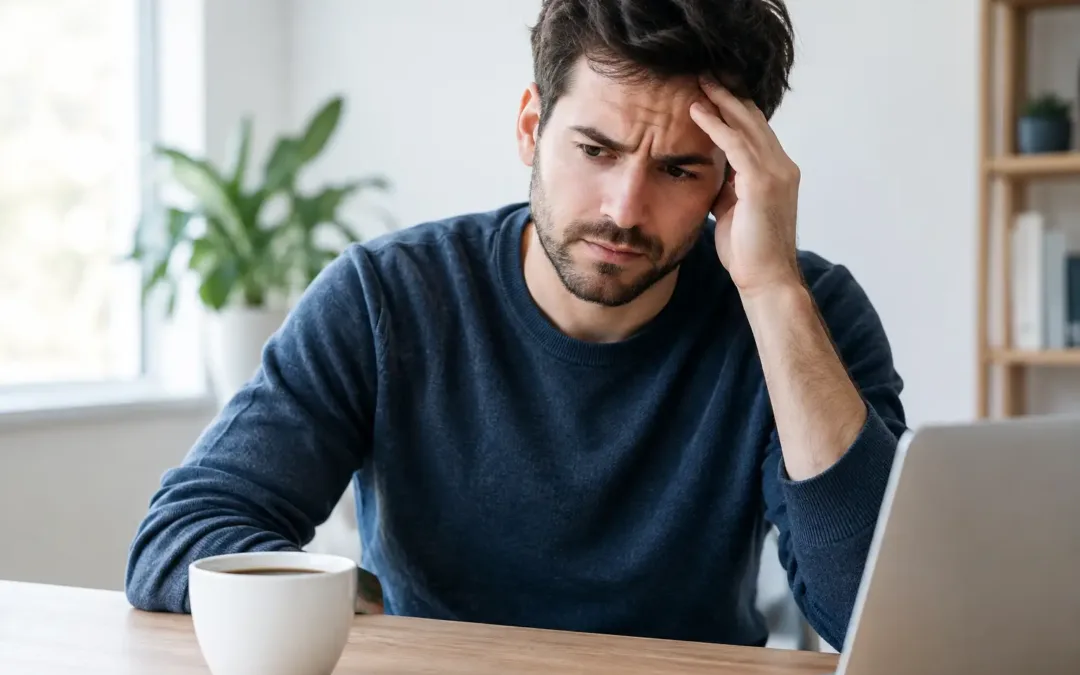
Your second coffee may feel like the only thing standing between you and a productive morning. But if your heart is racing during meetings, your thoughts are looping at night, or small problems suddenly feel huge, that cup could be part of the picture. Does caffeine worsen anxiety symptoms? For many men, yes - especially at higher doses, during stressful periods, or when sleep is already running low.
Caffeine is not automatically bad. It can improve alertness, exercise performance, and focus. The issue is that its effects can closely resemble anxiety: a faster pulse, shaky hands, sweating, stomach discomfort, restlessness, and trouble sleeping. When your nervous system is already under pressure, caffeine can turn the volume up.
How Caffeine Can Worsen Anxiety Symptoms
Caffeine works by blocking adenosine, a brain chemical that helps you feel sleepy and relaxed. That is useful when you need energy. But it also encourages a more activated state, increasing stress hormones and making your body more responsive to stimulation.
For a man prone to anxiety, this can create a frustrating loop. You drink caffeine to push through fatigue, feel temporarily sharper, then become wired or irritable. That stress response makes it harder to sleep, so you wake up tired and reach for more caffeine the next day.
The physical sensations matter too. Anxiety often feeds on interpretation. A pounding heart after an energy drink may be harmless, but if you read it as a sign that something is wrong, worry can escalate quickly. The body feels threatened, your mind starts scanning for danger, and a caffeine buzz becomes a full anxiety spike.
Why the Effect Is Different for Every Man
Your reaction is not a test of toughness. Caffeine sensitivity varies substantially based on genetics, body size, tolerance, medications, sleep quality, and your current stress load. A man who can drink two cups of coffee without issue in his 20s may find the same routine hits differently in his 40s, particularly if work demands, poor sleep, blood pressure concerns, or health worries have increased.
Dose is a major factor. A standard brewed coffee may contain roughly 80 to 120 milligrams of caffeine, while large coffees, pre-workouts, and energy drinks can deliver far more. It is easy to underestimate total intake when coffee is combined with a pre-gym supplement, afternoon soda, tea, or chocolate.
Timing matters just as much. Caffeine can stay in the body for hours. An afternoon coffee may still be affecting your sleep late that night, even if you fall asleep without much trouble. Lighter, more fragmented sleep can leave you more emotionally reactive the next day. That means caffeine may worsen anxiety indirectly, even when you do not feel especially jittery after drinking it.
Stress, Sleep, and Caffeine Stack Up
Caffeine is most likely to become a problem when it is layered on top of other stressors. A hard training block, alcohol-heavy weekend, financial pressure, relationship strain, a new baby, shift work, or untreated sleep apnea can all lower your margin for stimulation.
Men often frame fatigue as something to beat with more intensity: another coffee, a stronger pre-workout, a late-night work session. But persistent fatigue is often useful information. If your energy is low because your recovery is poor, stimulants may mask the issue while making anxiety, irritability, and sleep worse.
Signs Your Caffeine Habit May Be Affecting Anxiety
Look for patterns instead of blaming every anxious moment on coffee. Your caffeine intake may be contributing if you regularly feel edgy within an hour or two of using it, experience palpitations or trembling, become unusually impatient, or have trouble winding down at night.
Another clue is relief after skipping caffeine, although withdrawal can complicate the first few days. Headaches, fatigue, low mood, and poor concentration are common when you suddenly stop after regular use. That does not necessarily mean caffeine was helping your anxiety. It may simply mean your brain is adjusting to less stimulation.
Pay attention to the context of panic-like symptoms. If intense fear, chest tightness, shortness of breath, dizziness, or a racing heart repeatedly follow energy drinks or high-dose pre-workout, do not ignore the connection. Those symptoms can overlap with medical conditions, so it is worth discussing them with a clinician rather than assuming they are only anxiety.
How Much Caffeine Is Too Much for Anxiety?
For most healthy adults, up to 400 milligrams of caffeine per day is often cited as a general upper limit. But that is not a personal target, and it is not an anxiety-safe guarantee. Some men notice more anxiety at 200 milligrams or less. Others tolerate more, at least until sleep debt or stress catches up with them.
A better question is: what amount lets you feel alert without feeling driven by your nervous system? If you are consuming caffeine mainly to overcome poor sleep, late-night scrolling, heavy alcohol use, or burnout, reducing intake may help - but addressing the underlying cause will matter more.
Be especially cautious with concentrated sources. Pre-workout powders and energy drinks may combine high caffeine doses with other stimulants, and serving sizes can be misleading. Avoid stacking them with coffee, particularly before demanding workouts, long workdays, or situations that already make you anxious.
A Practical Way to Test Your Tolerance
You do not have to quit coffee forever to find out whether it is affecting your anxiety. Run a simple two-week experiment. Keep your morning routine steady, but reduce your total caffeine intake by about one-quarter to one-half. If you drink four cups daily, try two or three rather than going straight to zero.
Have your first caffeine after food and water, not immediately after waking. Limit it to the morning, ideally stopping at least eight hours before bed. Replace later caffeinated drinks with decaf coffee, sparkling water, or herbal tea. Keep notes on sleep, mood, tension, focus, and any racing-heart episodes.
The goal is not perfection. It is useful data. If your sleep improves and you feel calmer without losing much productivity, you have found a lever worth using. If there is no change, caffeine may not be the main driver, and you can look more closely at workload, alcohol, nutrition, recovery, or a mental health concern.
Keep the Benefits Without the Jitters
If you enjoy caffeine and tolerate modest amounts, use it strategically. A single coffee earlier in the day may provide the focus you want without the crash or nighttime restlessness. Pair it with breakfast, especially if you tend to feel shaky when drinking coffee on an empty stomach.
Exercise can also change the equation. Some men feel fine with caffeine before a workout but anxious when they use the same amount while sitting at a desk. Still, more is not always better. If pre-workout makes you feel aggressive, nauseated, panicky, or unable to sleep, lower the dose or train without it for a few sessions.
When Anxiety Needs More Than a Caffeine Cutback
Reducing caffeine can be a smart first move, but it is not a substitute for care when anxiety is persistent or disruptive. Talk with a healthcare professional if worry is affecting work, relationships, sex drive, sleep, training, or your ability to enjoy normal life. Therapy, stress-management skills, medication when appropriate, and treatment for related issues such as insomnia can make a meaningful difference.
Seek urgent medical help for new or severe chest pain, fainting, severe shortness of breath, or a sustained irregular heartbeat. Anxiety can cause intense physical symptoms, but those symptoms should not be self-diagnosed.
Your coffee habit should support your performance, not quietly erode it. Start by noticing how caffeine affects your body, sleep, and state of mind, then adjust from there. A calmer nervous system is not a loss of edge - it is a better foundation for training, work, relationships, and long-term health.
This article contains general information about medical conditions and treatments. The information is not advice, and should not be treated as such. Click here for further information.