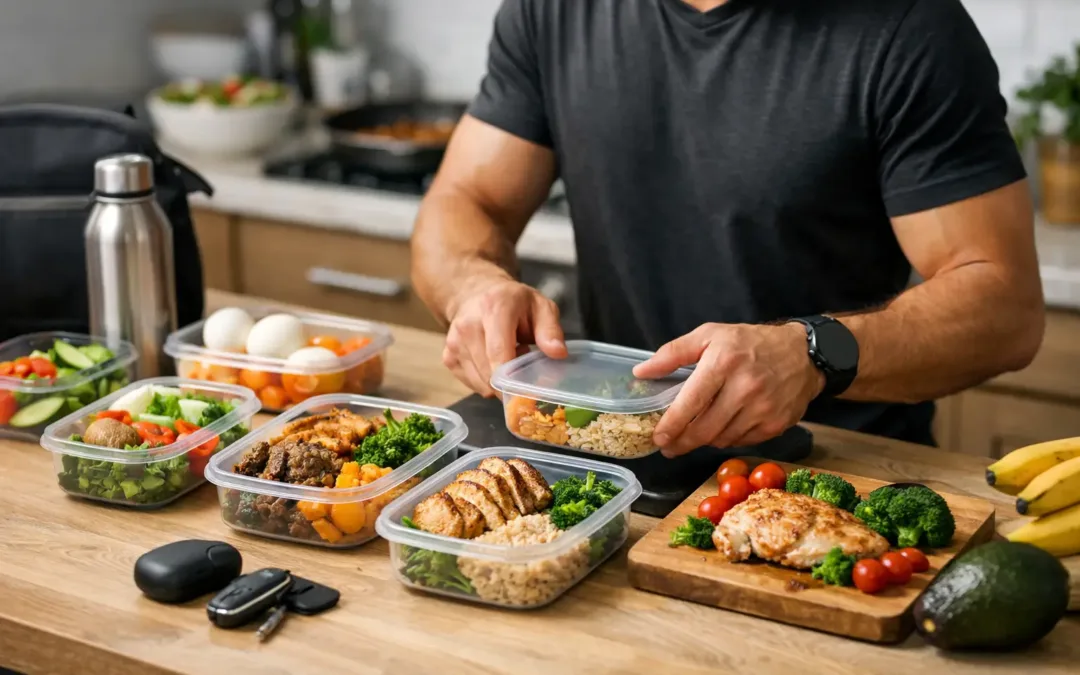
A packed calendar makes takeout feel like the practical choice. But meal prep for busy men is less about cooking seven perfect lunches in matching containers and more about removing bad decisions when you are tired, hungry, and short on time. A few prepared basics can protect your energy, support training, and keep late-night drive-thru meals from becoming the default.
For men trying to lose fat, build muscle, manage blood pressure, or simply feel more in control, food consistency matters. You do not need a chef's schedule or a refrigerator full of bland chicken and broccoli. You need a system that fits the way you actually work, train, commute, and eat.
Why meal prep works for busy men
Most nutrition plans fail at the same moment: 6:30 p.m., after a long workday, when hunger is high and patience is low. At that point, the decision is rarely between salmon and pizza. It is between whatever is immediately available and whatever requires more effort.
Meal prep changes the environment before that moment arrives. When a filling meal is ready in the fridge or freezer, you are more likely to get enough protein and fiber without overshooting calories, sodium, alcohol, or added sugar. That matters for body composition, but it also supports steadier energy, better workout recovery, heart health, and blood sugar control.
The biggest benefit is not perfection. It is repeatability. Eating well five or six days out of seven will do far more for your health than following a strict plan for one week and abandoning it.
Start meal prep for busy men with a realistic target
Do not begin by promising to cook every meal for the week. Start with the meals most likely to go off track. For many men, that means weekday lunches and two or three dinners. If breakfast is rushed, preparing that can also make a major difference.
A useful first target is eight to 10 prepared meals per week. That might mean four lunches, four dinners, and a couple of backup breakfasts. Once the routine feels normal, you can adjust based on your schedule.
Your calorie and protein needs depend on body size, activity level, age, and goals. Men who lift regularly or are trying to preserve muscle while losing weight generally benefit from distributing protein across the day rather than relying on one oversized dinner. A practical starting point is to include a palm-sized or larger serving of protein at each main meal. If you have kidney disease or have been told to limit protein, follow your clinician's guidance instead of forcing a high-protein plan.
Build meals from four simple parts
The easiest way to avoid random, unsatisfying meals is to build around a repeatable formula. Each container should include a protein source, a high-fiber plant food, a carbohydrate source when it fits your needs, and a source of healthy fat or flavor.
Protein can come from chicken thighs or breast, lean ground turkey, eggs, Greek yogurt, canned tuna or salmon, tofu, beans, or lean beef. Choose options you enjoy enough to eat repeatedly. Chicken breast may be leaner, but thighs can be more satisfying and less likely to dry out after reheating.
For vegetables, use convenience to your advantage. Bagged salad kits, frozen broccoli, green beans, stir-fry blends, pre-cut peppers, and baby carrots all count. Frozen vegetables are often a better choice than fresh produce that sits unused until it spoils.
Carbohydrates are not the enemy, especially if you train, walk a lot, or need sustained focus at work. Rice, potatoes, oats, whole-grain pasta, beans, fruit, and tortillas can all work. Portion size is where goals differ. A man trying to gain muscle may need larger servings around training, while a man working on fat loss may use more vegetables and a smaller serving of starch.
Healthy fats add staying power and make food taste like food. Olive oil, avocado, nuts, seeds, and a moderate amount of cheese are useful options. Sauces matter, too. Salsa, hot sauce, mustard, Greek-yogurt-based dressings, and lower-sugar barbecue sauce can keep simple meals from becoming boring.
Make two proteins, not seven recipes
Variety helps, but too much variety creates a long grocery list and a frustrating Sunday. A better approach is to cook two proteins, one or two carbohydrate bases, and several vegetables. Then change the flavor profile during the week.
For example, cooked ground turkey can become a taco bowl with rice, black beans, salsa, and avocado one day, then a Mediterranean-style bowl with potatoes, cucumber, tomato, feta, and lemon the next. The base stays efficient while the meal feels different.
This approach also reduces waste. Instead of buying ingredients for five separate recipes, you use the same ingredients in multiple combinations.
A two-hour prep routine that holds up
Set aside one block of time, usually on Sunday or the day before your busiest stretch. Put protein in the oven, air fryer, slow cooker, or skillet first because it takes the longest. While it cooks, start rice or potatoes, wash produce, portion snacks, and prepare one simple sauce.
You do not need to cook every component from scratch. Rotisserie chicken, microwaveable brown rice, canned beans, pre-washed greens, and frozen vegetables are legitimate tools. Saving 45 minutes may be the difference between doing meal prep consistently and quitting after two weeks.
After cooking, divide food into containers for the next three to four days. Refrigerated cooked foods do not stay fresh indefinitely. If you prepare meals for later in the week, freeze some portions as soon as they cool. Reheat meals thoroughly until steaming hot, and do not leave cooked food sitting out for hours.
If one long session feels unrealistic, use a split system. Do a larger prep on Sunday, then spend 20 minutes on Wednesday replenishing protein, vegetables, or breakfast items. This can work especially well for men who dislike eating the same meal four days in a row.
Keep emergency meals on hand
Even a solid plan gets disrupted by overtime, travel, sick kids, or a workout that runs late. The answer is not willpower. It is having backup food that is faster than ordering delivery.
Keep a few shelf-stable and freezer options available: canned chili with reasonable sodium, tuna packets, frozen grilled chicken, frozen vegetables, microwavable grains, eggs, Greek yogurt, fruit, and nuts. These are not glamorous meals, but they can become a balanced dinner in 10 minutes.
Restaurant meals can also fit when you choose with intention. Look for grilled protein, vegetables, beans, potatoes, rice, or a salad with dressing on the side. The goal is not to fear burgers, pizza, or wings. It is to make those choices occasional rather than automatic, especially if you are managing weight, cholesterol, high blood pressure, or prediabetes.
Prep for your actual weak spots
Many men prep lunch but ignore the habits that derail progress: skipping breakfast, grazing on office snacks, overeating after workouts, or drinking calories at night. Identify the one or two moments that cost you the most each week and plan around them.
If mornings are chaotic, overnight oats with Greek yogurt and berries, egg muffins, or a ready-to-blend smoothie pack can prevent the coffee-and-pastry routine. If afternoon hunger hits hard, keep a protein-rich snack nearby, such as yogurt, cottage cheese, jerky with low added sugar, fruit, or a small handful of nuts.
If you routinely eat large portions at night, do not try to white-knuckle your way through hunger. Make lunch more substantial, include enough protein and fiber earlier in the day, and prepare a dinner you genuinely look forward to eating.
Track what makes the system easier
You do not need to count every calorie forever, but a brief period of tracking can reveal useful patterns. You may find that your "healthy" lunch is low in protein, your weekend drinks erase your weekday calorie deficit, or your energy crash follows a low-fiber breakfast.
Pay attention to performance markers beyond the scale: waist measurement, gym progress, afternoon energy, sleep quality, digestion, and how often you buy food on impulse. If you have diabetes, high blood pressure, digestive disease, or take medications that affect appetite or blood sugar, personalized advice from a registered dietitian or clinician can help you build a safer plan.
The best meal prep plan is the one that still works when life gets busy. Keep it simple, make it satisfying, and treat each prepared meal as one less obstacle between you and the stronger, healthier version of yourself.
This article contains general information about medical conditions and treatments. The information is not advice, and should not be treated as such. Click here for further information.