A mouthguard can sound like a simple fix when snoring is wrecking your sleep, your partner’s sleep, or both. But a useful mouthguard for snoring review has to separate a reasonable tool for certain men from a one-size-fits-all promise. These devices can reduce snoring for some people. They can also cause jaw discomfort, fail to help, or delay attention to sleep apnea if you choose the wrong device for the wrong problem.
For men who are otherwise healthy but snore because their lower jaw and tongue fall backward during sleep, the right oral appliance can be a practical next step. The key is understanding what it does, what it cannot do, and when a medical evaluation needs to come first.
What a Snoring Mouthguard Actually Does
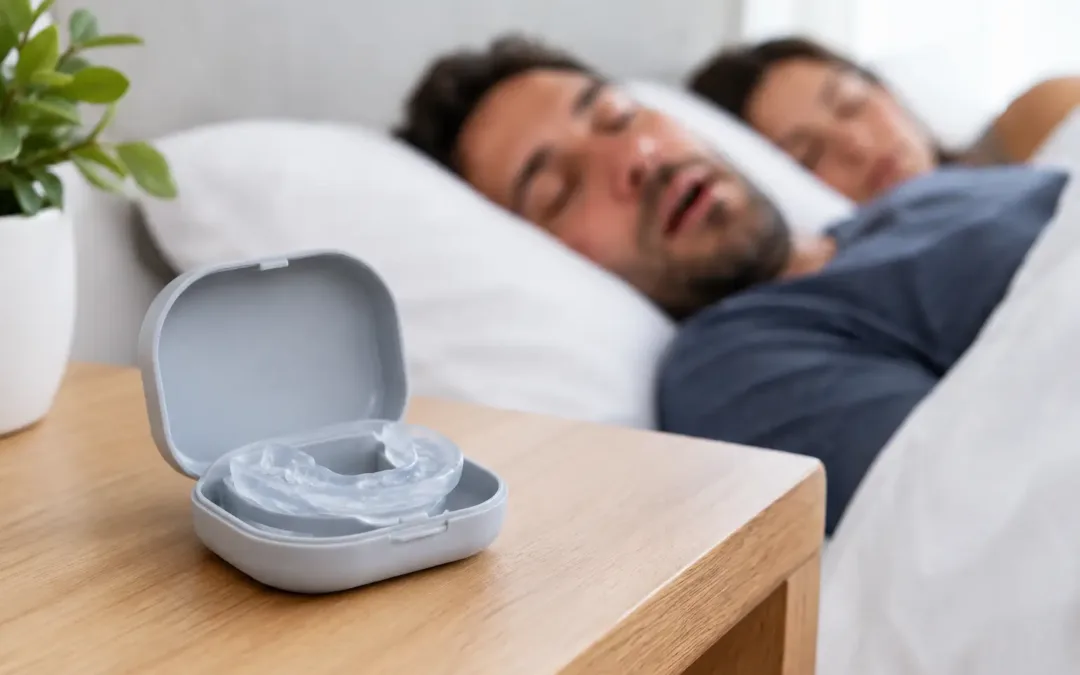
Most snoring mouthguards are mandibular advancement devices, often shortened to MADs. You wear one over your teeth at night, much like a sports mouthguard. It gently holds the lower jaw slightly forward. That forward position can pull the tongue and soft tissues away from the back of the throat, creating more room for air to move.
Less vibration in narrowed throat tissues can mean less snoring. That is the basic idea, and it makes sense for men whose snoring is worse on their back, after alcohol, or during periods of weight gain.
A second category, tongue-retaining devices, uses suction to hold the tongue forward. These are sometimes suggested for men who do not have enough healthy teeth to anchor a standard mouthguard. They can work for a smaller group of users, but many men find them harder to tolerate because of tongue soreness, drooling, and the unfamiliar feeling of suction.
Neither style fixes every cause of snoring. Nasal congestion, enlarged tonsils, a deviated septum, alcohol use, sedatives, and obstructive sleep apnea can all be part of the picture.
Mouthguard for Snoring Review: The Real Benefits
The biggest advantage is convenience. A well-fitted device is compact, quiet, and easy to travel with. Unlike a CPAP machine, it does not require a mask, hose, or power source. For a man with uncomplicated snoring or mild sleep-disordered breathing, that simplicity can make consistent use more realistic.
A mouthguard may also help if your snoring is clearly positional. If your partner notices that you are quieter on your side but loud when you roll onto your back, jaw advancement may reduce the airway narrowing that occurs in that position. It can be especially useful alongside basic changes such as reducing alcohol close to bedtime, treating nasal allergies, and improving sleep position.
Custom devices made by a qualified dentist generally offer the best chance of comfort and a stable fit. They are adjustable, so the lower jaw can be moved forward gradually instead of forced into an aggressive position on night one. That matters because more advancement is not automatically better. The goal is the smallest effective adjustment that improves breathing without beating up your jaw.
For men focused on performance, recovery, and daytime energy, quieter sleep is not merely a relationship issue. Chronic disrupted breathing can leave you less sharp in meetings, less motivated to train, and more likely to lean on caffeine just to get through the afternoon. Better breathing at night supports the work you put into your health during the day.
The Drawbacks You Should Know Before Buying
The main trade-off is comfort. Your jaw is held in a new position for hours, and some men wake with temporary jaw soreness, tooth pressure, dry mouth, excess saliva, or a change in their bite that fades after a few minutes. Others develop more persistent discomfort, especially if they already have temporomandibular joint, or TMJ, pain.
Over time, poorly supervised use can potentially shift teeth or change how the upper and lower teeth meet. This is one reason a cheap boil-and-bite device is not equivalent to a professionally fitted oral appliance. An over-the-counter model may be a short trial for occasional snoring, but it lacks the precise fit and follow-up that protect your teeth and jaw.
Cost is another consideration. Store-bought mouthguards are less expensive, but quality and fit vary widely. Custom devices cost more up front and may or may not be covered by insurance, depending on your diagnosis and plan. If sleep apnea is confirmed, coverage is more likely for a medically prescribed appliance than for a device marketed only for snoring.
Finally, a mouthguard requires healthy enough teeth and gums for support. Men with loose teeth, significant untreated gum disease, extensive dental work, or active jaw problems should talk with a dentist before using one.
Snoring Versus Sleep Apnea: Do Not Guess
Snoring alone is common. Sleep apnea is different. It involves repeated partial or complete airway blockage during sleep, which can lower oxygen levels and repeatedly jolt the body out of deeper sleep. A mouthguard can be an appropriate treatment for some cases of mild to moderate obstructive sleep apnea, but that decision should follow an evaluation, not an online checkout page.
Take snoring seriously if you have witnessed pauses in breathing, choking or gasping during sleep, morning headaches, dry mouth, high blood pressure, erectile dysfunction, frequent nighttime urination, or strong daytime sleepiness. These signs do not prove sleep apnea, but they are enough to justify a conversation with a clinician or sleep specialist.
That conversation matters even more if you are overweight, have a large neck circumference, have type 2 diabetes, use sedatives or opioid pain medication, or have heart disease. Sleep apnea is linked with cardiovascular strain and metabolic problems. Trying to power through it can undercut your fitness, libido, mood, and long-term health.
A home sleep test or overnight sleep study can clarify what is happening. If apnea is moderate to severe, CPAP is often the most reliable first-line treatment. A custom mandibular advancement device may still be considered when CPAP is not tolerated or when a sleep clinician recommends it. The right answer depends on the severity of airway obstruction and how consistently you can use the treatment.
How to Choose a Better Snoring Mouthguard
Start by deciding whether you are addressing simple snoring or a possible breathing disorder. If red flags for sleep apnea are present, get tested before experimenting. If the issue appears to be straightforward snoring, look for an adjustable mandibular advancement design rather than a bulky device that simply covers the teeth.
A good device should allow gradual adjustment and should stay in place without excessive pressure. Avoid products that promise to cure sleep apnea, guarantee results for everyone, or encourage you to move your jaw dramatically forward right away. Those claims ignore how different men’s airways, teeth, and jaw joints are.
A dental sleep medicine provider is the strongest option if snoring is persistent, loud, or affecting your energy. They can assess your bite, screen for dental concerns, create a custom appliance, and monitor for side effects. That follow-up is not a luxury if you plan to wear the device every night for months or years.
It also helps to measure results instead of relying only on hope. Ask your partner whether the snoring is less frequent and less intense. Notice whether you wake less often, feel more rested, and have fewer morning headaches. If symptoms continue despite less noise, do not assume the problem is solved. Snoring volume and sleep quality are related, but they are not the same thing.
Ways to Improve Your Odds of Success
A mouthguard works best as part of a broader plan, not as permission to ignore the habits that tighten the airway. Keeping alcohol away from the last few hours before bed can make a noticeable difference, since alcohol relaxes throat muscles. Sleeping on your side may help, especially when snoring is clearly worse on your back.
If excess body weight is part of the picture, even modest fat loss can reduce pressure around the upper airway. Regular exercise, better sleep timing, and treatment for nasal congestion also make the device more likely to help. Men often look for one tool that solves the issue overnight. The better approach is to stack the actions that improve breathing, recovery, and body composition together.
A snoring mouthguard is worth considering when it fits the cause of your snoring and does not replace needed care. If your nights include gasping, breathing pauses, or relentless daytime fatigue, make sleep testing the move that protects your health, not the shortcut you postpone.
This article contains general information about medical conditions and treatments. The information is not advice, and should not be treated as such. Click here for further information.