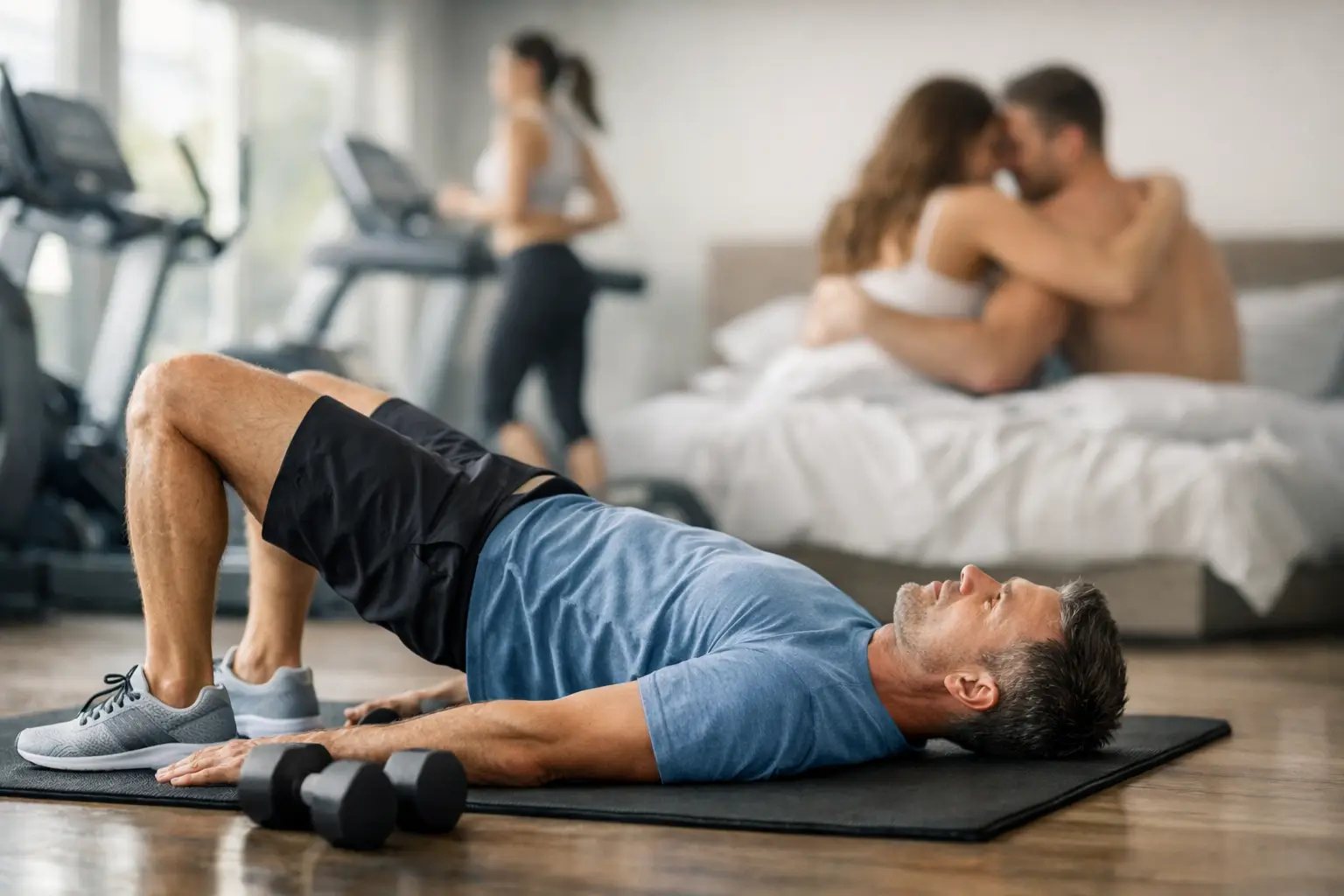
If erections have become less reliable, your body is giving you useful information. In many cases, the best exercise for erectile dysfunction is not a single magic move - it is a smart mix of pelvic floor training, cardio, and strength work that improves blood flow, nerve function, hormone health, and confidence at the same time.
That matters because erectile dysfunction is often less about the penis itself and more about the systems that support sexual function. Circulation, heart health, stress levels, blood sugar, sleep, body weight, and pelvic muscle strength all play a role. Exercise helps nearly every one of them.
What is the best exercise for erectile dysfunction?
If you want the shortest answer, start with pelvic floor exercises and combine them with regular brisk walking. Pelvic floor training directly targets the muscles involved in erection quality and ejaculation control, while walking improves cardiovascular health, which is essential for strong blood flow.
Still, the real answer depends on why ED is happening. If poor circulation is the main issue, aerobic exercise often gives the biggest payoff. If you sit all day, carry extra abdominal weight, or have early signs of metabolic issues, steady cardio and resistance training may do more than any isolated exercise. If stress, tension, or weak pelvic muscles are part of the picture, Kegels can make a noticeable difference.
So rather than chasing one perfect movement, think in layers. The best plan is the one that improves the mechanism behind your symptoms.
Why exercise helps erections
An erection is a blood flow event controlled by nerves, hormones, blood vessels, and muscle function. When those systems are working well, the penis can fill and stay firm. When they are not, erections can become weaker, slower, or less consistent.
Exercise improves endothelial function, which is your blood vessels' ability to relax and widen. That matters because erection quality depends on healthy blood vessel response. Exercise also lowers inflammation, helps manage blood pressure, improves insulin sensitivity, supports testosterone levels, and reduces stress. For many men, those are the exact factors driving the problem.
There is also a psychological benefit. Men with ED often start anticipating failure, which creates more anxiety and worse performance. A consistent training routine can restore a sense of control. That does not solve every case, but it helps break the loop.
Pelvic floor exercises for erectile dysfunction
The pelvic floor is one of the most overlooked parts of male sexual health. These muscles help support the bladder and bowel, but they also contribute to erection rigidity by helping trap blood in the penis.
If those muscles are weak, erections may feel less firm or harder to maintain. Strengthening them can improve function, especially when combined with broader lifestyle changes.
How to find the right muscles
The easiest way to identify your pelvic floor muscles is to imagine stopping urine midstream or preventing yourself from passing gas. That squeeze should feel internal, not like you are clenching your abs, thighs, or glutes.
You do not want to practice repeatedly while urinating, since that can create bad habits. Use it only as a way to recognize the right muscles.
How to do Kegels correctly
Tighten the pelvic floor muscles, hold for about 3 to 5 seconds, then relax for the same amount of time. Start with 10 reps, once or twice per day. As control improves, build toward longer holds and more repetitions.
The key is quality, not brute force. If you strain, hold your breath, or recruit your stomach and butt, you are missing the point. The contraction should feel controlled and isolated.
Some men also benefit from learning the opposite move - relaxing the pelvic floor. If you are always tense, a muscle that cannot relax well may not function well either. That is one reason form matters.
Best cardio for erectile dysfunction
When ED is linked to blood flow, cardio is hard to beat. It strengthens the heart, improves circulation, and supports healthy blood vessels throughout the body, including the penis.
Brisk walking is one of the best options because it is simple, sustainable, and backed by solid evidence. For many men, especially those who are overweight or out of shape, walking consistently is enough to improve erectile function over time.
Cycling, jogging, swimming, rowing, and elliptical training can also help. The best choice is the one you can stick with for months, not just a week.
How much cardio do you need?
A practical target is 150 minutes per week of moderate-intensity cardio. That can mean 30 minutes, five days a week. If you are short on time, shorter sessions still count.
You do not need to train like an athlete. You need consistency. A man who walks briskly most days will usually get better results than a man who crushes one intense workout on Saturday and does nothing the rest of the week.
One note on cycling - it can be excellent cardio, but long hours on a poorly fitted bike seat may irritate the perineal area in some men. If cycling seems to worsen numbness or discomfort, adjust the seat, posture, and volume or switch to another form of cardio.
Strength training and erectile health
Resistance training deserves a place in any plan for ED, especially for men over 40. It helps improve body composition, insulin sensitivity, blood sugar control, and overall metabolic health. Those changes matter because erectile dysfunction often overlaps with belly fat, prediabetes, type 2 diabetes, and cardiovascular risk.
Strength training may also support hormone health, including testosterone, although the effect depends on age, sleep, nutrition, training load, and body fat levels. It is not a direct cure, but it helps create a body that performs better.
Focus on compound movements such as squats, deadlifts, rows, presses, lunges, and pushups. You do not need a bodybuilder split. Two to four full-body sessions per week is enough for most men.
If you are new to lifting, start with body weight or light dumbbells and build gradually. Overdoing it can backfire by increasing fatigue, soreness, and stress hormones, especially if your sleep is already poor.
The best exercise plan for erectile dysfunction
The strongest approach is a combination plan. Pelvic floor work improves the local mechanics. Cardio improves blood flow. Strength training improves metabolic and hormone health.
A simple week might look like brisk walking or other moderate cardio on most days, two or three strength sessions, and daily pelvic floor exercises. That gives you a broad effect without making the routine complicated.
If your schedule is packed, keep the bar realistic. Ten minutes of walking after meals, short home workouts, and a few minutes of pelvic floor work can still move the needle. A good plan you actually follow beats a perfect plan you abandon.
When exercise helps most - and when it may not be enough
Exercise is especially effective when ED is linked to sedentary habits, excess weight, high blood pressure, poor cardiovascular fitness, stress, or early metabolic dysfunction. In those cases, improving your fitness can improve your sex life at the same time.
But there are limits. If ED is related to medication side effects, nerve injury, advanced diabetes, Peyronie's disease, severe low testosterone, depression, sleep apnea, or relationship problems, exercise alone may not fully fix it. It can still help, but you may need medical evaluation too.
That is worth taking seriously because ED can be an early warning sign of vascular disease. The blood vessels in the penis are smaller than the arteries supplying the heart, so problems may show up there first.
Mistakes that can slow progress
One common mistake is expecting instant results. If your ED has been building for months or years, the body usually needs time to respond. Some men notice changes in a few weeks, but a more realistic window is several weeks to a few months of consistent effort.
Another mistake is focusing only on one area. Kegels alone will not overcome poor sleep, heavy drinking, uncontrolled blood sugar, and zero cardio. On the flip side, intense exercise will not always help if chronic stress and pelvic tension are the main issues.
Recovery matters too. If you are sleeping five hours a night, drinking heavily on weekends, and living on processed food, your workouts are fighting uphill. Exercise works best when the rest of your lifestyle is not working against it.
When to talk to a doctor
If ED is new, frequent, getting worse, or happening alongside chest pain, shortness of breath, fatigue, low libido, or urinary symptoms, get checked out. The same goes if you have diabetes, high blood pressure, obesity, or a history of smoking. This is not about panic. It is about catching a bigger issue early.
A doctor can help rule out hormone problems, medication effects, cardiovascular disease, and other underlying causes. If needed, treatment can include therapy, medication, or other interventions alongside lifestyle changes.
For men who want practical, male-focused health education, Male Health Zone covers the bigger picture too, because sexual performance rarely exists in isolation from the rest of your health.
The strongest move you can make is not searching for a miracle exercise. It is building a body that supports better blood flow, better energy, and better function day after day.
This article contains general information about medical conditions and treatments. The information is not advice, and should not be treated as such. Click here for further information.