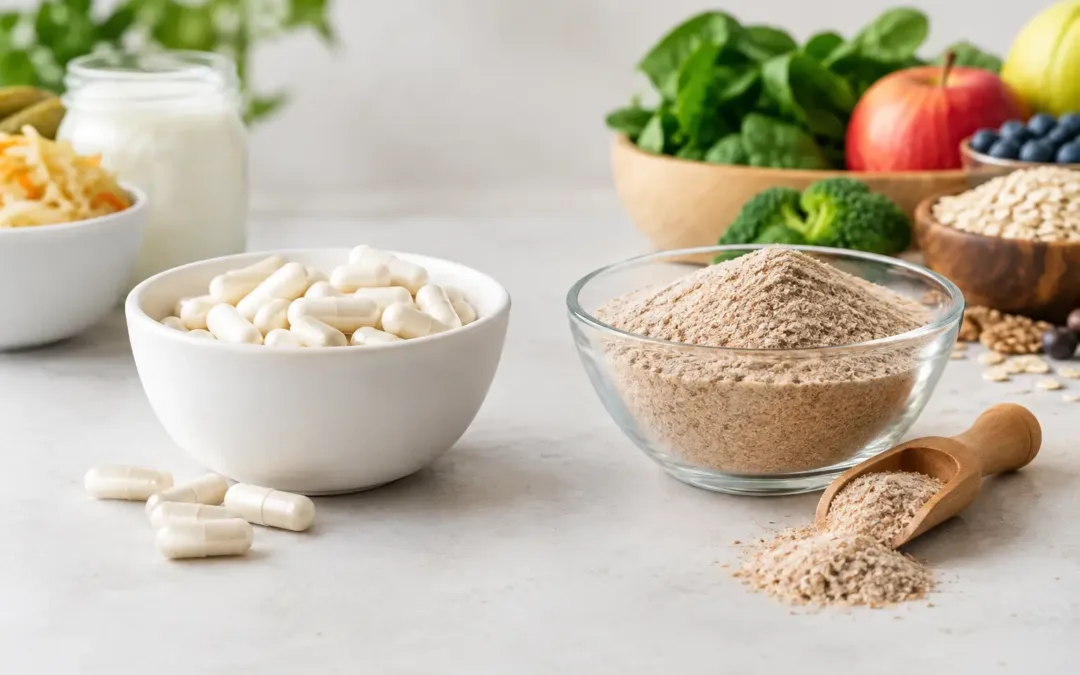
If your gut has become unpredictable - bloating after lunch, constipation during a busy week, or loose stools after a course of antibiotics - the probiotics versus fiber supplements question is worth asking. Both can support digestive health, but they are not interchangeable. One mainly feeds the helpful microbes already living in your gut; the other adds live microorganisms, with effects that depend heavily on the specific strain and your reason for taking it.
For men focused on better energy, body composition, regularity, and long-term health, fiber is often the more foundational move. Probiotics can be useful in specific situations, but they are not a universal repair kit for every digestive complaint.
Probiotics Versus Fiber Supplements: The Core Difference
Fiber is a carbohydrate from plant foods that your body does not fully digest. Some forms add bulk and help stool move through the intestines. Others are fermented by gut bacteria, producing compounds that help support the lining of the colon and may influence metabolic health.
A fiber supplement gives you more of these useful plant compounds when your usual diet falls short. Psyllium husk, wheat dextrin, methylcellulose, and partially hydrolyzed guar gum are common examples. They do not all behave the same way, so the best choice depends on whether you are dealing with constipation, irregular stools, cholesterol concerns, or sensitivity to gas.
Probiotics are live microorganisms, usually bacteria or yeasts, sold in capsules, powders, drinks, and fermented foods. The goal is to deliver strains that may offer a defined benefit, such as reducing the risk of antibiotic-associated diarrhea or improving symptoms in some people with irritable bowel syndrome.
The key word is may. Probiotic effects are strain-specific. A product listing several billion CFUs does not automatically make it more effective. The actual organism, dose, product quality, and health issue matter more than an impressive number on the label.
Why Fiber Usually Comes First
Most American men do not get enough fiber from food. The general target is about 38 grams daily for men through age 50 and about 30 grams daily after 50, although individual needs vary. Many men fall well short, especially when meals revolve around protein shakes, meat, refined grains, takeout, and low-produce convenience foods.
That gap matters beyond bathroom regularity. Higher-fiber eating patterns are associated with better heart health, steadier blood sugar, improved fullness, and healthier body weight. Those benefits are especially relevant for men trying to reduce abdominal fat, manage cholesterol, or lower their risk of type 2 diabetes.
A fiber supplement is not a substitute for vegetables, beans, fruit, oats, nuts, and whole grains. Whole foods provide vitamins, minerals, and a broader mix of fibers. But a supplement can be a practical tool when your diet is not there yet.
Psyllium is often a strong starting point because it forms a gel in the digestive tract. That can help soften hard stools, add form to loose stools, and support healthy cholesterol levels. If you want a simple, evidence-based option for regularity, psyllium is often more useful than chasing a high-priced probiotic blend.
Start low and increase gradually. Jumping from very little fiber to a large dose can cause uncomfortable gas, cramping, and bloating. Mix powdered fiber with plenty of water, and keep your fluid intake up throughout the day. Fiber without enough fluids can worsen constipation for some people.
When a Probiotic May Make Sense
Probiotics are most useful when there is a specific reason to use one. For example, some strains may help lower the chance of diarrhea while taking antibiotics. Others may be worth discussing with a clinician if you have diagnosed irritable bowel syndrome and want to try an additional symptom-management strategy.
They can also be reasonable after a stomach bug, travel-related diarrhea, or a disruption in your usual diet, but results are not guaranteed. Your gut microbiome is complex, and a capsule cannot reliably "reset" it overnight.
If you choose a probiotic, look beyond marketing claims such as “gut balance” or “total wellness.” A better label identifies the genus, species, and strain, such as a named Lactobacillus or Bifidobacterium strain. It should also state the amount of live organisms guaranteed through the expiration date, not only at the time of manufacturing.
Give a new probiotic a fair but limited trial. If it is going to help a mild digestive issue, you may notice a difference within a few weeks. If you feel no benefit after four to eight weeks, there is little reason to keep paying for it. More is not always better, and stacking several probiotic products can make it harder to tell what is causing symptoms.
The Trade-Offs Men Should Know
Fiber has a wider track record for everyday digestive and cardiometabolic health, but it can interfere with the absorption of some medications if taken too close together. If you use prescription medications, ask a pharmacist or clinician about timing. Men with swallowing problems, a known intestinal narrowing, or severe constipation should get medical guidance before adding bulk-forming fiber.
Probiotics are generally well tolerated by healthy people, though they can cause temporary gas or bloating. They are not risk-free for everyone. Men with severely weakened immune systems, serious underlying illness, or a central venous catheter should speak with their medical team before using them because rare infections have occurred in high-risk settings.
Neither supplement is the right answer for persistent symptoms that need evaluation. Blood in stool, black stools, unexplained weight loss, fever, anemia, severe abdominal pain, new bowel changes after age 45, or diarrhea that wakes you at night deserve medical attention. Do not mask a warning sign with supplements and hope it disappears.
Can You Take Fiber and Probiotics Together?
Yes, many men can take both. In fact, certain fermentable fibers are often called prebiotics because they provide fuel for beneficial gut bacteria. That does not mean every combination will feel great right away. A probiotic plus a rapidly fermented fiber supplement can increase gas in someone with a sensitive gut.
The smart approach is to change one thing at a time. Start with a modest fiber dose for a week or two and see how your digestion responds. If you have a clear reason to try a probiotic, add it later. This gives you useful feedback instead of turning your supplement cabinet into an uncontrolled experiment.
It also helps to separate the goal from the product. If your goal is constipation, focus first on fluids, daily movement, food fiber, and a well-tolerated fiber supplement. If your goal is avoiding antibiotic-related diarrhea, a properly chosen probiotic may be more relevant. If the goal is general health, your regular meals, sleep, exercise, alcohol intake, and stress level will have a bigger impact than either supplement.
A Practical Choice Based on Your Goal
Choose a fiber supplement first if your diet is low in plant foods, you are often constipated or irregular, you want more fullness while losing weight, or you are working on cholesterol and blood sugar. It is usually the more cost-effective everyday tool.
Consider a probiotic when you have a defined, evidence-supported reason, such as antibiotic use or a clinician-guided plan for a digestive condition. Choose a product with identified strains rather than a vague proprietary blend.
If bloating is your main complaint, slow down before buying either. Bloating can come from eating quickly, carbonated drinks, large evening meals, lactose intolerance, constipation, high alcohol intake, or a sudden increase in protein bars and artificial sweeteners. Addressing the trigger may do more than adding bacteria or bulk.
Better gut health is rarely about finding one magic supplement. Build the basics first: eat more plants, stay hydrated, train regularly, sleep enough, and give your digestive system consistent routines. Then use fiber or probiotics with a clear purpose, not as a substitute for the habits that keep you performing at your best.
This article contains general information about medical conditions and treatments. The information is not advice, and should not be treated as such. Click here for further information.