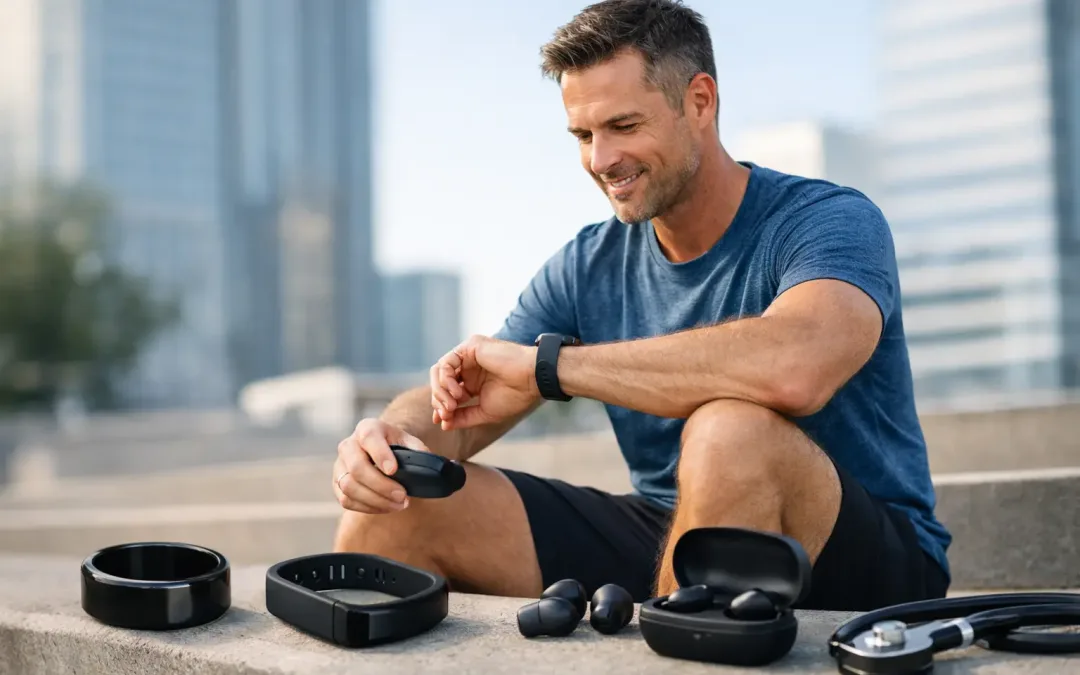
A smartwatch buzzing at 10:30 p.m. because your resting heart rate is still elevated might tell you more about your habits than another motivational quote ever will. The best wearables for men's health do not just count steps. They can reveal patterns in sleep, recovery, stress, heart rhythm, and training load that many men ignore until something starts slipping - energy, libido, performance, or long-term health.
That is the real value here. A wearable cannot diagnose every problem, fix low testosterone, or replace a doctor. But it can give you a clearer picture of what your body is doing every day, which is often the missing piece when you are trying to lose weight, improve stamina, lower cardiovascular risk, or figure out why you feel drained.
Why wearables for men's health are getting more useful
A few years ago, most devices were glorified pedometers. Now many can track heart rate trends, estimate sleep stages, monitor blood oxygen, log skin temperature changes, detect irregular rhythms, and measure workout strain. For men who want practical data instead of vague advice, that shift matters.
It matters even more because a lot of male health issues build slowly. Weight gain, poor sleep, rising blood pressure, reduced recovery, and declining aerobic fitness usually do not show up all at once. They creep in. A wearable can help you catch that drift earlier by showing changes over weeks and months, not just how you feel on one random Tuesday.
For men over 40, that can be especially helpful. Recovery tends to change with age. Sleep often becomes lighter. Cardiovascular risk starts to carry more weight. Training the same way you did at 28 may stop working, or start costing more than it gives back. Data can help you adjust before your body forces the issue.
What these devices can actually help you improve
The strongest use case for wearables for men's health is behavior change. If your device shows that you sleep six hours on weeknights, your heart rate stays elevated after heavy drinking, and your recovery score crashes after three hard workouts in a row, that is actionable. You can connect cause and effect.
Sleep is probably the biggest win for most men. Poor sleep affects appetite, insulin sensitivity, workout performance, mood, and sexual health. It can also make stress feel worse and recovery slower. Wearables are not perfect at measuring sleep stages, but they are often good enough to expose trends. If your total sleep time is short and your schedule is inconsistent, you already have something worth fixing.
Cardiovascular health is another major area. Resting heart rate, heart rate variability, aerobic fitness estimates, and rhythm alerts can provide useful signals. No, these numbers are not the whole story. But if your resting heart rate is trending up, your fitness is declining, and your daily movement is low, those markers can push you to address diet, activity, alcohol use, and stress before bigger problems show up.
Fitness and body composition goals also benefit from wearable data. Men who want to lose fat often focus only on workouts, but their devices may show they are far less active outside the gym than they think. On the other side, men training hard may realize they are under-recovering, sleeping poorly, or pushing intensity too often. More effort is not always better. Better timing is often better.
Stress tracking can also be useful, with a catch. Many devices estimate stress through heart rate variability and related signals. That can be helpful when paired with your actual life. If your device shows repeated high-stress patterns during travel, work deadlines, or late-night eating, pay attention. If it labels you stressed while you are calm and watching a game, treat it as a rough signal, not a verdict.
The best metrics to pay attention to
Most men do not need more data. They need the right data. If you try to track every score your device generates, you will either obsess over it or stop looking altogether.
Start with resting heart rate, sleep duration, daily movement, workout frequency, and recovery trends. Those five areas tell you a lot about whether your lifestyle is moving in the right direction. If your device also measures heart rate variability and you understand how to interpret trends rather than one-off readings, that can add useful context.
What matters most is consistency. One bad night of sleep is not a crisis. One low recovery score does not mean your testosterone is crashing. Look for patterns over two to four weeks. That is where wearables become useful instead of distracting.
Where wearables fall short
This is where a lot of men get misled. Wearables can create a false sense of precision. They look medical, but most are still consumer devices. That means estimates, algorithms, and imperfect sensors.
Calorie burn numbers are often off. Sleep staging is not exact. Blood oxygen readings can vary. Stress scores are not a diagnosis. Even heart rate can become less reliable during certain workouts, especially if the fit is poor or the movement is intense.
There is also a mental downside. Some men become too dependent on the device. If the watch says recovery is low, they skip a workout they would have handled fine. If the sleep score is mediocre, they feel tired before the day even starts. Data should support body awareness, not replace it.
If you have symptoms like chest pain, shortness of breath, dizziness, fainting, erectile dysfunction that persists, major fatigue, or signs of sleep apnea, a wearable is not enough. It may give clues, but it is not a substitute for medical evaluation.
Which type of wearable makes the most sense
The right choice depends on your goal, not what is trending online. If you want broad lifestyle tracking, a smartwatch is usually the most practical option. It covers movement, heart rate, sleep, workouts, and alerts in one device, which is enough for most men.
If your main focus is training, recovery, and performance, a fitness-focused wearable may give deeper insight into strain, readiness, and exercise trends. That can be useful for runners, lifters, cyclists, and men who already train consistently.
If comfort matters most, especially for sleep, a ring-style wearable can be a better fit. Some men simply do not like sleeping with a watch on. A device you actually wear every night beats a more advanced one sitting on your dresser.
Chest straps are still stronger for highly accurate heart rate tracking during exercise, but they are less convenient for all-day health monitoring. For most readers, convenience wins because consistency beats perfection.
How to use wearables for men's health without overthinking it
Use your device to answer real questions. Are you sleeping enough to support energy, body composition, and sexual health? Is your training helping or just exhausting you? Are weekends wrecking your recovery? Are you as active as you claim to be?
Pick one or two outcomes that matter to you right now. Maybe it is lowering blood pressure risk, improving stamina, losing 15 pounds, or getting better sleep. Then use the wearable to track behaviors linked to that goal. If you try to optimize everything at once, you will burn out.
For example, if your energy is low, start with sleep duration, bedtime consistency, and resting heart rate trends. If you want fat loss, track daily activity, workout consistency, and sleep. If you are over 40 and trying to stay sharp in the gym without feeling beat up, pay attention to recovery trends, morning resting heart rate, and whether hard days are followed by enough rest.
This is also where common sense matters. A wearable can show that your sleep improved when you stopped eating huge meals late at night, cut back on alcohol, and kept a more regular bedtime. It cannot make those choices for you.
A smarter way to think about the data
Think of wearables as feedback, not judgment. Their job is to help you notice what your habits are doing to your body. That alone can be powerful. Men often perform better with clear signals, visible progress, and a score they can improve. Used the right way, a wearable turns invisible health drift into something measurable.
At Male Health Zone, the bigger point is simple: more awareness should lead to better decisions, not more anxiety. If your numbers help you walk more, sleep longer, train smarter, and catch warning signs earlier, the device is doing its job.
The best wearable is not the one with the longest feature list. It is the one that helps you make a better choice tonight, tomorrow morning, and six months from now when your health either looks stronger or more neglected. Use the data to take control, then let your habits do the heavy lifting.
This article contains general information about medical conditions and treatments. The information is not advice, and should not be treated as such. Click here for further information.