
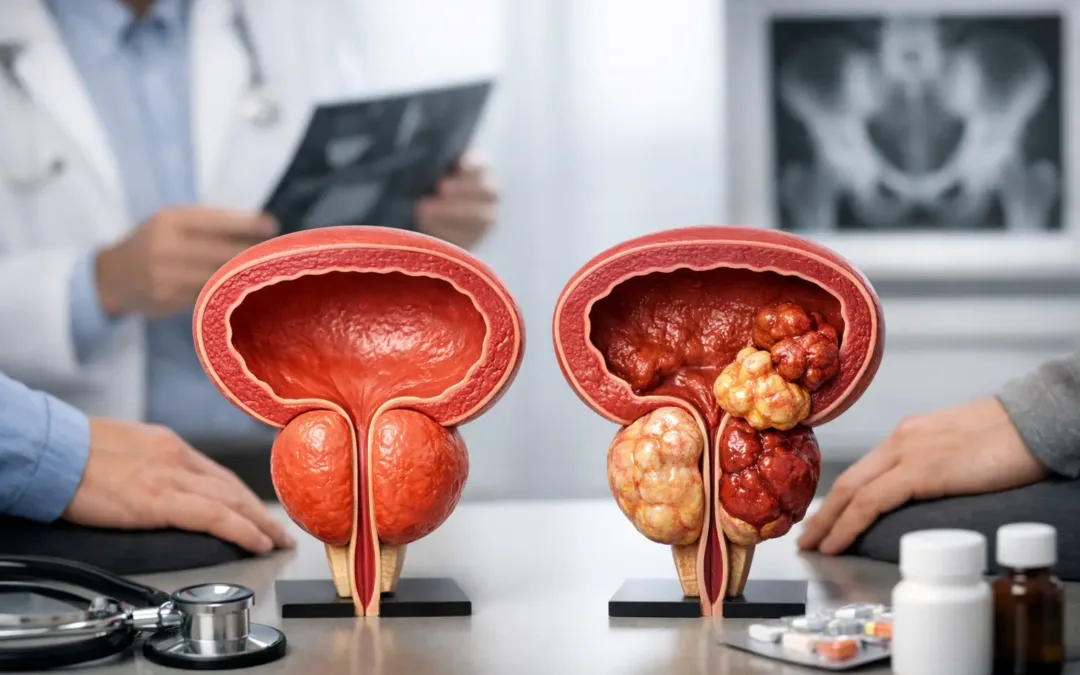
A lot of men notice weaker urine flow or more trips to the bathroom at night and assume it is just age catching up. That is exactly why the topic of bph vs prostate cancer symptoms matters. The overlap can be real, but the meaning behind those symptoms is not always the same, and guessing wrong can delay the care you actually need.
The good news is that urinary changes do not automatically mean cancer. Benign prostatic hyperplasia, or BPH, is very common as men get older. It is not cancer, and it does not turn into cancer. Still, both conditions involve the prostate, and both can affect urination, which is why men often mix them up.
BPH vs prostate cancer symptoms: why they get confused
The prostate sits below the bladder and wraps around part of the urethra, the tube that carries urine out of the body. When the prostate enlarges, it can squeeze that tube and make urination harder. That is the basic reason BPH causes urinary symptoms.
Prostate cancer can also affect the prostate and, in some cases, create similar problems. But there is an important difference. Early prostate cancer often causes no symptoms at all. That is one reason it can be missed if a man waits for obvious warning signs before getting checked.
So when men compare bph vs prostate cancer symptoms, the tricky part is this: BPH usually causes bothersome urinary symptoms, while prostate cancer may cause none early on. When prostate cancer does create symptoms, they can overlap with BPH, especially later.
Common symptoms of BPH
BPH is mainly about pressure and blockage. As the prostate enlarges, urine flow becomes less efficient. The pattern is usually gradual, not sudden.
Typical BPH symptoms include a weak urine stream, trouble starting urination, stopping and starting while urinating, dribbling at the end, feeling like the bladder is not fully empty, going more often during the day, and waking up at night to urinate. Some men also feel a strong, urgent need to go.
These symptoms can range from mild to disruptive. One man may just notice slower flow. Another may start planning his day around bathroom access and lose sleep from nighttime trips. That matters, because poor sleep, stress, and constant urgency can wear down your energy and quality of life.
BPH becomes more common with age, especially after 50. Hormonal shifts, family history, and overall aging of the prostate all play a role.
Common symptoms of prostate cancer
Early prostate cancer often stays silent. A man can feel completely fine and still have it. That is why screening discussions with a doctor matter, especially if you are over 50, Black, or have a father or brother with prostate cancer.
When prostate cancer does cause symptoms, they may include trouble urinating, weak flow, frequent urination, blood in the urine, blood in semen, erectile dysfunction, pain during ejaculation, or discomfort in the pelvis. If cancer has spread beyond the prostate, symptoms can include unexplained weight loss, fatigue, and bone pain, especially in the hips, back, or ribs.
That last group of symptoms is a different level of concern. BPH does not spread to bones or cause cancer-related weight loss. If urinary issues come with bone pain or unexplained decline in overall health, that needs prompt medical attention.
The biggest differences between BPH and prostate cancer
The most useful way to think about bph vs prostate cancer symptoms is not that one has urinary symptoms and the other does not. It is more about pattern, timing, and associated red flags.
BPH usually causes classic lower urinary tract symptoms because it enlarges in a way that presses on the urethra. Prostate cancer often starts in a different area of the prostate, so it may not block urine flow early. That means a man with obvious urinary symptoms may have BPH, but a man with no symptoms can still have prostate cancer.
Blood in urine or semen raises the level of concern. It does not prove cancer, but it should not be brushed off. Unexplained pain, especially in the back or bones, is also more concerning for cancer than BPH.
Another difference is progression. BPH tends to be slow, mechanical, and focused on urination. Prostate cancer can also be slow, but if it becomes aggressive, the effects go beyond bathroom habits.
What symptoms should make you call a doctor sooner
Some urinary changes can wait a few days for a routine appointment, but others deserve faster action. If you cannot urinate at all, have severe pain, develop fever with urinary symptoms, or see blood in your urine, get checked promptly. Those issues can signal urinary retention, infection, stones, or something more serious.
You should also book an appointment if your symptoms are getting worse, waking you up repeatedly at night, affecting workouts or workdays, or leading you to avoid travel and social plans. Men often downplay these changes for months or years. That does not make you tough. It just makes the problem harder to sort out later.
How doctors tell the difference
No symptom checklist can diagnose BPH or prostate cancer on its own. Doctors look at the whole picture.
That may include a symptom review, medical history, physical exam, digital rectal exam, urine testing, and a PSA blood test. PSA stands for prostate-specific antigen. Higher PSA levels can happen with prostate cancer, but also with BPH, prostatitis, recent ejaculation, or even certain activities. So PSA is useful, but not perfect.
Depending on the results, a doctor may recommend imaging, a prostate MRI, or a biopsy. That can sound intimidating, but it is how the guesswork ends. The goal is to find out whether symptoms are from benign enlargement, inflammation, cancer, or a different urinary issue entirely.
Why self-diagnosing is risky
Men are often tempted to label any urinary problem as either normal aging or a worst-case scenario. Both mistakes create problems.
If you assume everything is BPH, you may ignore a cancer that needs treatment or monitoring. If you assume every change means cancer, you create unnecessary stress and may avoid getting checked because you fear the answer. Neither approach helps.
A better move is to treat symptoms like data. Notice what changed, how long it has been happening, whether you have pain or blood, and whether the issue is affecting sleep, sex, training, or daily function. Then bring that information to a doctor.
Can you have both BPH and prostate cancer?
Yes. A man can have BPH and prostate cancer at the same time. They are separate conditions, but they become more common with age, so overlap happens.
That is another reason symptoms alone do not tell the whole story. A man may have BPH causing urinary trouble and also have an early prostate cancer that was found on screening. Or he may have an elevated PSA from BPH and need more testing to rule out cancer.
This is where precision matters. You do not need panic. You do need clarity.
What to do if you are noticing symptoms now
Start with the basics. Pay attention to how often you urinate, whether your stream is weaker, whether you feel fully empty, and whether you are waking up more at night. Note any blood, pelvic discomfort, erection changes, or pain with ejaculation.
Then schedule a medical visit instead of trying to out-tough it. If you are over 40 and especially if you have risk factors, this is part of smart maintenance, not overreaction. Men track workouts, body weight, and finances because those numbers matter. Your prostate health deserves the same level of attention.
In the meantime, avoid loading up on fluids right before bed, go easy on alcohol if it worsens urgency, and review any medications with your doctor because some can affect urination. Those steps may help comfort, but they are not a substitute for evaluation.
If there is one takeaway here, it is simple: changes in urination are common, but common does not mean harmless. Getting checked early puts you back in control, and that is always a stronger move than waiting and hoping it goes away.
This article contains general information about medical conditions and treatments. The information is not advice, and should not be treated as such. Click here for further information.

