
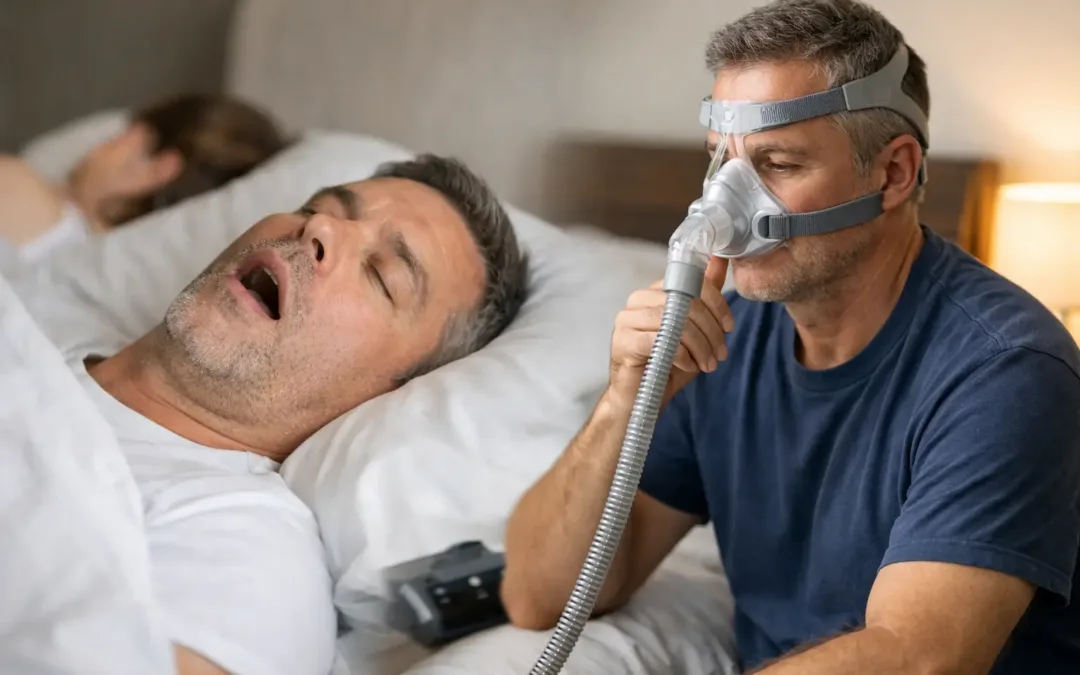
Waking up tired after eight hours in bed is not a character flaw or a sign that you need more coffee. For many men, it is a warning sign of sleep apnea. This guide to sleep apnea for men explains how the condition affects more than snoring, why it can drain your energy and sexual performance, and what you can do next.
Sleep apnea is common, treatable, and worth addressing early. Left alone, it can raise the strain on your heart, metabolism, mood, training recovery, and relationships. The good news is that getting evaluated does not mean giving up control. It gives you a clear problem to solve.
What Sleep Apnea Actually Does
Obstructive sleep apnea, the most common form, happens when the muscles in the back of the throat relax during sleep and narrow or block the airway. Your breathing may pause repeatedly, sometimes for 10 seconds or longer. The brain briefly wakes you enough to restart breathing, often without you remembering it.
Those interruptions can happen dozens of times per night. You may spend seven or eight hours in bed but miss out on the deep, restorative sleep your body needs. Blood oxygen can also dip during these episodes, which adds stress to the cardiovascular system.
Central sleep apnea is less common. It occurs when the brain does not consistently send the right signals to breathe. It requires medical evaluation because it can be connected to certain medications, heart conditions, neurological issues, or high-altitude exposure. Most men who are told they have sleep apnea have the obstructive type.
Sleep Apnea Symptoms Men Should Not Brush Off
Snoring gets the most attention, but not every man who snores has sleep apnea, and not every man with sleep apnea snores loudly. The bigger concern is a pattern of symptoms that points to disrupted breathing and fragmented sleep.
Pay attention if you regularly wake up with a dry mouth, sore throat, headache, or a feeling that sleep did not do its job. Your partner may notice loud snoring, choking, gasping, or pauses in breathing before you do. Daytime signs can include nodding off during meetings, struggling to stay alert while driving, brain fog, irritability, and needing caffeine just to feel functional.
Men often write these changes off as a demanding job, fatherhood, getting older, or hard training. Those factors can absolutely make fatigue worse. But they should not be used to explain away persistent exhaustion, especially when it comes with heavy snoring or witnessed breathing pauses.
Sleep apnea can also show up as reduced workout recovery, lower motivation, elevated blood pressure, or a libido that has lost momentum. It is not always the only cause of these problems, but it belongs on the list.
Why Men Face a Higher Risk
Men are diagnosed with obstructive sleep apnea more often than women, particularly through midlife. Anatomy plays a role. Men tend to have larger neck circumferences and patterns of fat distribution that can place more pressure around the upper airway. Hormonal differences may also affect how stable the airway remains during sleep.
Body weight matters, but sleep apnea is not limited to men in larger bodies. A lean man with a narrow jaw, enlarged tonsils, chronic nasal obstruction, or a family history can develop it too. That said, excess weight around the neck and abdomen is a major and modifiable risk factor for many men.
Risk also rises with age. Alcohol close to bedtime, sedating medications, smoking, untreated nasal congestion, and sleeping on your back can worsen airway collapse. Testosterone therapy deserves an individualized conversation with a clinician. It may worsen sleep-disordered breathing in some men, particularly when apnea is already untreated, but it is not a reason to make medication changes on your own.
The Health and Performance Costs of Untreated Apnea
Sleep apnea is not simply a snoring problem. Repeated oxygen drops and stress responses can contribute to high blood pressure, irregular heart rhythms, heart disease, stroke risk, insulin resistance, and type 2 diabetes. It can also make weight management harder by increasing hunger, reducing training consistency, and leaving you too tired to move.
There is a direct quality-of-life cost as well. Poor sleep can blunt patience, focus, reaction time, and decision-making. Men who drive for work or operate machinery should take daytime drowsiness especially seriously. A brief lapse behind the wheel can be dangerous.
Sexual health is another reason not to ignore the problem. Erectile dysfunction and sleep apnea often overlap because both can involve blood vessel health, hormones, inflammation, and poor sleep. Treating apnea will not automatically solve every case of ED, but better sleep and oxygen levels can support the systems that sexual function depends on.
How to Get a Real Diagnosis
A diagnosis starts with a healthcare professional, often a primary care clinician or sleep specialist. Be direct about snoring, witnessed pauses, daytime sleepiness, blood pressure, weight changes, medications, alcohol use, and any concerns about erections or low energy. These details help connect the dots.
Many men qualify for a home sleep apnea test. You wear a small monitor overnight that tracks breathing, oxygen, and other signals. It is convenient and often effective when obstructive sleep apnea is strongly suspected. However, a negative home test does not always rule the condition out, especially if symptoms are convincing.
An overnight sleep study, called polysomnography, is more detailed. It may be done in a sleep center and can measure brain activity, sleep stages, breathing effort, oxygen levels, heart rhythm, and leg movements. This option is often preferred when central sleep apnea, another sleep disorder, or more complex medical issues are possible.
Your results are often described using the apnea-hypopnea index, or AHI, which estimates breathing disruptions per hour of sleep. The number helps guide treatment, but your symptoms, oxygen drops, health history, and daily safety risks matter too.
Sleep Apnea Treatment Options That Work
The best treatment depends on the severity of apnea, your anatomy, body weight, comfort needs, and whether you can use the therapy consistently. The goal is not to find the most impressive option. It is to find the one you will actually use and benefit from.
CPAP and Other Positive Airway Pressure Devices
Continuous positive airway pressure, or CPAP, is the standard treatment for moderate to severe obstructive sleep apnea. The machine sends gentle pressurized air through a mask to keep the airway open. When the mask fits well and the settings are right, CPAP can dramatically reduce breathing events and improve daytime alertness.
The adjustment period is real. Some men dislike the mask, notice dryness, or feel claustrophobic at first. Those issues are usually worth troubleshooting rather than abandoning treatment. Different mask styles, humidification, pressure adjustments, and gradual practice while awake can make a major difference. Other devices, such as auto-adjusting PAP or bilevel PAP, may fit certain needs better.
Oral Appliances, Weight Loss, and Position Changes
A custom oral appliance fitted by a qualified dental professional can move the lower jaw forward to help keep the airway open. It may be a good option for mild to moderate apnea or for men who cannot tolerate CPAP. It is not the same as a generic mouthguard bought online.
If excess body fat is contributing to apnea, losing weight can reduce its severity and improve blood pressure, energy, and metabolic health. But do not wait to seek treatment until you reach a target weight. Many men need apnea treatment now while working on sustainable nutrition and exercise habits.
Some men have positional apnea, meaning events happen mostly while sleeping on their back. Side sleeping may help, but it is rarely enough for severe apnea. Treat nasal allergies or congestion when present, avoid alcohol within several hours of bed, and review sedating medications with the prescriber who manages them.
When Surgery Is Considered
Surgery may be considered when a structural issue is clearly contributing, such as enlarged tonsils, a severely blocked nose, or jaw anatomy that narrows the airway. Procedures can help selected patients, but results vary. Surgery should be discussed with a sleep specialist and an experienced ear, nose, and throat surgeon or oral and maxillofacial surgeon, not treated as an automatic shortcut.
Start With One Practical Move This Week
If your partner has seen you stop breathing, if you are fighting sleep during the day, or if you wake up gasping, schedule a medical appointment rather than trying to power through it. If you have severe daytime sleepiness, avoid driving when drowsy. That is a safety issue, not a toughness test.
Tonight, make your sleep history useful. Ask your partner what they notice. Write down how often you wake up, whether you get morning headaches, how much caffeine you need, and whether alcohol or back sleeping makes symptoms worse. Bring that information to your appointment.
Better sleep is not a luxury add-on to a stronger body, sharper mind, or healthier sex life. If sleep apnea is holding you back, getting it treated can be one of the most practical performance upgrades you make.
This article contains general information about medical conditions and treatments. The information is not advice, and should not be treated as such. Click here for further information.

