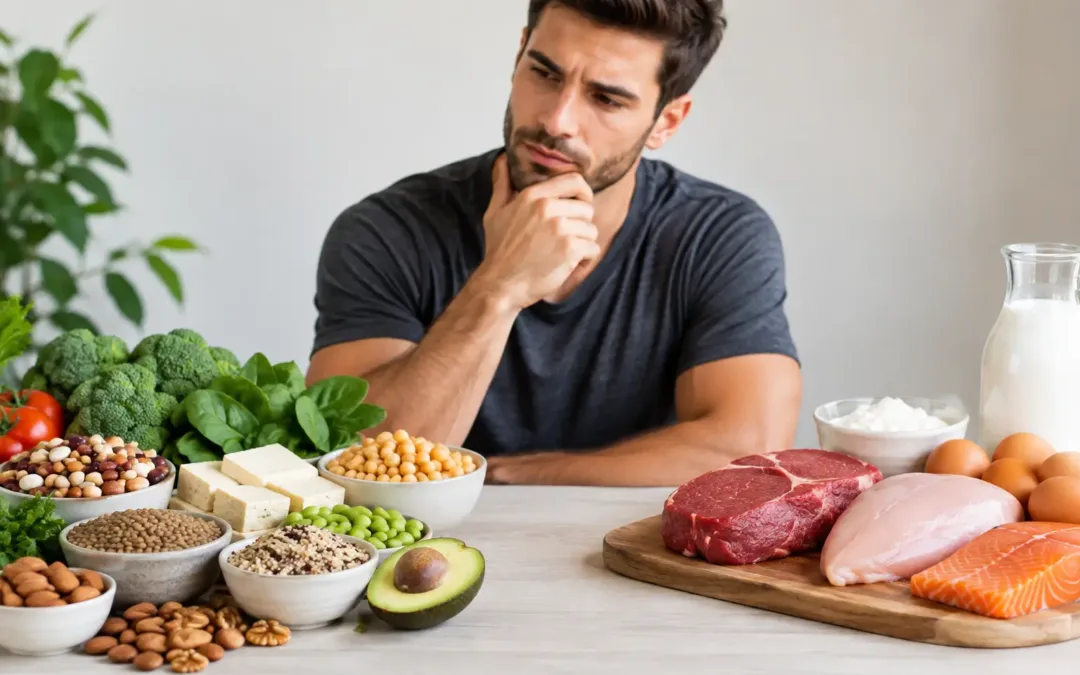
A steak-and-eggs breakfast may feel like the obvious choice for building muscle, while a bean bowl can seem like a compromise. But plant protein versus animal protein is not a simple battle between “strong” and “healthy.” For men focused on muscle, energy, weight control, heart health, and staying capable after 40, the best choice depends on your total diet, training demands, and medical history.
Animal foods generally make it easier to get a large dose of highly usable protein. Plant foods bring fiber, potassium, and protective compounds that many men do not get enough of. The winning move is usually not picking a side. It is knowing where each source fits.
Plant Protein Versus Animal Protein for Muscle
Protein helps repair muscle tissue after training, supports immune function, and makes meals more satisfying. What separates protein sources is their amino acid profile, digestibility, and the amount you need to eat to reach an effective dose.
Animal proteins such as eggs, dairy, fish, poultry, lean beef, and pork are considered complete proteins. They provide all nine essential amino acids, including leucine, an amino acid that helps trigger muscle protein synthesis. They are also typically easy for the body to digest and absorb.
That is why a chicken breast, Greek yogurt, or whey shake can be a convenient option after lifting. You can get 25 to 40 grams of protein without consuming a huge amount of food, which matters if you are trying to gain muscle without overeating.
Plant proteins vary more. Soy, quinoa, buckwheat, and certain blends of pea and rice protein provide strong amino acid coverage. Beans, lentils, nuts, seeds, and whole grains contribute protein too, but some are lower in one or more essential amino acids or contain less leucine per serving.
This does not mean plant protein cannot build muscle. It can. The practical difference is that men eating mostly plant-based may need slightly larger portions, more total daily protein, and a wider variety of sources. A tofu stir-fry, lentil pasta with edamame, or a pea-and-rice protein shake can all support training when the total intake is high enough.
Your total daily intake matters more than one meal
For generally active men, around 1.2 to 1.6 grams of protein per kilogram of body weight per day is often a useful target. Men who lift regularly, are dieting to lose fat, or are trying to gain muscle may benefit from roughly 1.6 to 2.2 grams per kilogram daily.
Spread protein across three or four meals instead of saving most of it for dinner. A practical target is 25 to 40 grams per meal, adjusted for your body size and goals. If most of that protein comes from plants, aim toward the upper end of the range and prioritize higher-protein foods.
The Health Trade-Offs Men Should Know
The health impact of a protein source is not just about protein. It also comes with everything else on the plate.
A serving of salmon provides protein along with omega-3 fats, which support heart health. Eggs provide protein, choline, and several micronutrients. Plain Greek yogurt offers calcium and can be an easy high-protein snack. Lean, minimally processed animal foods can fit well into a health-focused diet.
The concern is not that all animal protein is harmful. It is that many men get a large share from processed meats, fatty cuts, fast-food burgers, and sodium-heavy convenience foods. Regularly relying on bacon, sausage, hot dogs, deli meat, and oversized portions of red meat can work against blood pressure, cholesterol, and long-term cardiovascular health.
Plant proteins come packaged differently. Beans, lentils, chickpeas, tofu, tempeh, nuts, seeds, and whole grains often provide fiber, which supports digestion, fullness, cholesterol management, and steadier blood sugar. That is valuable for men carrying extra abdominal fat or managing prediabetes, high cholesterol, or high blood pressure.
Plant-forward eating may also support erectile function indirectly. Erections depend heavily on healthy blood flow, and dietary patterns that support the heart and blood vessels support sexual performance as well. No single food fixes erectile dysfunction, but better cardiovascular nutrition is a meaningful part of the bigger picture.
There are trade-offs. Some plant-based meals are high in refined carbohydrates, added oils, or sodium. A plant-based burger and fries are not automatically a better choice than grilled chicken with vegetables. Likewise, heavily processed vegan protein products may be convenient, but they should not replace whole foods most of the time.
Does Protein Source Affect Testosterone?
Men often look for foods that will raise testosterone, but protein source alone is not a testosterone switch. Eating enough calories, getting adequate dietary fat, lifting weights, sleeping well, controlling excess body fat, and limiting heavy alcohol use have a much larger effect on hormonal health.
Very restrictive diets can create problems. A man who eliminates animal foods without planning may come up short on vitamin B12, iron, zinc, iodine, calcium, or omega-3 fats. A man who eats only meat and avoids fruits, vegetables, beans, and whole grains may miss fiber and key micronutrients that support metabolic and heart health.
If you follow a vegan diet, pay close attention to B12 and consider whether you need fortified foods or supplements. If fatigue, poor exercise recovery, low libido, or unexplained weakness is persistent, do not assume it is a protein issue. A clinician can help assess iron status, B12, thyroid function, testosterone when appropriate, sleep quality, and other possible causes.
A Practical Protein Strategy for Men
For most men, a mixed approach is effective and easy to sustain. Use animal protein strategically for convenience and muscle support, then use plant protein to increase fiber and improve the quality of your overall diet.
At breakfast, eggs with black beans and vegetables give you complete protein plus fiber. At lunch, try chicken or tuna with a grain-and-bean salad rather than a deli-meat sandwich. At dinner, rotate lean meat or fish with lentils, tofu, or tempeh a few nights each week. This is not about perfection. It is about replacing low-quality default meals with options that serve your goals.
If you are trying to lose fat, choose protein sources that keep calories under control. Skinless poultry, fish, nonfat Greek yogurt, cottage cheese, tofu, tempeh, lentils, and beans can all help you stay full. Watch the extras: creamy sauces, fried coatings, large amounts of cheese, and calorie-dense oils can turn a healthy protein choice into a surplus quickly.
If you are trying to gain muscle, make protein convenient. Keep Greek yogurt, eggs, canned fish, rotisserie chicken, tofu, edamame, and a quality protein powder available. A whey protein powder is efficient after training, while soy or a pea-and-rice blend can work well for men who avoid dairy or prefer plant-based options.
When you may need a more personalized plan
Men with chronic kidney disease, advanced liver disease, gout, digestive conditions, or a history of kidney stones should not blindly follow high-protein fitness advice. The right amount and type of protein can change based on your condition and medications.
The same applies if you have high LDL cholesterol or significant family history of heart disease. You may not need to remove all animal protein, but replacing processed meat and frequent fatty red meat with fish, poultry, beans, and soy can be a smart shift.
The Bottom Line on Plant Protein Versus Animal Protein
Animal protein has an edge for convenience, amino acid quality, and muscle-building efficiency. Plant protein has an edge for fiber and the broader nutritional benefits that support heart health, body weight, digestion, and blood sugar control. Neither is automatically better in every situation.
Build meals around the outcome you want: enough high-quality protein to recover and stay strong, enough plant foods to protect your long-term health, and fewer processed foods that quietly work against both. The best protein plan is the one you can follow consistently while feeling stronger, leaner, and more in control of your health.
This article contains general information about medical conditions and treatments. The information is not advice, and should not be treated as such. Click here for further information.