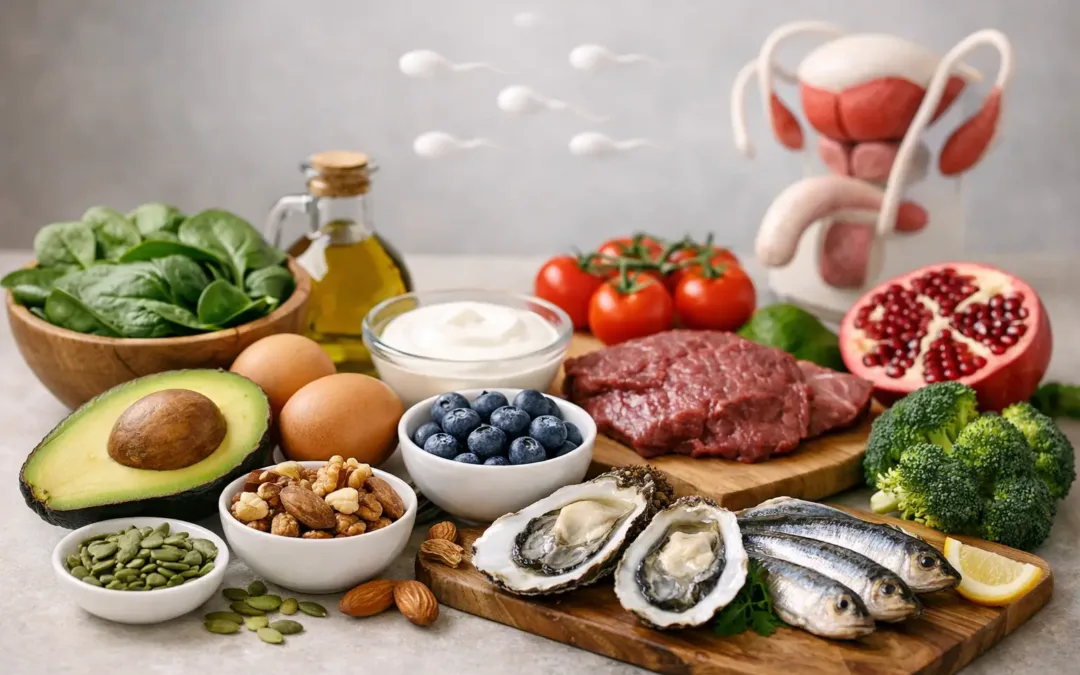
If you are trying to conceive, your grocery cart is not a magic fix, but it is one part of the equation you can control. The best foods for male fertility support the systems involved in sperm production, hormone health, blood flow, and protection against oxidative stress. That matters because sperm take roughly two to three months to develop, so consistent choices now can affect the quality of the sperm produced later.
Food cannot correct every fertility issue. Varicocele, hormone conditions, genetic factors, certain medications, infections, and blocked reproductive pathways all need proper medical evaluation. Still, a nutrient-dense eating pattern can strengthen the foundation, especially when it is paired with regular exercise, adequate sleep, a healthy body weight, and less alcohol and tobacco.
Why Nutrition Matters for Male Fertility
Sperm cells are unusually vulnerable to oxidative stress, a type of cellular damage linked with inflammation, poor diet, smoking, excess body fat, and environmental exposures. Antioxidant-rich foods help the body manage that stress. Meanwhile, nutrients such as zinc, selenium, folate, vitamin C, vitamin E, and omega-3 fats play roles in normal sperm development and function.
The goal is not to hunt for one so-called fertility superfood. A man who eats oysters once a month but lives on fast food, sugary drinks, and late-night alcohol is not building a fertility-friendly routine. The bigger win is a Mediterranean-style pattern centered on seafood, produce, beans, whole grains, nuts, and minimally processed proteins.
Best Foods for Male Fertility
1. Oysters and Other Zinc-Rich Shellfish
Oysters are well known for their zinc content, and for good reason. Zinc supports normal reproductive function and is involved in testosterone production and sperm development. Other shellfish, including crab, mussels, and clams, can also contribute.
You do not need oysters every day. A serving of shellfish once or twice a week can fit well into a balanced plan. If shellfish is not your thing, beef, pumpkin seeds, beans, dairy, and fortified cereals provide zinc too.
2. Fatty Fish
Salmon, sardines, trout, herring, and mackerel provide omega-3 fatty acids. These fats are important components of cell membranes, including sperm cells, and they also support heart health. Better cardiovascular health supports healthy circulation, which matters for sexual function as well as long-term wellbeing.
Aim for two seafood meals weekly when possible. Choose lower-mercury options such as salmon, sardines, trout, and canned light tuna more often than large predatory fish. If you dislike fish, discuss omega-3 options with a clinician rather than assuming a supplement is automatically necessary.
3. Eggs
Eggs offer high-quality protein along with choline, selenium, vitamin B12, and other nutrients involved in normal cell function. They are also practical: fast to cook, affordable, and easy to pair with vegetables and whole grains.
For most healthy men, eggs can be part of a heart-conscious diet. What matters more than the egg itself is the overall meal. Eggs with spinach, tomatoes, and whole-grain toast are a different choice from eggs paired with processed meat and a sugary breakfast pastry every morning.
4. Colorful Berries, Citrus, and Leafy Greens
Vitamin C and plant compounds found in berries, oranges, grapefruit, kiwi, peppers, and leafy greens help defend cells from oxidative stress. Dark leafy greens such as spinach, kale, and collards also supply folate, a B vitamin involved in cell division.
Use color as a simple rule. Add berries to plain Greek yogurt, eat an orange with lunch, or fill half your dinner plate with vegetables. Frozen produce counts and is often easier to keep on hand than fresh options.
5. Tomatoes and Cooked Tomato Foods
Tomatoes provide lycopene, a carotenoid antioxidant that has been studied for its potential relationship with sperm health. Research is still developing, so treat tomatoes as a smart addition, not a treatment. Cooked tomato products, such as tomato sauce and tomato paste, can make lycopene easier for the body to absorb.
Try a simple pasta sauce over whole-grain pasta with lean ground turkey, lentils, or seafood. Pairing tomato foods with a little olive oil can also improve absorption of fat-soluble carotenoids.
6. Walnuts, Pumpkin Seeds, and Other Nuts and Seeds
Walnuts provide healthy fats and polyphenols, while pumpkin seeds are a convenient source of zinc and magnesium. Almonds, pistachios, sunflower seeds, and chia seeds add additional fiber, minerals, and unsaturated fats.
A small handful is enough. Nuts and seeds are calorie-dense, so they work best as a replacement for chips, candy, or heavily processed snack foods, not as an automatic extra on top of an already high-calorie diet.
7. Beans, Lentils, and Chickpeas
Beans and lentils bring fiber, folate, plant protein, iron, and magnesium to the plate. They are especially useful for men working on body weight, cholesterol, blood sugar, or blood pressure, all of which can overlap with fertility and sexual health concerns.
Add chickpeas to salads, make lentil chili, or replace half the ground meat in tacos with black beans. This approach does not require going fully vegetarian. It simply gives your diet more fiber and nutrient variety.
8. Greek Yogurt and Other Protein-Rich Dairy
Plain Greek yogurt provides protein, calcium, iodine, and often probiotics. Some research suggests that full-fat dairy may have a different association with fertility than low-fat dairy, but the evidence is not strong enough to prescribe one version for every man.
Choose the option that fits your overall calorie needs, cholesterol profile, and preferences. The bigger issue is avoiding desserts disguised as yogurt. Look for plain or low-added-sugar choices, then add fruit, cinnamon, or nuts yourself.
9. Whole Grains
Oats, quinoa, brown rice, whole-wheat bread, and barley provide steady energy, fiber, and B vitamins. Replacing refined grains with whole grains can help improve diet quality without making meals complicated.
This is particularly relevant for men with insulin resistance, prediabetes, or excess abdominal weight. Blood sugar management and fertility are not separate health projects. They often improve through the same basic habits.
Build a Fertility-Friendly Week, Not a Perfect Day
A useful target is to make most meals look simple: a protein source, a high-fiber carbohydrate, colorful produce, and a healthy fat. For breakfast, that could be eggs with spinach and oats. For lunch, try a salmon grain bowl with greens and olive oil. Dinner might be lentil chili with avocado and a side salad.
Consistency matters more than perfection. Eat takeout sometimes, enjoy a steak at a cookout, and have dessert without turning one meal into a reason to abandon the plan. The best diet is one you can sustain for the next three months and beyond.
Foods and Habits That Can Work Against Your Goal
No single food ruins fertility, but frequent ultra-processed meals can crowd out nutrients that support sperm health. Limit sugary drinks, processed meats, deep-fried foods, and snacks built around refined carbohydrates and industrial fats. These foods tend to make weight management and blood sugar control harder.
Alcohol deserves an honest look. Heavy drinking can negatively affect testosterone, sexual function, sleep, and sperm health. If conception is the goal, reducing alcohol or taking a break is a practical move. Smoking, vaping nicotine, marijuana use, anabolic steroids, and testosterone therapy can also affect fertility. Testosterone replacement can sharply reduce sperm production, so men who want biological children should speak with a clinician before starting or continuing it.
When Food Is Not Enough
If pregnancy has not happened after 12 months of regular unprotected sex, it is reasonable for both partners to be evaluated. Seek help after six months if the female partner is 35 or older, or sooner if you have a history of testicular injury, undescended testicles, chemotherapy, pelvic surgery, erectile or ejaculation problems, or known hormone concerns.
A semen analysis can provide useful information about sperm count, movement, and shape. That is far more valuable than guessing based on libido, semen volume, or how healthy you feel. Fertility is a shared issue, and getting checked early can save time and remove a lot of unnecessary stress.
Start with your next meal: add color, choose a quality protein, and make one swap you can repeat all week. Small decisions, practiced consistently, give your body the best possible conditions to do its job.