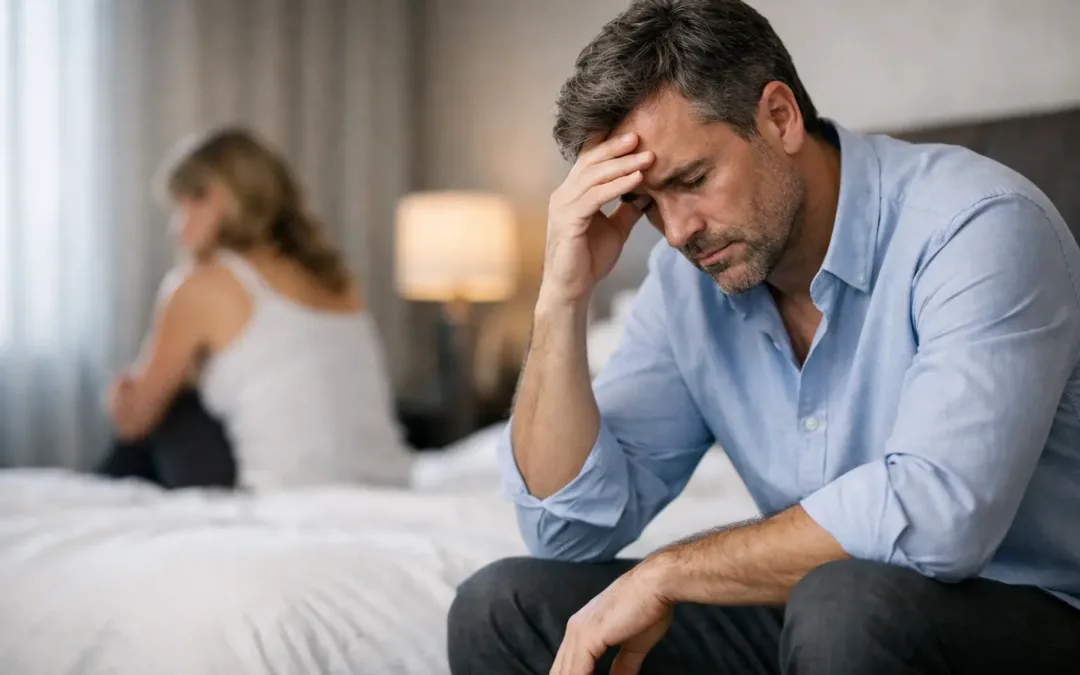
You are fine during the day, then everything falls apart when it matters most. That pattern is one reason so many men ask, can stress cause ED? The short answer is yes. Stress can interfere with erections, lower desire, and create a cycle where one bad experience leads to more pressure the next time.
That does not mean the problem is "all in your head," and it does not mean you are stuck with it. Stress-related erectile dysfunction is real, common, and often fixable when you address both the mental pressure and the physical factors that may be riding along with it.
Can stress cause ED?
Yes. Stress can absolutely cause ED, especially when your body stays in a fight-or-flight state instead of shifting into the relaxed, receptive state that supports arousal.
An erection is not just about desire. It depends on coordination between your brain, nerves, blood vessels, hormones, and emotions. When stress is high, your body pumps out stress hormones like adrenaline and cortisol. Those chemicals are useful if you need to react fast, but they are not helpful when you need blood flow, focus, and sexual confidence.
Stress can tighten blood vessels, raise muscle tension, distract your mind, and make it harder to stay mentally present. Even if you want sex, your body may not cooperate. For some men, the issue is getting an erection. For others, it is keeping one long enough to finish.
Why stress affects erections
The main issue is that stress pulls your body in the opposite direction of sexual function. A good erection usually happens when you are relaxed enough for blood vessels to open and blood to stay trapped in the penis. Ongoing stress makes that process less efficient.
There is also the mental side. If your brain is focused on work problems, money pressure, lack of sleep, relationship tension, or fear of failing sexually, arousal has to compete with all of that noise. Performance anxiety can turn one off night into a recurring pattern.
For some men, stress lowers testosterone indirectly by hurting sleep, increasing alcohol use, and disrupting exercise habits. It may also reduce libido, which can make ED feel worse because desire and performance often influence each other.
What stress-related ED can look like
Stress-related ED does not always show up the same way. You may notice that erections are weaker during busy periods, after arguments, or when you feel burned out. Some men still wake up with morning erections but struggle during partnered sex. Others do fine alone but have trouble with a partner because pressure changes the situation.
That pattern matters. If erections are sometimes normal, stress or anxiety may be playing a major role. Still, it is not a perfect test. Physical causes can also come and go, especially early on.
A few signs point more strongly toward stress as part of the problem. Symptoms may begin suddenly, happen more in certain situations, or get worse the more you worry about them. You may also notice trouble sleeping, irritability, jaw tension, headaches, low motivation, or a constantly racing mind.
Stress, anxiety, and ED are not exactly the same
Men often use these words interchangeably, but they are not identical. Stress is the pressure your body and mind feel when life demands more than your current bandwidth. Anxiety is the worry, fear, or anticipatory tension that can build around that pressure.
In sexual health, the two often feed each other. Work stress may start the problem, then anxiety about your performance keeps it going. That is why a man can have no major medical issue and still struggle in bed for weeks or months.
It also means the fix is not always just "relax." If the problem has become conditioned, your brain may start treating sex like a test instead of something enjoyable. Rebuilding confidence can take deliberate effort.
When stress is the main cause and when it is not
Stress can be the main driver of ED, but it is not always the only one. Age, blood pressure, diabetes, obesity, low testosterone, poor sleep, smoking, heavy drinking, and certain medications can all contribute. Depression can also affect both desire and erection quality.
This is where honesty helps. If you are under intense pressure and the timing lines up, stress may be front and center. But if you also have high blood sugar, carry extra weight around the waist, snore heavily, or get short of breath easily, there may be a circulation or hormone issue in the background.
That is not bad news. It just means you should not assume one cause without looking at the full picture.
How to improve stress-related ED
The best approach is usually practical, not dramatic. You want to reduce stress load, improve recovery, and stop feeding the performance-anxiety loop.
Start with sleep. If you are consistently sleeping five or six hours, your body is already working uphill. Poor sleep raises stress hormones, hurts testosterone, and makes erections less reliable. Aim for a regular sleep schedule and treat snoring or suspected sleep apnea seriously.
Next, look at movement. Exercise is one of the most effective ways to lower stress and support erectile function at the same time. It improves circulation, insulin sensitivity, mood, and confidence. You do not need a hardcore plan to start. Brisk walking, strength training, and moderate cardio done consistently can make a real difference.
Alcohol is another common trap. A couple of drinks may feel relaxing, but too much can blunt erections in the moment and worsen sleep later. The same goes for nicotine and recreational drugs, which can affect blood flow and nervous system function.
You also need to manage the mental side more directly. If sex has started to feel like a performance check, take pressure off the situation. That may mean slowing things down, focusing less on penetration, and talking openly with your partner instead of pretending everything is fine. Silence usually increases tension.
Simple stress tools help more than men expect. Deep breathing, short daily walks, reduced screen time at night, and setting boundaries around work can lower your baseline stress level. If your mind is constantly revving, therapy or counseling can be especially useful. That is not weakness. It is a direct way to improve a real health problem.
Can stress cause ED long term?
It can, especially if nothing changes. Chronic stress can keep your body in a high-alert state for months or years. Over time, that can affect sleep, blood pressure, body weight, blood sugar, and relationship quality. At that point, stress is no longer just a trigger. It becomes part of a larger system that makes ED more likely.
The encouraging part is that long-term stress-related ED can still improve. Many men see progress when they tackle the basics consistently and stop waiting for the problem to magically disappear.
When to see a doctor
If ED is happening often, it is worth getting checked out. That is true even if stress seems like the obvious cause. Erectile problems can be an early warning sign of cardiovascular issues, metabolic problems, or hormone imbalances.
See a doctor sooner if the problem has lasted more than a few weeks, you have other symptoms like low libido or fatigue, or you have risk factors such as diabetes, high blood pressure, high cholesterol, or smoking history. A medication review also matters because some antidepressants, blood pressure drugs, and other prescriptions can affect sexual function.
Treatment may include lifestyle changes, counseling, medication, or a mix depending on the cause. For some men, ED medication helps break the anxiety cycle while they work on sleep, stress, and fitness. That can be a smart bridge, not a failure.
The bottom line for men asking can stress cause ED
Yes, stress can cause ED, and it can do it through both your body and your mind. The good news is that this is one of the more actionable causes of erectile dysfunction. Better sleep, better stress control, stronger fitness habits, less alcohol, and a direct conversation with a doctor can shift things in the right direction faster than most men expect.
If this is happening to you, treat it like any other performance issue - not with shame, but with a plan. Your body is giving you feedback, and that feedback can be used to get healthier, calmer, and more confident where it counts.
This article contains general information about medical conditions and treatments. The information is not advice, and should not be treated as such. Click here for further information.