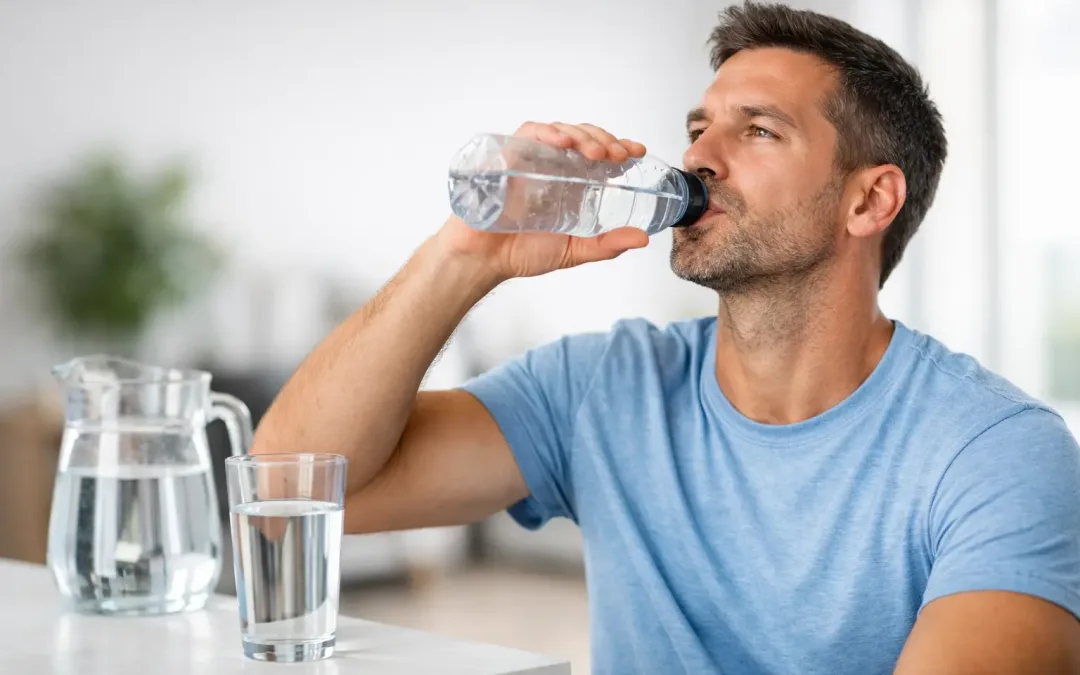
You do not need to carry a gallon jug everywhere to stay healthy, but if you are dragging through workouts, getting headaches, or feeling unusually hungry, hydration may be part of the problem. When men ask how much water should a man drink, they usually want one number. The honest answer is more useful than that - there is a solid baseline, but your size, activity level, climate, and age all change the target.
How much water should a man drink each day?
A good general benchmark for adult men is about 3.7 liters of total fluid per day, which is roughly 125 ounces. That number includes fluids from water, coffee, tea, milk, and water-rich foods like fruit, vegetables, and soup. It does not mean every man needs to drink 125 ounces of plain water.
For many men, a practical daily target is around 80 to 100 ounces of fluids, then adjusting upward based on sweat loss, exercise, heat, or illness. If you eat a lot of whole foods, especially produce, some of your hydration is already coming from meals. If your diet is heavy on protein, sodium, alcohol, or caffeine, your needs may rise.
That is why a single rule can fall short. A 25-year-old warehouse worker in Texas does not have the same hydration needs as a 65-year-old office worker in a cool climate. Both need enough fluid, but the path there looks different.
Why hydration matters more for men than most realize
Hydration is not just about quenching thirst. Water affects energy, blood volume, circulation, digestion, temperature control, joint comfort, and physical performance. Even mild dehydration can make you feel off before you feel thirsty enough to do something about it.
For men focused on stamina, muscle function, and body composition, this matters. If you are underhydrated, workouts can feel harder, your heart rate may rise faster, and your recovery may suffer. Some men also mistake thirst for hunger, which can lead to extra snacking and make weight management harder.
There is also a sexual health angle. Blood flow plays a major role in erectile function, and while drinking more water is not a cure for erectile dysfunction, poor hydration can contribute to fatigue, lower exercise capacity, and an overall drop in how well you feel and perform.
The easiest way to tell if you are drinking enough
Forget complicated formulas for a second. Your body gives you feedback every day.
Urine color is one of the simplest signs. Pale yellow usually means you are in a good range. Dark yellow or amber often means you need more fluids. Crystal clear urine all day can mean you are overdoing it.
Pay attention to how often you urinate, too. If you are going every few hours and feel normal, that is usually fine. If you are barely going, feel dry, lightheaded, or get headaches, that is a sign to step up your intake.
Thirst is useful, but it is not perfect. By the time you feel very thirsty, you may already be a bit dehydrated. That is especially true during long workdays, travel, and hard training sessions when it is easy to ignore your body.
When a man needs more water
Some situations raise your fluid needs fast. Exercise is the obvious one. If you are sweating through a run, lifting session, pickup game, or physical labor shift, you need to replace that fluid loss. Hot weather and high humidity can increase your needs even more because sweat evaporates less efficiently.
Bigger body size can also mean higher fluid needs. Men generally have more lean mass than women, and muscle holds a lot of water. If you are larger, more active, or trying to build muscle, hydration becomes even more important.
High-protein diets can increase water needs as well. Many men trying to lose fat or gain muscle are eating more protein than average. That is not automatically a problem, but it does make regular fluid intake more important for comfort and overall balance.
Alcohol is another factor. A few drinks can increase fluid loss and leave you feeling depleted the next day. If you drink, matching alcohol with water during the evening and drinking more before bed can help reduce the hit.
Illness can change things quickly. Fever, vomiting, diarrhea, and even a bad cold can push you toward dehydration. In those cases, plain water helps, but electrolytes may matter too.
How much water should a man drink for exercise?
If you are active, your baseline target is only the starting point. Before a workout, being reasonably hydrated matters more than chugging a huge amount right before you train. Drinking water steadily through the day works better than trying to catch up at the last minute.
During exercise, the goal is to keep fluid losses from getting too high. For shorter workouts under an hour, water is usually enough. For long sessions, heavy sweat, or training in the heat, you may benefit from a drink with sodium and other electrolytes, especially if you notice cramping, fatigue, or a big drop in performance.
After exercise, replace what you lost. A simple way to judge this is your body weight. If you are consistently lighter after training, that is mostly fluid loss. Rehydrating afterward helps recovery, especially if you train again within 24 hours.
This is where performance-focused men often miss the mark. They concentrate on protein, pre-workout, and supplements while ignoring the easiest upgrade on the table. Hydration is not flashy, but it can improve energy, endurance, and how you feel during the day.
Can you drink too much water?
Yes. More is not always better.
Drinking excessive amounts of water in a short period can dilute sodium levels in the blood, which can be dangerous. This is uncommon, but it can happen during endurance events or when someone forces huge amounts of water without enough electrolytes.
A better strategy is consistency. Drink enough to stay hydrated, increase intake when your body and environment demand it, and do not treat hydration like a contest. If your urine is always totally clear and you are running to the bathroom nonstop, pull back a bit.
Smart hydration habits that actually work
Most men do better with routines than with vague intentions. Keeping water in sight helps. So does pairing hydration with habits you already have, like drinking a glass when you wake up, with each meal, before a workout, and during your afternoon slump.
If plain water feels boring, use sparkling water, add lemon or lime, or include unsweetened tea. Coffee counts toward fluid intake too, despite the old myth that it cancels itself out. It can have a mild diuretic effect in some cases, but regular coffee drinkers still get hydration from it.
The main point is to make hydration easy enough that you actually do it. If carrying a large bottle helps, great. If it makes you ignore water because it feels forced, use a smaller bottle and refill it.
Special considerations for men over 40
As men get older, thirst signals can become less reliable. That means some men over 40 or 50 may not feel thirsty until they are already behind. Medications, blood sugar issues, prostate-related urinary symptoms, and blood pressure concerns can also complicate hydration habits.
This is where balance matters. Some men start drinking less water because they do not want to urinate frequently, especially at night. That can backfire by leaving them underhydrated during the day. A better move is to drink steadily earlier in the day and taper a bit in the evening rather than avoiding fluids altogether.
If you have kidney disease, heart failure, are taking diuretics, or have been told to limit fluids, follow your clinician's guidance instead of generic advice. The usual hydration rules do not always apply in those cases.
A practical daily target for most men
If you want a simple answer you can use today, start here. Aim for about 80 to 100 ounces of fluids per day as a baseline, then add more if you sweat heavily, work outdoors, live in a hot climate, drink alcohol, or exercise hard. Watch your urine color, thirst, and energy instead of chasing a fixed number no matter what.
That approach is more realistic than trying to hit an arbitrary gallon every day. It gives you structure without ignoring the fact that your body changes from one day to the next.
At Male Health Zone, the goal is not perfection. It is helping you make the kind of simple moves that improve energy, performance, and long-term health. Drinking enough water will not solve every problem, but it is one of the easiest ways to feel better fast - and your body usually tells you when you finally get it right.
This article contains general information about medical conditions and treatments. The information is not advice, and should not be treated as such. Click here for further information.