A stronger pelvic floor can affect more than bathroom control. These small muscles help support erections, ejaculation, bladder and bowel function, core stability, and confidence during workouts and daily life. If you want to improve male pelvic floor function, the goal is not to squeeze constantly. It is to build strength, coordination, and the ability to relax when your body needs it.
That distinction matters. Many men start doing Kegels after noticing urine dribble, weaker erections, or a feeling that they have lost control. Kegels can help, but they are only useful when you are working the right muscles with the right amount of tension. More repetitions are not automatically better.
What the Male Pelvic Floor Does
The pelvic floor is a group of muscles at the base of the pelvis, running from the pubic bone toward the tailbone. Think of it as a supportive sling beneath the bladder and bowel. In men, these muscles also work around the prostate and base of the penis.
When the pelvic floor contracts effectively, it helps close the urethra to control urine flow. It contributes to the pressure and blood trapping involved in an erection, and it contracts rhythmically during orgasm. It also works with the diaphragm, abdominal wall, hips, and deep back muscles to stabilize the body when you lift, run, cough, or move quickly.
Weakness is one possible problem, especially after prostate surgery, long periods of inactivity, weight gain, chronic coughing, or aging. But some men have the opposite issue: muscles that are too tight, overactive, or poorly coordinated. That can contribute to pelvic pain, urinary urgency, constipation, painful ejaculation, or difficulty starting urine flow. The right plan depends on which pattern you have.
Signs Your Pelvic Floor May Need Attention
A few occasional symptoms do not automatically mean you have a pelvic floor disorder. Still, it is worth paying attention if you regularly experience urine leakage after using the bathroom, leakage while coughing or lifting, frequent urgent trips to the bathroom, or difficulty fully emptying your bladder.
Sexual changes can also be a clue. Some men notice less control over ejaculation, reduced erection firmness, or a decrease in sensation. Pelvic floor training may be one useful part of addressing these concerns, but erections are also closely tied to blood flow, sleep, stress, medication use, testosterone, diabetes, and heart health. Do not assume every sexual-performance issue is a muscle problem.
Pain is a different category. Pelvic, penile, testicular, rectal, hip, or lower-abdominal pain deserves an evaluation rather than a do-it-yourself exercise challenge. Tight muscles can be involved, but so can infection, prostate conditions, nerve irritation, hernias, and other issues that need medical attention.
How to Improve Male Pelvic Floor Control
Start by learning the movement without turning every moment into a workout. The simplest way to identify the muscles is to imagine stopping urine or preventing gas from escaping. You should feel a gentle lift and tightening around the anus and base of the penis. Your stomach, glutes, and thighs should stay relatively relaxed.
You can briefly test this sensation during urination once, but do not make a habit of stopping your stream mid-flow. Repeatedly interrupting urine flow can interfere with normal bladder emptying and is not a reliable training method.
Begin With Clean, Controlled Contractions
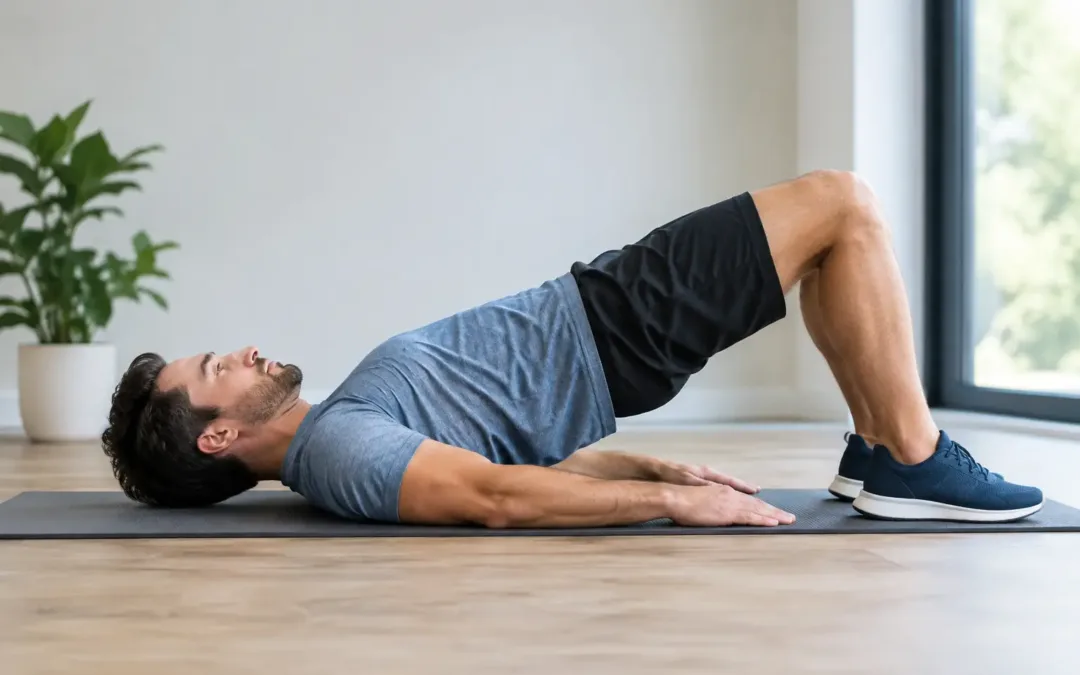
Lie on your back with your knees bent, or sit tall in a chair. Breathe in and allow your belly and pelvic area to soften. As you breathe out, gently lift the pelvic floor as if you are stopping urine. Hold for three seconds, then fully relax for three seconds.
Try 8 to 10 repetitions, once or twice a day. If you can complete those without breath-holding, butt clenching, or strain, gradually build toward holds of five to eight seconds. The release is part of every repetition. A muscle that cannot relax well will not perform well under pressure.
Add a second style of training after you have the basics down: quick contractions. Gently squeeze and release for one second at a time, completing 8 to 10 reps. These quicker contractions can help train the response you need before a cough, laugh, jump, or lift.
Quality beats volume. If your pelvic area feels sore, heavy, twitchy, or more urgent after training, cut back. That may mean fewer repetitions, shorter holds, or a need to focus on relaxation rather than strengthening.
Use the Breath to Your Advantage
Your diaphragm and pelvic floor move together. When you inhale, the pelvic floor naturally lengthens and drops slightly. When you exhale, it can gently lift. Coordinating your exercise with an exhale helps prevent the common mistake of bearing down instead of lifting.
This breathing pattern also applies to strength training. Before a squat, deadlift, or heavy press, take a controlled breath and brace your trunk. Exhale through the hardest portion of the lift without forcing your breath out aggressively. Avoid holding your breath for long periods or straining so hard that you feel pressure pushing downward into the pelvis.
Men who train hard often overlook this. Strong abs and a strong lower body are useful, but repeatedly lifting with poor pressure management can aggravate pelvic-floor symptoms. You do not need to avoid heavy training forever. You need sound technique and a training load that matches your current control.
Daily Habits That Support Pelvic Floor Health
Pelvic-floor progress is easier when the rest of your routine stops working against it. Constipation is one of the biggest overlooked factors because repeated straining puts extra pressure on the pelvic floor. Drink enough water, eat fiber-rich foods consistently, and give yourself time in the bathroom rather than forcing a bowel movement.
Body weight matters too. Carrying extra abdominal weight can raise pressure on the bladder and pelvic floor, particularly during movement. Even modest weight loss can support bladder control and overall cardiovascular health, which also benefits sexual function.
Take breaks from long stretches of sitting. Sitting is not automatically harmful, but hours of slumped posture can keep the hips and pelvic region stiff. Stand up, walk for a few minutes, and use gentle hip mobility work such as deep supported squats, hip flexor stretches, or a relaxed child’s pose if they feel comfortable.
Stress management is not fluff here. Many men tighten their jaw, shoulders, abs, and pelvic floor when they are stressed without realizing it. Slow breathing, regular exercise, better sleep, and less caffeine if it worsens urgency can reduce the background tension that keeps the pelvic floor from settling down.
When Kegels Are Not the Right First Move
Kegels are often presented as the answer for every pelvic issue, but that is too simplistic. If you have pelvic pain, burning, constipation, urinary hesitancy, painful sex, or a constant feeling of tightness, repeated strengthening may make symptoms worse. Your first priority may be down-training: diaphragmatic breathing, learning to relax the pelvic muscles, and addressing habits that create chronic tension.
A pelvic floor physical therapist can assess whether the muscles are weak, tight, uncoordinated, or a mix of all three. This is not only for women or for men recovering from prostate cancer surgery. Men see these specialists for urinary symptoms, erectile concerns, chronic pelvic pain, post-surgical recovery, athletic pressure-management problems, and bowel issues.
Talk with a clinician promptly if you have blood in your urine, fever, burning with urination, new severe pelvic pain, inability to urinate, unexplained weight loss, or sudden major changes in erections or bladder function. Those symptoms should not be managed with home exercises alone.
Build a Routine You Can Actually Maintain
For most men without pain or significant urinary symptoms, a short daily practice is enough to start. Pair it with an existing habit, such as after brushing your teeth or before your first workout. Give it at least six to 12 weeks of consistent, controlled practice before judging the result.
Do not chase maximum tension. The pelvic floor is meant to respond, support, and let go. Better control may show up as less post-urination dribble, greater confidence during exercise, improved awareness during sex, or simply the ability to relax an area you did not realize was always working overtime. That is a practical kind of strength worth building.
This article contains general information about medical conditions and treatments. The information is not advice, and should not be treated as such. Click here for further information.