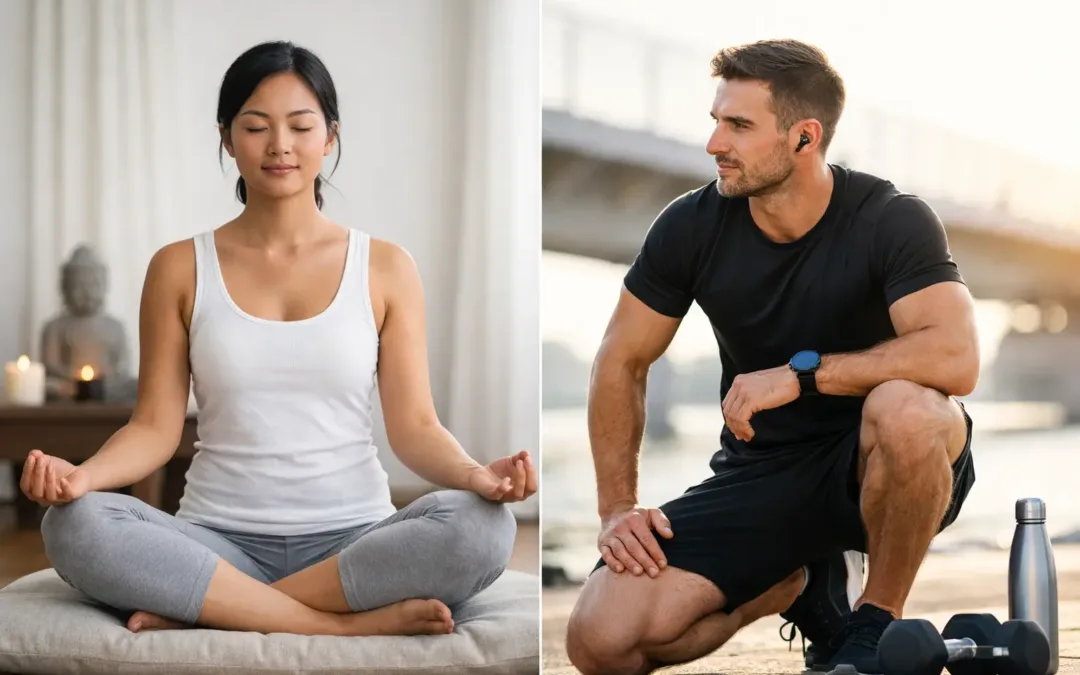
A stressful week can show up as tight shoulders, shallow sleep, low motivation, irritability, and a shorter fuse with the people you care about. For men trying to stay productive at work, present at home, and consistent in the gym, the question of meditation vs exercise stress relief is practical: What will actually help you feel better and perform better?
The honest answer is that neither method wins in every situation. Exercise is often the stronger tool when stress has left you restless, wired, or physically tense. Meditation can be more effective when your body is still but your mind will not stop replaying problems. The best choice depends on your symptoms, schedule, fitness level, and what you can repeat consistently.
Meditation vs Exercise for Stress Relief: The Real Difference
Meditation changes your relationship with stress in the moment. Instead of trying to solve every thought or push every uncomfortable feeling away, you practice noticing what is happening without immediately reacting. This can lower mental noise, improve emotional control, and create a pause between a stressful trigger and your next move.
Exercise works through the body first. A brisk walk, strength session, bike ride, or pickup game gives built-up energy somewhere to go. It raises your heart rate, shifts your attention away from rumination, and can leave you with the calmer, more grounded feeling that follows physical effort.
Both can support sleep, mood, and long-term health. But they ask different things of you. Meditation requires stillness and attention, which may feel frustrating at first. Exercise requires time, recovery, and enough physical capacity to train safely. If you hate sitting still, meditation may need a more active entry point. If you are exhausted, injured, or already training hard, another intense workout may not be the answer.
When Meditation Is the Better Stress Tool
Meditation is particularly useful when stress is driven by overthinking. Maybe you are lying in bed reviewing a difficult conversation, anticipating tomorrow's meeting, or worrying about money despite having no immediate action to take. Your body may be tired, but your nervous system is still on alert.
A simple mindfulness practice can help interrupt that loop. Sit comfortably, breathe normally, and place your attention on the sensation of breathing for five minutes. When your mind wanders, notice it and return to the breath. That is the training - not forcing your mind to go blank.
Benefits that matter outside the meditation session
With regular practice, meditation may help you recognize stress earlier. That matters because many men do not notice they are overloaded until they snap at someone, skip workouts for a week, drink too much, or cannot sleep. Becoming more aware of your internal state gives you a chance to choose a better response before stress starts running the day.
Meditation can also be done almost anywhere. A five-minute session in your car before walking into the house, at your desk after a tense call, or before bed costs nothing and requires no equipment. For a man balancing work, family, and a packed schedule, that accessibility is a real advantage.
Still, meditation is not a magic off switch. If you are severely sleep-deprived, under-fueled, sedentary, or dealing with a major conflict, breathing exercises alone will not fix the root cause. Some people also feel more uncomfortable when they sit quietly with anxious thoughts. In that case, try walking meditation, guided practice, or brief sessions rather than forcing 20 minutes of stillness.
When Exercise Is the Better Stress Tool
Exercise tends to shine when your stress feels physical. You may feel agitated, tense in your jaw and neck, unable to focus, or tempted to blow off steam in ways that leave you worse the next day. Movement gives that pressure a healthier outlet.
You do not need a punishing workout to get the mental benefits. Moderate activity is often enough: a 20- to 30-minute walk, an easy jog, a short lifting session, or several rounds on a bike. The goal is to finish feeling more settled, not crushed.
Exercise supports more than your mood
For men, regular training can also improve factors that strongly affect stress tolerance: cardiovascular fitness, body composition, energy, sleep quality, and confidence in what your body can do. Strength training in particular gives many men a sense of structure and progress when other areas of life feel uncertain.
The trade-off is recovery. High-intensity intervals, heavy lifting, and endurance training are productive stressors, but they are still stressors. If your job is demanding, your sleep is poor, and you are already training hard six days a week, adding another brutal workout can worsen fatigue and irritability. On those days, an easy walk, mobility work, or a lighter session may provide more relief than trying to set a personal record.
Exercise may also be difficult to use during a sudden spike in anxiety. You cannot always leave a meeting to lift weights. That is where a short breathing practice has a clear edge.
Which Works Better for Men Under Pressure?
If you want one answer, start with the method you are most likely to use three or more times per week. Consistency beats the theoretically perfect stress-management plan that never survives a busy Tuesday.
Choose exercise first if you spend most of your day sitting, feel physically keyed up, have excess energy at night, or want stress relief that also supports weight, heart health, and fitness. Choose meditation first if your main problem is racing thoughts, reactivity, trouble winding down, or a schedule that makes workouts hard to fit in.
For many men, the strongest answer to meditation vs exercise stress relief is not choosing sides. Use exercise to discharge physical tension and meditation to sharpen your ability to handle pressure without impulsive reactions. One trains the body to recover; the other trains the mind to pause.
A Practical Plan That Uses Both
You do not need an elaborate wellness routine. Start with a two-week experiment and pay attention to your sleep, mood, patience, and energy rather than judging success by whether you feel perfectly calm.
Try this simple setup:
- Take a 20- to 30-minute brisk walk or complete a moderate workout three to five days a week.
- Spend five minutes on quiet breathing or a guided meditation most days, especially before bed or after work.
- On high-stress days, lower the intensity of your workout instead of skipping movement completely.
- Keep your phone out of reach during the final five minutes before sleep, and use that time to breathe, stretch, or sit quietly.
This approach works because it removes the all-or-nothing mindset. If you cannot make it to the gym, you can still take a walk. If you cannot sit for 15 minutes, you can still take 10 slow breaths before responding to an email or stepping into a difficult conversation.
Timing matters, too. Morning exercise can improve focus and create momentum for the day. Evening walks may help you transition out of work mode. Meditation is often helpful before bed, but a brief practice can also work before a presentation, medical appointment, or important talk with your partner.
Do Not Ignore Persistent Stress Symptoms
Lifestyle tools are valuable, but chronic stress deserves attention when it starts affecting your health or relationships. Talk with a qualified health professional if anxiety, low mood, insomnia, anger, sexual performance concerns, chest pain, panic symptoms, or increased alcohol or drug use are becoming regular patterns.
Stress can contribute to erectile difficulties, lower libido, elevated blood pressure, poor sleep, and weight gain, but those symptoms can also have medical causes. Getting checked is not weakness. It is preventive maintenance for the parts of life you want to protect.
The right stress-relief practice is the one that helps you show up with more control, energy, and patience. Move when your body needs an outlet. Get still when your mind needs space. Build both habits, and pressure is less likely to dictate how you live.
This article contains general information about medical conditions and treatments. The information is not advice, and should not be treated as such. Click here for further information.