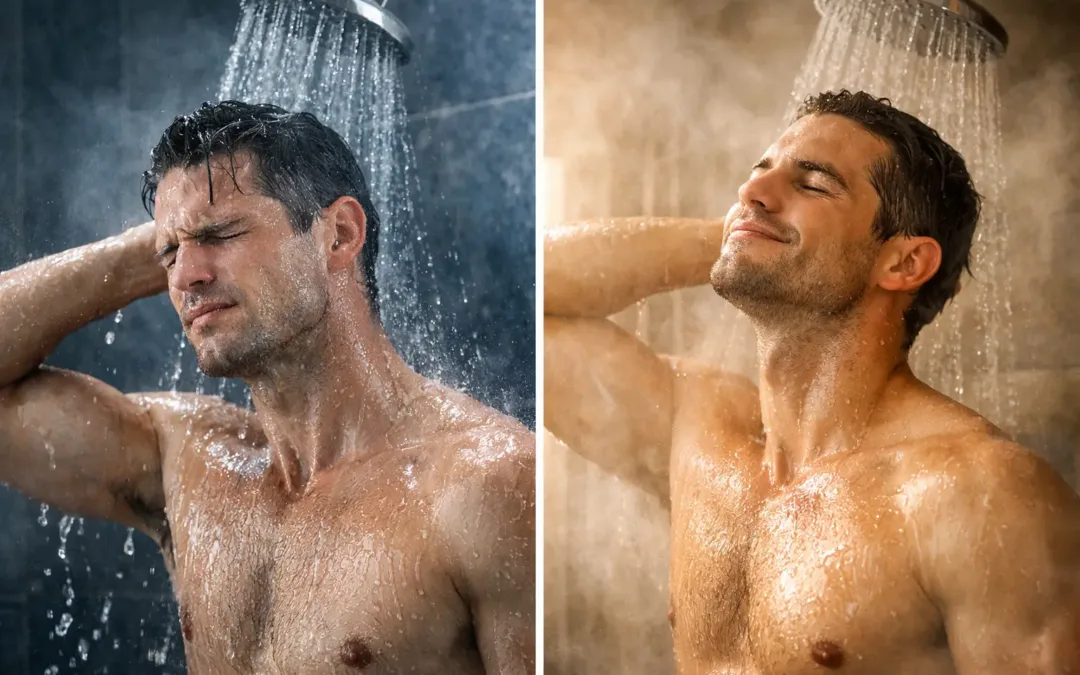
A shower is one of the few health habits you can change today without buying a supplement, joining a gym, or overhauling your schedule. But in the cold showers vs hot debate, the best choice depends on what your body needs at that moment: a sharper start, less muscle soreness, cleaner skin, easier sleep, or simple comfort.
For most men, neither extreme needs to win. Hot and cold water create different effects in the body, and using each strategically can support training, recovery, sleep, and daily energy. The key is knowing where the evidence is solid, where the claims get exaggerated, and when a temperature change could work against your goals.
Cold Showers vs Hot Showers: The Main Difference
Cold water causes blood vessels near the skin to constrict and triggers a short-term stress response. You may breathe faster, feel more alert, and experience a noticeable jolt of energy. Hot water does almost the opposite: it relaxes muscles, increases blood flow near the skin, and can calm your nervous system.
That makes cold showers more useful when you want to feel awake or cool down after heat exposure. Hot showers tend to fit better after a long day, before bed, or when your body feels stiff and tight.
Neither is a replacement for the big drivers of men's health: quality sleep, resistance training, cardiovascular fitness, a nutrient-dense diet, stress control, and routine medical care. A shower can be a useful lever, not a shortcut to higher testosterone, rapid fat loss, or better sexual performance.
When Cold Showers Make Sense
For alertness and mental momentum
A brief cold shower can make you feel more switched on, especially in the morning or after a poor night of sleep. The cold exposure activates the sympathetic nervous system, which is the body's action-oriented response. That feeling can be useful before work, a workout, or a day when your motivation is low.
The practical benefit is often behavioral: if a 30- to 60-second cold finish makes you feel disciplined and energized, you may be more likely to train, eat better, or get moving. That is valuable. Just do not confuse a temporary adrenaline surge with lasting energy improvement. Persistent fatigue deserves attention to sleep, stress, nutrition, medications, and possible medical issues such as low testosterone, anemia, diabetes, or sleep apnea.
For cooling down and managing soreness
Cold exposure can reduce the sensation of soreness after hard exercise. That is why ice baths are common in competitive sports. If you have an important event tomorrow, a short cold shower may help you feel fresher after a tough session.
There is a trade-off for men focused on building muscle. Regularly using intense cold exposure immediately after strength training may reduce some of the inflammation and signaling involved in muscle adaptation. In plain terms, if your main goal is bigger, stronger muscles, do not make an ice-cold shower your automatic post-lifting ritual. Save cold water for rest days, endurance training, hot weather, or times when next-day performance matters more than muscle growth.
For a quick mood reset
Some men find cold water helpful when they feel mentally sluggish or stressed. The controlled discomfort requires you to slow your breathing and stay composed. That can create a sense of control that carries into the rest of the day.
Still, cold showers are not a treatment for anxiety, depression, or burnout. If low mood, irritability, poor concentration, or loss of sex drive is sticking around, take it seriously and speak with a qualified clinician.
When Hot Showers Make Sense
For muscle stiffness and relaxation
Hot showers can feel especially good after sitting at a desk, driving, doing physical labor, or waking up with a stiff back. Warmth increases local circulation and can relax tight muscles, which may make gentle mobility work more comfortable.
If you train hard, a hot shower later in the day can be a simple recovery tool. Pair it with a protein-rich meal, hydration, and enough sleep. Those basics will do far more for recovery than water temperature alone.
For sleep support
A warm shower or bath about one to two hours before bed can support a smoother transition to sleep. The warmth raises skin temperature briefly, and the cooling that follows may help signal to your body that it is time to wind down.
Keep it comfortably warm rather than scorching. A hot shower right before you jump under heavy blankets can leave you overheated and restless, particularly if you already sweat at night or have sleep apnea symptoms.
For nasal congestion and comfort
Steam from a warm shower can temporarily loosen mucus and make nasal congestion feel less miserable during a cold or allergy flare. It does not cure an infection, but it can make breathing more comfortable while you hydrate and rest.
Avoid very hot water if you have sensitive skin, eczema, rosacea, or frequent itching. Long, steamy showers strip protective oils from the skin and can leave it dry, flaky, and irritated. This matters for men who shower after every workout or work shift.
Do Cold Showers Boost Testosterone or Burn Fat?
The internet tends to oversell cold exposure as a hormone hack. There is no strong evidence that taking cold showers meaningfully raises testosterone in healthy adult men. Testosterone is influenced much more by sleep, body fat level, resistance training, calorie intake, alcohol use, chronic stress, certain medications, and underlying health conditions.
Cold exposure may slightly increase calorie use because the body works to maintain temperature, but a shower is too short to create meaningful fat loss on its own. If fat loss is your goal, prioritize a sustainable calorie deficit, strength training, protein, daily movement, and sleep. Use cold showers because you enjoy the mental boost, not because you expect them to replace the fundamentals.
The same goes for claims about libido and erection quality. Better circulation, fitness, sleep, and cardiovascular health can support sexual function over time. A cold shower does not directly fix erectile dysfunction. New or persistent ED can be an early warning sign of blood vessel disease, diabetes, medication effects, low testosterone, or emotional stress, so it is worth discussing with a healthcare professional.
A Smart Shower Strategy for Men
You do not need to pick one side forever. Match water temperature to the time of day and your goal.
Use a warm shower at night, after a stressful day, or when muscles feel tight. Use a cool or cold finish in the morning when you want alertness, or after being out in the heat. After lifting for muscle growth, choose a normal or warm shower and delay intense cold exposure for several hours if you want to be cautious about training adaptations.
If you are new to cold water, start with your usual temperature, then turn it cool for 15 to 30 seconds at the end. Focus on slow, controlled breaths. Over a few weeks, you can work up to one or two minutes if you like it. There is no prize for suffering through ten minutes of freezing water.
For hot showers, keep the water warm rather than painfully hot and limit long sessions. Apply moisturizer afterward if your skin gets dry, especially in winter or if you use acne treatments.
Who Should Be Careful With Cold Water?
Sudden cold exposure can sharply raise breathing rate, heart rate, and blood pressure. Men with heart disease, uncontrolled high blood pressure, a history of fainting, arrhythmias, Raynaud's phenomenon, circulation problems, or asthma triggered by cold should check with a clinician before making cold showers a routine.
Do not use extreme cold exposure when you are sick, intoxicated, severely sleep-deprived, or alone in an unsafe setting. Stop if you feel chest pain, dizziness, numbness, severe shortness of breath, or an irregular heartbeat. The goal is controlled discomfort, not a health scare.
The best shower routine is the one that supports the rest of your routine. Use warmth to loosen up and settle down. Use cold water when you need a brief jolt of focus or relief from heat. Then put most of your effort into the habits that keep a man performing well for decades: training consistently, sleeping deeply, eating well, and addressing symptoms before they become bigger problems.
This article contains general information about medical conditions and treatments. The information is not advice, and should not be treated as such. Click here for further information.